An Imperial Capital: Vijaynagara — NCERT Solutions
CBSE · Class 12 · History
NCERT Solutions for An Imperial Capital: Vijaynagara, CBSE Class 12 History: 9 textbook questions solved step by step. Covers Exercises.
Interactive on Super Tutor
Studying An Imperial Capital: Vijaynagara? Get the full interactive chapter.
Quizzes, flashcards, AI doubt-solver and a step-by-step study plan — built for NCERT solutions and more.
Free trial, no card needed.
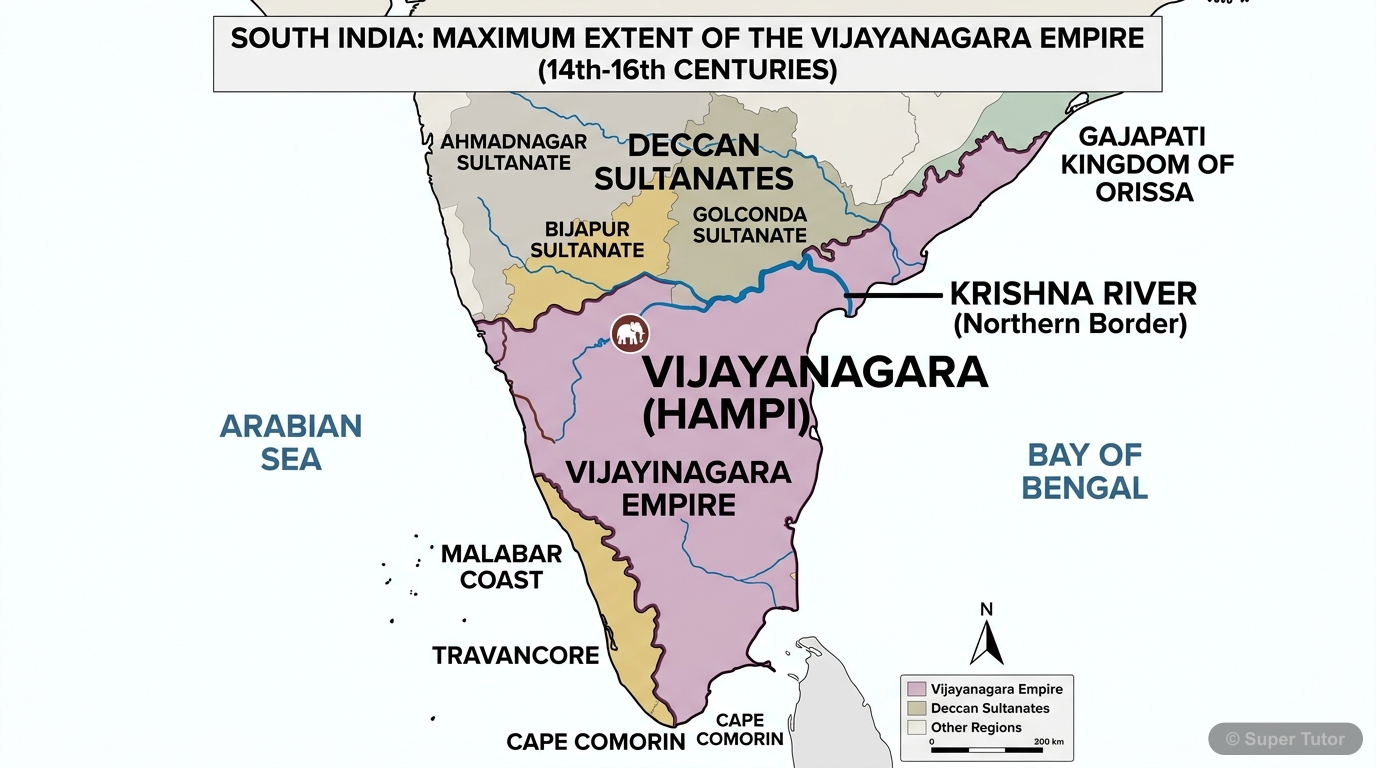
Learn better with visuals Super Tutor pairs illustrations like this with notes and quizzes for An Imperial Capital: Vijaynagara.
Get startedThe first 5 solutions are open to read. The other 4 are free with a Super Tutor account. Unlock all 9 free in Super Tutor
Exercises
1What have been the methods used to study the ruins of Hampi over the last two centuries? In what way do you think they would have complemented the information provided by the priests of the Virupaksha temple?Show solution
The ruins of Hampi were studied through multiple methods over the last two centuries: Colin Mackenzie’s survey map of 1800, oral memories of priests of the Virupaksha temple and the shrine of Pampadevi, photographs from 1856 onwards, epigraphic study of inscriptions from 1836 onwards, and later travellers’ accounts and literature in Telugu, Kannada, Tamil and Sanskrit. Archaeologists also used extensive surveys, mapping, plans, elevations, and excavation to document structures, roads, bazaars and waterworks. These methods would have complemented the priests’ information by adding physical evidence, dated inscriptions, and outside descriptions, making it possible to reconstruct the city’s history more fully and check memories against material remains.
Not sure why a step works? check your working in Super Tutor
2How were the water requirements of Vijayanagara met?Show solution
The water requirements of Vijayanagara were met by a well-planned system based on the Tungabhadra river, streams, tanks, canals and embankments. The city lay in a natural basin formed by the river. Embankments were built across streams to make reservoirs. The most important tank was the Kamalapuram tank, which irrigated nearby fields and sent water by channel to the royal centre. The Hiriya canal drew water from a dam across the Tungabhadra and irrigated the cultivated valley between the sacred centre and the urban core. Archaeologists also found evidence of many wells, rainwater tanks, temple tanks and channels. Since the region was arid, these arrangements were essential for both the city and its farmland.
Not sure why a step works? check your working in Super Tutor
3What do you think were the advantages and disadvantages of enclosing agricultural land within the fortified area of the city?Show solution
Enclosing agricultural land within the fortified area had clear advantages. It helped protect fields, gardens and houses during sieges, when enemies tried to starve the defenders into surrender. It also ensured food supply and supported long resistance. Because the rulers of Vijayanagara used an elaborate canal system, the agricultural belt inside the fort could be watered and productive. The disadvantages were that building and maintaining such a large fortified area was costly and required much labour and resources. It also made the city’s defence more complex, since the fort had to protect not only buildings but also fields and forests. Still, the chapter suggests that the rulers preferred this expensive strategy instead of simply storing grain in large granaries.
Not sure why a step works? check your working in Super Tutor
4What do you think was the significance of the rituals associated with the mahanavami dibba?Show solution
The rituals associated with the mahanavami dibba were significant because they publicly displayed the prestige, power and suzerainty of the Vijayanagara kings. The ceremonies included worship of the image, worship of the state horse, and sacrifice of buffaloes and other animals. There were dances, wrestling matches, processions of horses, elephants, chariots and soldiers, and ritual presentations by chief nayakas and subordinate kings. On the last day, the king inspected his army and the armies of the nayakas and received tribute. These rituals therefore strengthened royal authority, expressed control over military power and loyalty, and linked kingship with religion and spectacle.
Not sure why a step works? check your working in Super Tutor
5Fig. 7.33 is an illustration of another pillar from the Virupaksha temple. Do you notice any floral motifs? What are the animals shown? Why do you think they are depicted? Describe the human figures shown.Fig. 7.33
Show solution
Fig. 7.33
Yes, the pillar shows floral motifs along with animal figures. The animals shown are horses and warriors riding them, and there are also elephants in the carving. They are probably depicted to show the royal power, military strength, and grandeur of the Vijayanagara rulers, since horses and elephants were important in warfare and ceremonies. The human figures are shown as armed men, some of them appearing as warriors or attendants, and they seem to be engaged in movement or action, suggesting strength, control and celebration of power.
Not sure why a step works? check your working in Super Tutor
Free with a Super Tutor account
Free with a Super Tutor account
Free with a Super Tutor account
Free with a Super Tutor account
4 more solved questions in An Imperial Capital: Vijaynagara
They are free with a Super Tutor account, along with practice quizzes and flashcards for this chapter. Free to start, no card needed.
Frequently Asked Questions
What are the important topics in An Imperial Capital: Vijaynagara for CBSE Class 12 History?
Are these NCERT Solutions for An Imperial Capital: Vijaynagara free?
How should I revise An Imperial Capital: Vijaynagara for the CBSE Class 12 board exam?
Sources & Official References
- NCERT Official — ncert.nic.in
- CBSE Academic — cbseacademic.nic.in
- CBSE Official — cbse.gov.in
- National Education Policy 2020 — education.gov.in
Content is aligned to the official syllabus. Refer to the board website for the latest curriculum.
More resources for An Imperial Capital: Vijaynagara
Practice Quiz
Test yourself with a quick quiz
Important Questions
Exam-style questions with answers
Revision Notes
Key points for last-minute revision
Chapter Summary
Understand the chapter at a glance
Concept Maps
See how topics connect
Study Plan
Step-by-step plan for this chapter
Flashcards
Quick-fire cards for active recall
Syllabus
What topics to cover
For serious students
Get the full An Imperial Capital: Vijaynagara chapter — start free.
Quizzes, flashcards, an AI doubt solver and a study plan for CBSE Class 12 History. Free to start, no card needed.