Kinship, Caste and Class (Early Societies) (c. 600 BCE-600 CE) — NCERT Solutions
CBSE · Class 12 · History
NCERT Solutions for Kinship, Caste and Class (Early Societies) (c. 600 BCE-600 CE), CBSE Class 12 History: 5 textbook questions solved step by step.
Interactive on Super Tutor
Studying Kinship, Caste and Class (Early Societies) (c. 600 BCE-600 CE)? Get the full interactive chapter.
Quizzes, flashcards, AI doubt-solver and a step-by-step study plan — built for NCERT solutions and more.
Free trial, no card needed.
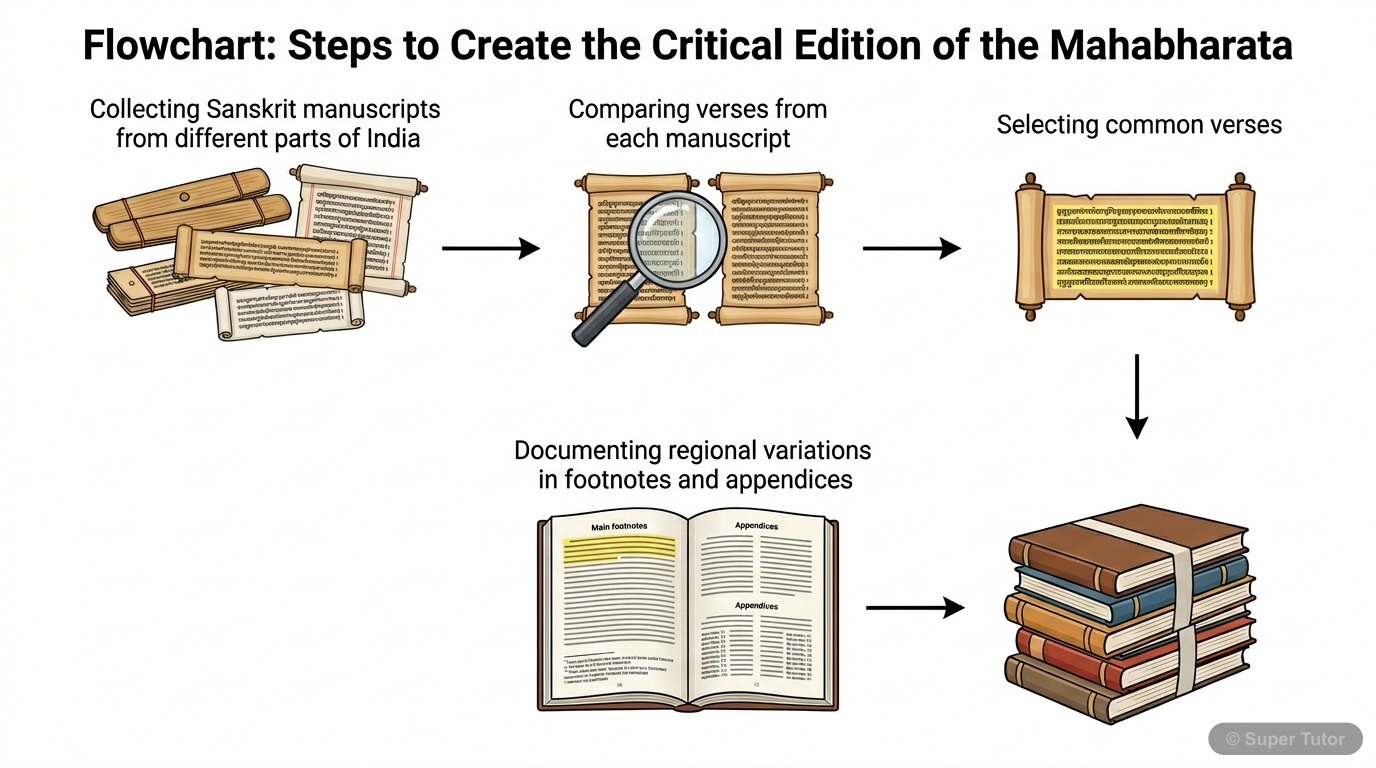
One of 16 illustrations for Kinship, Caste and Class (Early Societies) (c. 600 BCE-600 CE) in Super Tutor — alongside flashcards, concept maps and practice questions.
See them allThe first 3 solutions are open to read. The other 2 are free with a Super Tutor account. Unlock all 5 free in Super Tutor
Answer in 100-150 Words
1Explain why patriliney may have been particularly important among elite families.Show solution
Patriliny was especially important among elite families because property, power and status had to pass on in an orderly way from one generation to the next. Under patrilineal succession, sons inherited the resources of their fathers, including the throne in the case of kings. This helped ruling families keep control over land, wealth and political authority within the same lineage. It also reduced disputes over succession, because the rule preferred descent through males. The Mahabharata reinforced this ideal through the conflict of the Kauravas and Pandavas and the victory of the Pandavas, after which patrilineal succession was proclaimed. For elites, then, patriliny was a way to preserve dynasty, patrimony and legitimacy.
Not sure why a step works? check your working in Super Tutor
2Discuss whether kings in early states were invariably Kshatriyas.Show solution
No, early kings were not invariably Kshatriyas. The texts say that the Shastras prescribed kingship for Kshatriyas, but actual political power was more flexible. The Mauryas were later described in different ways: Buddhist texts called them Kshatriyas, while Brahmanical texts described them as of “low” origin. The Shungas and Kanvas were Brahmanas. The Shakas were regarded as mlechchhas, yet one of them, Rudradaman, was powerful and used Sanskrit. The Satavahana ruler Gotami-puta Siri-Satakani even called himself both a Brahmana and a destroyer of Kshatriya pride. So kingship depended more on support and resources than on birth alone.
Not sure why a step works? check your working in Super Tutor
3Compare and contrast the dharma or norms mentioned in the stories of Drona, Hidimba and Matanga.Show solution
The three stories show different ideas of dharma or proper conduct. In the story of Drona and Ekalavya, dharma is presented as a rigid social order: a Brahmana teacher refuses to teach a forest-dweller, and Ekalavya must surrender his thumb so that Arjuna remains superior. This reflects obedience to authority and the restriction of knowledge by status. In the story of Hidimba, the woman crosses social boundaries by choosing Bhima as husband; the union is accepted only after conditions are set by Yudhishtira. Here the norm is about marriage, kinship and controlled acceptance of a non-Brahmanical union. In Matanga, the story reverses Brahmanical prejudice: a chandala is shown as spiritually superior to the arrogant Brahmana and his son. The norm here is that moral worth, not birth, should matter. Thus, the stories both reflect and question social norms.
Not sure why a step works? check your working in Super Tutor
Free with a Super Tutor account
Sanjaya, convey my respectful greetings to all the Brahmanas and the chief priest of the house of Dhritarashtra. I bow respectfully to teacher Drona ... I hold the feet of our preceptor Kripa ... (and) the chief of the Kurus, the great Bhishma. I bow respectfully to the old king (Dhritarashtra). I greet and ask after the health of his son Duryodhana and his younger brother ... Also greet all the young Kuru warriors who are our brothers, sons and grandsons ... Greet above all him, who is to us like father and mother, the wise Vidura (born of a slave woman) ... I bow to the elderly ladies who are known as our mothers. To those who are our wives you say this, “I hope they are well-protected”... Our daughters-in-law born of good families and mothers of children greet on my behalf. Embrace for me those who are our daughters ... The beautiful, fragrant, well-dressed courtesans of ours you should also greet. Greet the slave women and their children, greet the aged, the maimed (and) the helpless ...
Free with a Super Tutor account
2 more solved questions in Kinship, Caste and Class (Early Societies) (c. 600 BCE-600 CE)
They are free with a Super Tutor account, along with practice quizzes and flashcards for this chapter. Free to start, no card needed.
Frequently Asked Questions
What are the important topics in Kinship, Caste and Class (Early Societies) (c. 600 BCE-600 CE) for CBSE Class 12 History?
Are these NCERT Solutions for Kinship, Caste and Class (Early Societies) (c. 600 BCE-600 CE) free?
How should I revise Kinship, Caste and Class (Early Societies) (c. 600 BCE-600 CE) for the CBSE Class 12 board exam?
Sources & Official References
- NCERT Official — ncert.nic.in
- CBSE Academic — cbseacademic.nic.in
- CBSE Official — cbse.gov.in
- National Education Policy 2020 — education.gov.in
Content is aligned to the official syllabus. Refer to the board website for the latest curriculum.
More resources for Kinship, Caste and Class (Early Societies) (c. 600 BCE-600 CE)
Practice Quiz
Test yourself with a quick quiz
Important Questions
Exam-style questions with answers
Revision Notes
Key points for last-minute revision
Chapter Summary
Understand the chapter at a glance
Concept Maps
See how topics connect
Study Plan
Step-by-step plan for this chapter
Flashcards
Quick-fire cards for active recall
Syllabus
What topics to cover
For serious students
Get the full Kinship, Caste and Class (Early Societies) (c. 600 BCE-600 CE) chapter — start free.
Quizzes, flashcards, an AI doubt solver and a study plan for CBSE Class 12 History. Free to start, no card needed.