Early Childhood Care and Education — Revision Notes
CBSE · Class 12 · Home Science
Early Childhood Care and Education revision notes for CBSE Class 12 Home Science: 4 topics in quick points. Includes Importance of Early Childhood Care.
Interactive on Super Tutor
Studying Early Childhood Care and Education? Get the full interactive chapter.
Quizzes, flashcards, AI doubt-solver and a step-by-step study plan — built for revision notes and more.
Free trial, no card needed.
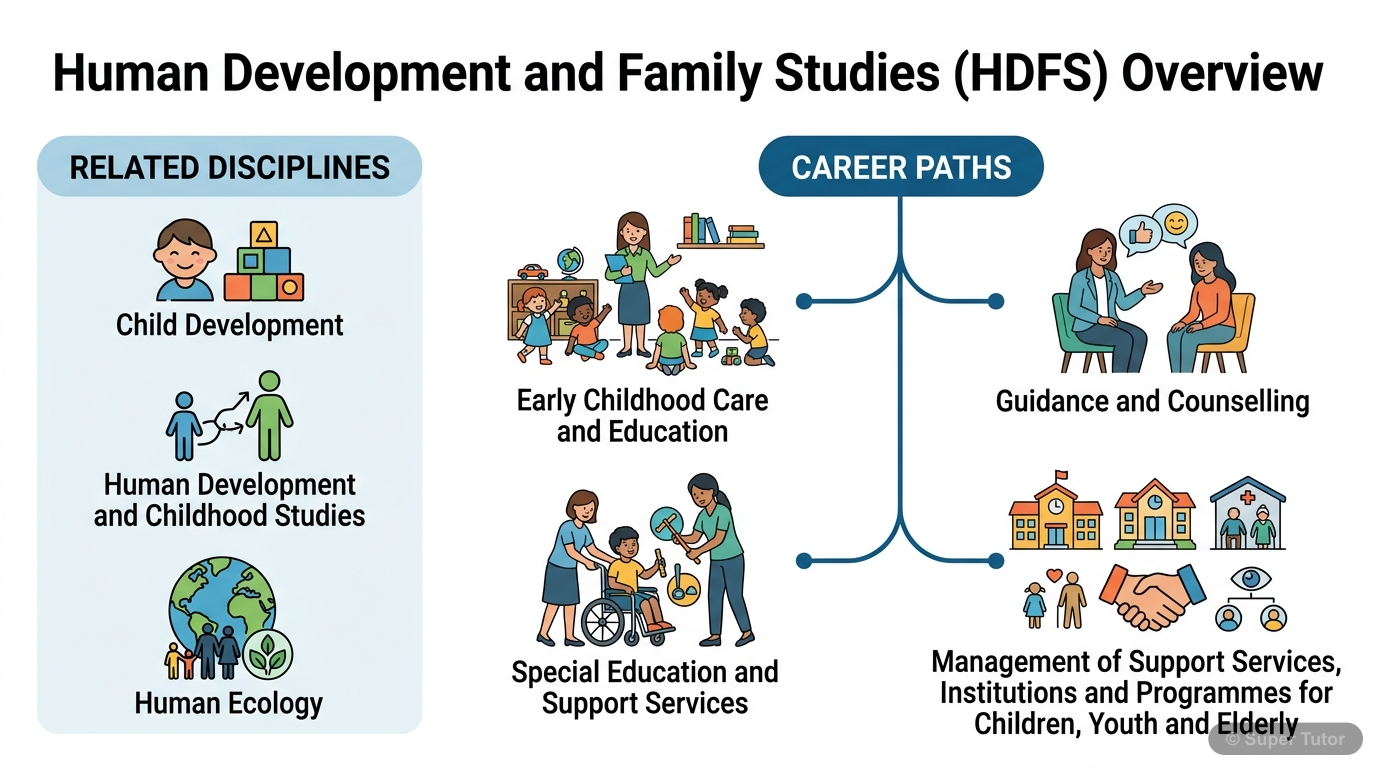
Learn better with visuals Super Tutor pairs illustrations like this with notes and quizzes for Early Childhood Care and Education.
Get startedKey Topics to Revise
1. Importance of Early Childhood Care and Education
- Early childhood is a very important phase because rapid physical, emotional, social, and language development happens during this period.
- A young child learns naturally through daily experiences, observation, interaction, and play.
- Infants develop attachment with family members, especially the mother, father, siblings, and grandparents.
2. Care Arrangements: Home, Crèche, and Day Care
- Traditionally, child care was usually the responsibility of another female member of the household who lived permanently or temporarily with the family.
- The mother is generally, but not always, the primary caregiver.
- When the mother works outside the home, substitute care becomes necessary.
3. Key Concepts of Early Childhood Stage
- Early childhood is commonly divided into two parts: birth to 3 years and 3 to 8 years.
- Infancy is the period of intense dependence on adults for everyday needs.
- During preschool years, children need less physical care supervision than in infancy because they can speak better, eat independently, and control bladder and bowel movements.
4. Principles and Objectives of ECCE
- The basic objectives of ECCE are holistic development of the child, preparation for school, and support services for women and children.
- Holistic development means development in all areas, not only academic learning.
- Preparation for school means helping the child adjust to formal schooling.
Get complete notes with diagrams and examples
Full NotesKey Concepts
Frequently Asked Questions
What are the important topics in Early Childhood Care and Education for CBSE Class 12 Home Science?
How should I revise Early Childhood Care and Education for the CBSE Class 12 board exam?
Sources & Official References
- NCERT Official — ncert.nic.in
- CBSE Academic — cbseacademic.nic.in
- CBSE Official — cbse.gov.in
- National Education Policy 2020 — education.gov.in
Content is aligned to the official syllabus. Refer to the board website for the latest curriculum.
More resources for Early Childhood Care and Education
Practice Quiz
Test yourself with a quick quiz
Important Questions
Exam-style questions with answers
Chapter Summary
Understand the chapter at a glance
Concept Maps
See how topics connect
Study Plan
Step-by-step plan for this chapter
Flashcards
Quick-fire cards for active recall
Syllabus
What topics to cover
NCERT Solutions
Every textbook question solved step by step
For serious students
Get the full Early Childhood Care and Education chapter — start free.
Quizzes, flashcards, an AI doubt solver and a study plan for CBSE Class 12 Home Science. Free to start, no card needed.