Work, Energy, and Simple Machines — Chapter Summary
CBSE · Class 9 · Science
Summary of Work, Energy, and Simple Machines for CBSE Class 9 Science. Part of the CBSE Class 9 Science syllabus.
Interactive on Super Tutor
Studying Work, Energy, and Simple Machines? Get the full interactive chapter.
Quizzes, flashcards, AI doubt-solver and a step-by-step study plan — built for chapter summary and more.
Free trial, no card needed.
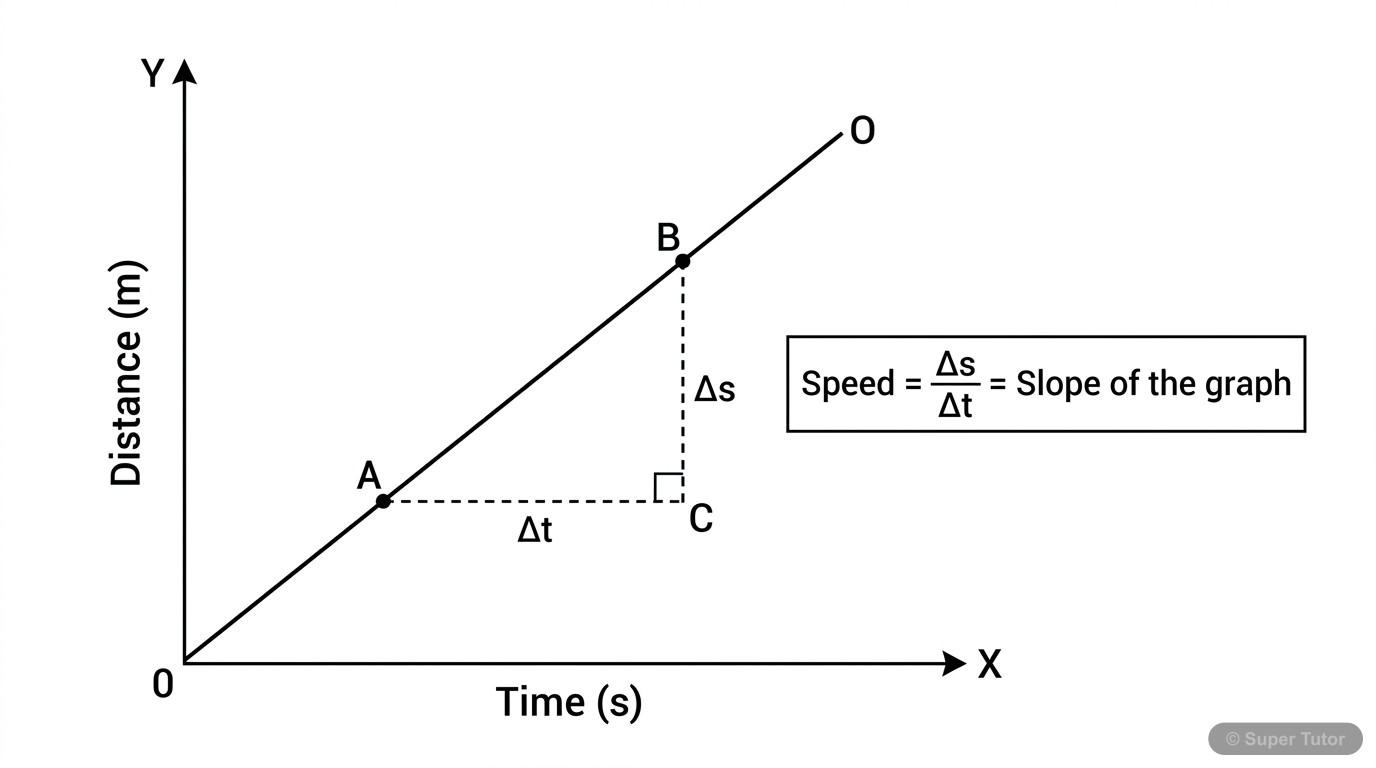
One of 4 illustrations for Work, Energy, and Simple Machines in Super Tutor — alongside flashcards, concept maps and practice questions.
Overview
Work, energy, and power are closely connected ideas that explain motion, force, and usefulness of machines. Work is done only when a force causes displacement in its own direction. Energy is the capacity to do work, and it appears in many forms such as kinetic, potential, thermal, light, sound, elec
Key Concepts
Work done by a constant force
Work done by a constant force is the product of force and displacement in the direction of the force: W = F × s. The SI unit is joule. Work is zero if
Energy is the capacity to do
Energy is the capacity to do work. It can be transferred and changed from one form to another. Mechanical energy is one important form because it is c
Work done on an object equals
Work done on an object equals the change in its energy. This relation applies even when the force is not constant, and work can then be found from the
Kinetic energy is the energy possessed
Kinetic energy is the energy possessed by an object due to its motion. The formula is K = 1/2 mv^2. If velocity doubles, kinetic energy becomes 4 time
Potential energy is stored by
Potential energy is stored by an object due to deformation or by a system due to relative position. Near Earth’s surface, gravitational potential ener
Learning Objectives
- Understand the meaning of work and its SI unit.
- Distinguish between zero, positive, and negative work.
- Relate work done to change in energy.
- Explain kinetic energy and potential energy with formulas.
- Use the idea of conservation of mechanical energy in simple situations.
Frequently Asked Questions
What are the important topics in Work, Energy, and Simple Machines for CBSE Class 9 Science?
How should I revise Work, Energy, and Simple Machines for Class 9 exams?
Sources & Official References
- NCERT Official — ncert.nic.in
- CBSE Academic — cbseacademic.nic.in
- CBSE Official — cbse.gov.in
- National Education Policy 2020 — education.gov.in
Content is aligned to the official syllabus. Refer to the board website for the latest curriculum.
More resources for Work, Energy, and Simple Machines
Practice Quiz
Test yourself with a quick quiz
Important Questions
Exam-style questions with answers
Revision Notes
Key points for last-minute revision
Formula Sheet
The chapter's formulas in one place
Concept Maps
See how topics connect
Study Plan
Step-by-step plan for this chapter
Flashcards
Quick-fire cards for active recall
Syllabus
What topics to cover
NCERT Solutions
Every textbook question solved step by step
For serious students
Get the full Work, Energy, and Simple Machines chapter — start free.
Quizzes, flashcards, an AI doubt solver and a study plan for CBSE Class 9 Science. Free to start, no card needed.