Sense Organs — Flashcards
ICSE · Class 10 · Biology
44 flashcards for Sense Organs (ICSE Class 10 Biology) to test yourself on key terms and facts. Sample: "What are sense organs and why are they"
Interactive on Super Tutor
Studying Sense Organs? Get the full interactive chapter.
Quizzes, flashcards, AI doubt-solver and a step-by-step study plan — built for flashcards and more.
Free trial, no card needed.
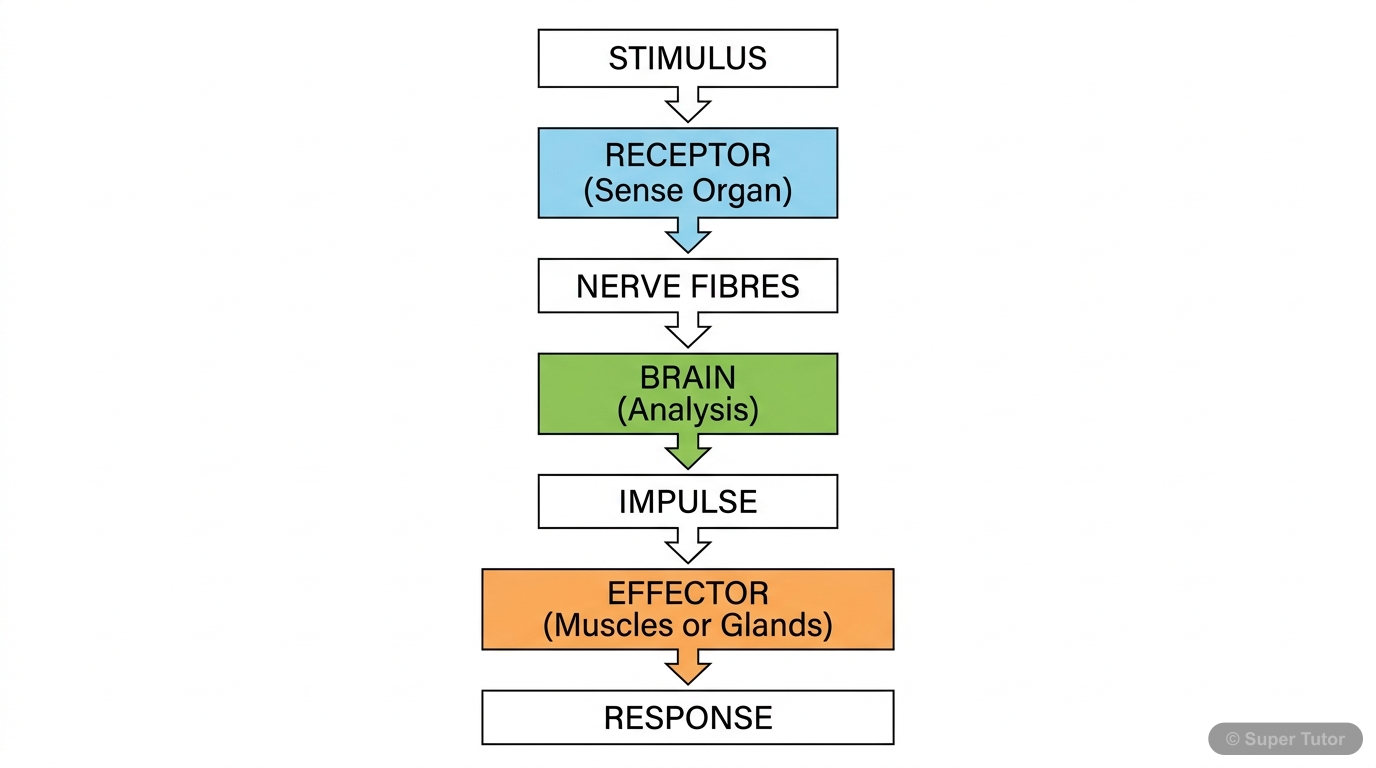
Learn better with visuals Super Tutor pairs illustrations like this with notes and quizzes for Sense Organs.
Get startedWhat are sense organs and why are they important?
Answer
Sense organs receive external or internal changes and are called receptors. They detect stimuli, send information to the brain, and help the body produce a response. Without them, the body cannot sens…
What is a stimulus?
Answer
A stimulus is a change in the environment or within the body which produces response. Examples include light entering the eye, sound reaching the ear, or a change inside the body that needs attention.
What is an effector?
Answer
An effector is a body part whose activity leads to a response. It may be muscles or glands. For example, muscles help in movement, and glands help in secretion.
How do receptors, brain, and effectors work together?
Answer
A receptor detects a stimulus and sends information to the brain through nerve fibres. The brain analyses the information and sends instructions to an effector. The effector then produces the response…
Differentiate between exteroceptors and interoceptors.
Answer
Exteroceptors are receptors present outside the body and detect changes from the external environment. Interoceptors are receptors present within the body and detect internal changes such as pH, oxyge…
What are mechanoreceptors? Give examples.
Answer
Mechanoreceptors detect sound, touch, and other vibrations and pressure. Ears and skin are examples of mechanoreceptors.
What are thermoreceptors?
Answer
Thermoreceptors sense any change in temperature of the environment. Nerve endings in the skin act as thermoreceptors and help the body feel hot and cold.
What are chemoreceptors? Give examples.
Answer
Chemoreceptors sense chemical stimuli. Receptors in the nose and on the tongue are chemoreceptors and help in smell and taste.
+36 more flashcards
Practise AllFrequently Asked Questions
What are the important topics in Sense Organs for ICSE Class 10 Biology?
How many flashcards are available for Sense Organs?
How should I revise Sense Organs for the ICSE Class 10 board exam?
Sources & Official References
Content is aligned to the official syllabus. Refer to the board website for the latest curriculum.
More resources for Sense Organs
Practice Quiz
Test yourself with a quick quiz
Important Questions
Exam-style questions with answers
Revision Notes
Key points for last-minute revision
Chapter Summary
Understand the chapter at a glance
Concept Maps
See how topics connect
Study Plan
Step-by-step plan for this chapter
Syllabus
What topics to cover
For serious students
Get the full Sense Organs chapter — start free.
Quizzes, flashcards, an AI doubt solver and a study plan for ICSE Class 10 Biology. Free to start, no card needed.