Waste Management - Impact of Waste Accumulation — Practice Quiz
ICSE · Class 10 · Geography
Try a 4-question quiz on Waste Management - Impact of Waste Accumulation for ICSE Class 10 Geography: tap an answer to check it and see why.
Interactive on Super Tutor
Studying Waste Management - Impact of Waste Accumulation? Get the full interactive chapter.
Quizzes, flashcards, AI doubt-solver and a step-by-step study plan — built for practice quiz and more.
Free trial, no card needed.
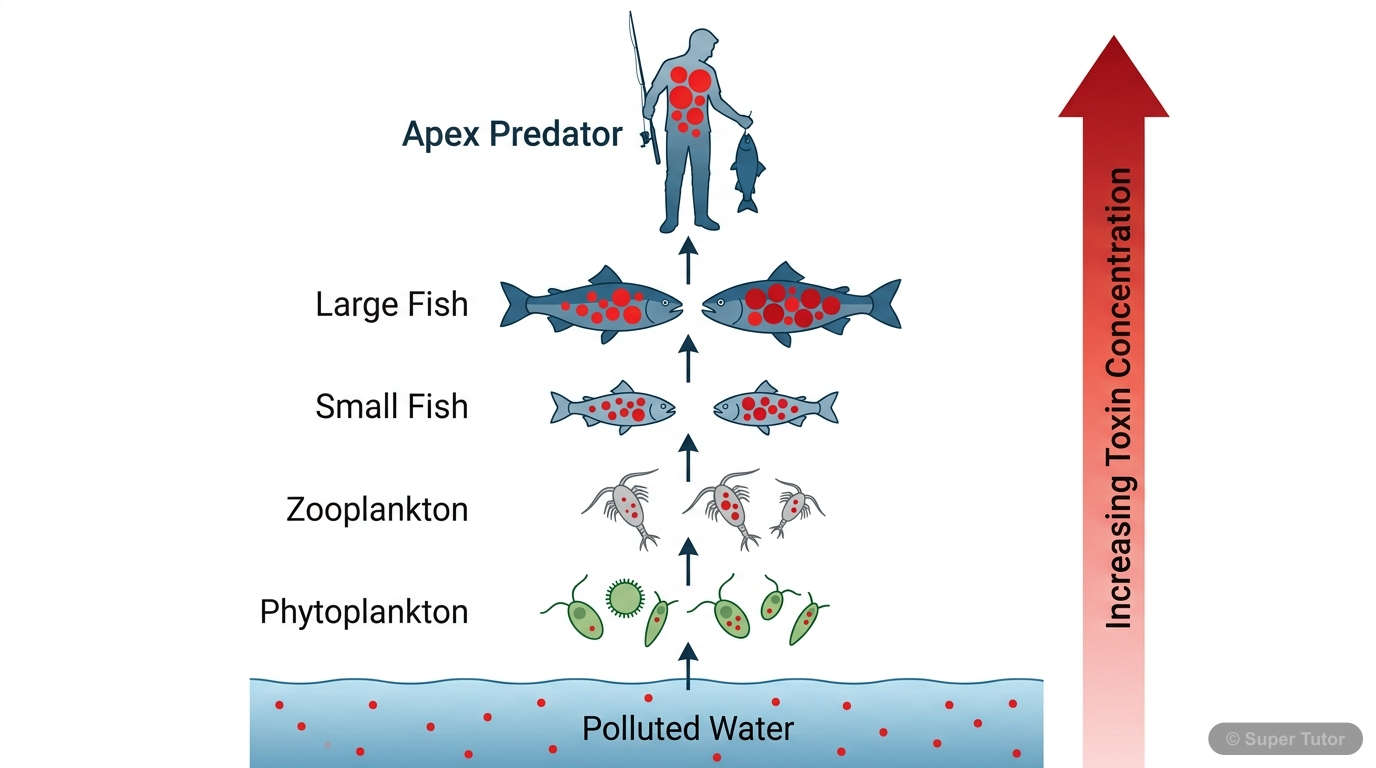
One of 4 illustrations for Waste Management - Impact of Waste Accumulation in Super Tutor — alongside flashcards, concept maps and practice questions.
See them allQuick Quiz: Waste Management - Impact of Waste Accumulation
0/4Tap an answer to check it instantly. No sign-up needed for these 4.
What is waste?
What does the '3 Rs' in waste management stand for?
Which disease was caused by mercury contamination in water in Japan?
What is eutrophication?
Sample Questions
Which of the following are primary air pollutants?
Show answer
Carbon monoxide, Sulphur dioxide, Nitrogen oxide, Suspended Particulate Matter
Primary pollutants are directly emitted into the air. These include carbon monoxide, sulphur dioxide, nitrogen oxide, and SPM. Ozone is a secondary pollutant formed from reactions between primary pollutants.
Acid rain is harmful to the environment.
Show answer
True
Acid rain is indeed harmful as it damages forests, kills fish, harms animals and humans, damages statues and buildings, and causes crop destruction and respiratory problems.
Which of the following contribute to global warming?
Show answer
Carbon dioxide, Methane, Chlorofluorocarbons (CFCs)
Global warming is caused by greenhouse gases including CO2 from burning fossil fuels, methane from industries, and CFCs from refrigerators. Nitrogen is not a greenhouse gas.
E-waste refers to:
Show answer
Electronic waste
E-waste refers to Electronic waste, which describes discarded electrical and electronic equipment. It contains harmful materials like lead, cadmium, and chromium that can be hazardous to health.
+39 more questions on Waste Management - Impact of Waste Accumulation (ICSE Class 10 Geography)
Practise AllFrequently Asked Questions
What are the important topics in Waste Management - Impact of Waste Accumulation for ICSE Class 10 Geography?
How many practice questions are there for Waste Management - Impact of Waste Accumulation?
Sources & Official References
Content is aligned to the official syllabus. Refer to the board website for the latest curriculum.
More resources for Waste Management - Impact of Waste Accumulation
Important Questions
Exam-style questions with answers
Revision Notes
Key points for last-minute revision
Chapter Summary
Understand the chapter at a glance
Concept Maps
See how topics connect
Study Plan
Step-by-step plan for this chapter
Flashcards
Quick-fire cards for active recall
Syllabus
What topics to cover
For serious students
Get the full Waste Management - Impact of Waste Accumulation chapter — start free.
Quizzes, flashcards, an AI doubt solver and a study plan for ICSE Class 10 Geography. Free to start, no card needed.