Chapter 16 of 17
Revision Notes
Waste Management - Impact of Waste Accumulation — Revision Notes
ICSE · Class 10 · Geography
Waste Management - Impact of Waste Accumulation revision notes for ICSE Class 10 Geography: 4 topics in quick points.
43 questions40 flashcards5 concepts
Interactive on Super Tutor
Studying Waste Management - Impact of Waste Accumulation? Get the full interactive chapter.
Quizzes, flashcards, AI doubt-solver and a step-by-step study plan — built for revision notes and more.
Free trial, no card needed.
Super Tutor
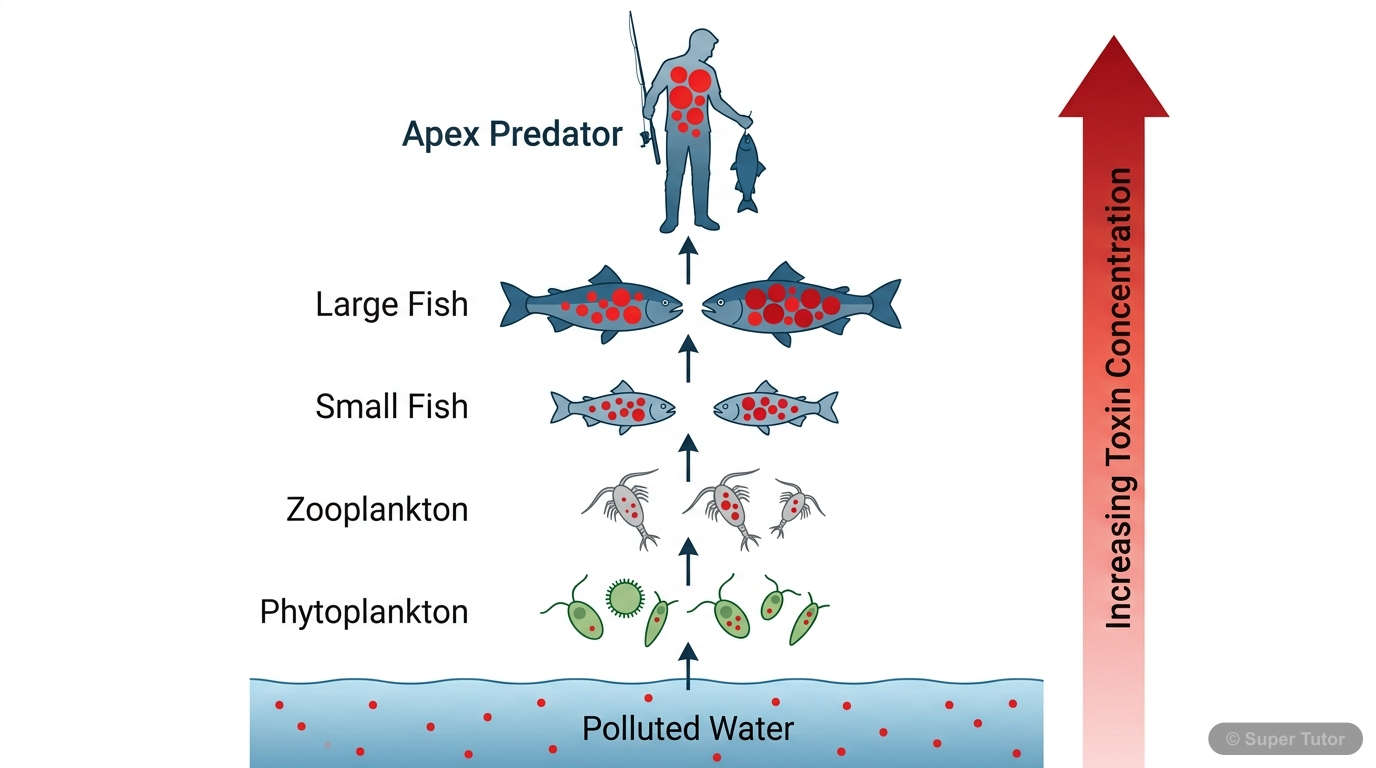
One of 4 illustrations for Waste Management - Impact of Waste Accumulation in Super Tutor — alongside flashcards, concept maps and practice questions.
See them allKey Topics to Revise
1
1. Waste, Waste Accumulation, and Landscape Spoilage
- Waste is useless or unwanted material that has no further use and is thrown away.
- Natural waste in the biosphere is recycled automatically by absorption into soil, consumption, or return to the atmosphere as gas.
- Human-generated waste increases with extraction of raw materials, processing, consumption, and other activities.
2
2. Pollution and Major Pollutants
- Pollutants are substances causing pollution.
- Air, water, and soil are all affected by waste accumulation.
- Ten major pollutants include Carbon dioxide, DDT, Lead, Carbon monoxide, Sulphur dioxide, Oil, Oxides of Nitrogen, Radiation, Mercury, and Phosphate.
3
3. Water Pollution, Eutrophication, Oil Spills, and Minamata Disease
- Water pollution happens when waste enters ponds, lakes, rivers, groundwater, and other water bodies.
- Sewage, eutrophication, and oil spills are examples of water pollution.
- Eutrophication is the depletion of oxygen from water bodies occurring naturally or due to human activities.
4
4. Soil Pollution and Biomagnification
- Soil pollution results from disposal of solid and semi-solid wastes in agriculture, industry, and sanitary habits.
- Soil pollutants include fertilizers and pesticides, which remain in soil for a long time and contaminate topsoil and groundwater.
- The problem of land pollution differs from water and air pollution because pollutants remain in place for a longer time.
Get complete notes with diagrams and examples
Full NotesKey Concepts
Waste generation increases with human activityHeaps of rubbishSubstances causing pollution are called pollutantsAir pollution happens when harmful chemicalsWaste entering water bodies changes
Frequently Asked Questions
What are the important topics in Waste Management - Impact of Waste Accumulation for ICSE Class 10 Geography?
Key topics in Waste Management - Impact of Waste Accumulation include Waste, Waste Accumulation, and Landscape Spoilage, Pollution and Major Pollutants, Water Pollution, Eutrophication, Oil Spills, and Minamata Disease, Soil Pollution and Biomagnification. Study these first, then practise questions on each for the ICSE Class 10 board exam.
How should I revise Waste Management - Impact of Waste Accumulation for the ICSE Class 10 board exam?
Learn the core ideas first, then work through the 43 practice questions on Waste Management - Impact of Waste Accumulation. Revise definitions regularly and use flashcards for quick recall before the exam.
Sources & Official References
Content is aligned to the official syllabus. Refer to the board website for the latest curriculum.
More resources for Waste Management - Impact of Waste Accumulation
For serious students
Get the full Waste Management - Impact of Waste Accumulation chapter — start free.
Quizzes, flashcards, an AI doubt solver and a study plan for ICSE Class 10 Geography. Free to start, no card needed.