Waste Management - Impact of Waste Accumulation — Chapter Summary
ICSE · Class 10 · Geography
Summary of Waste Management - Impact of Waste Accumulation for ICSE Class 10 Geography. Part of the ICSE Class 10 Geography syllabus.
Interactive on Super Tutor
Studying Waste Management - Impact of Waste Accumulation? Get the full interactive chapter.
Quizzes, flashcards, AI doubt-solver and a step-by-step study plan — built for chapter summary and more.
Free trial, no card needed.
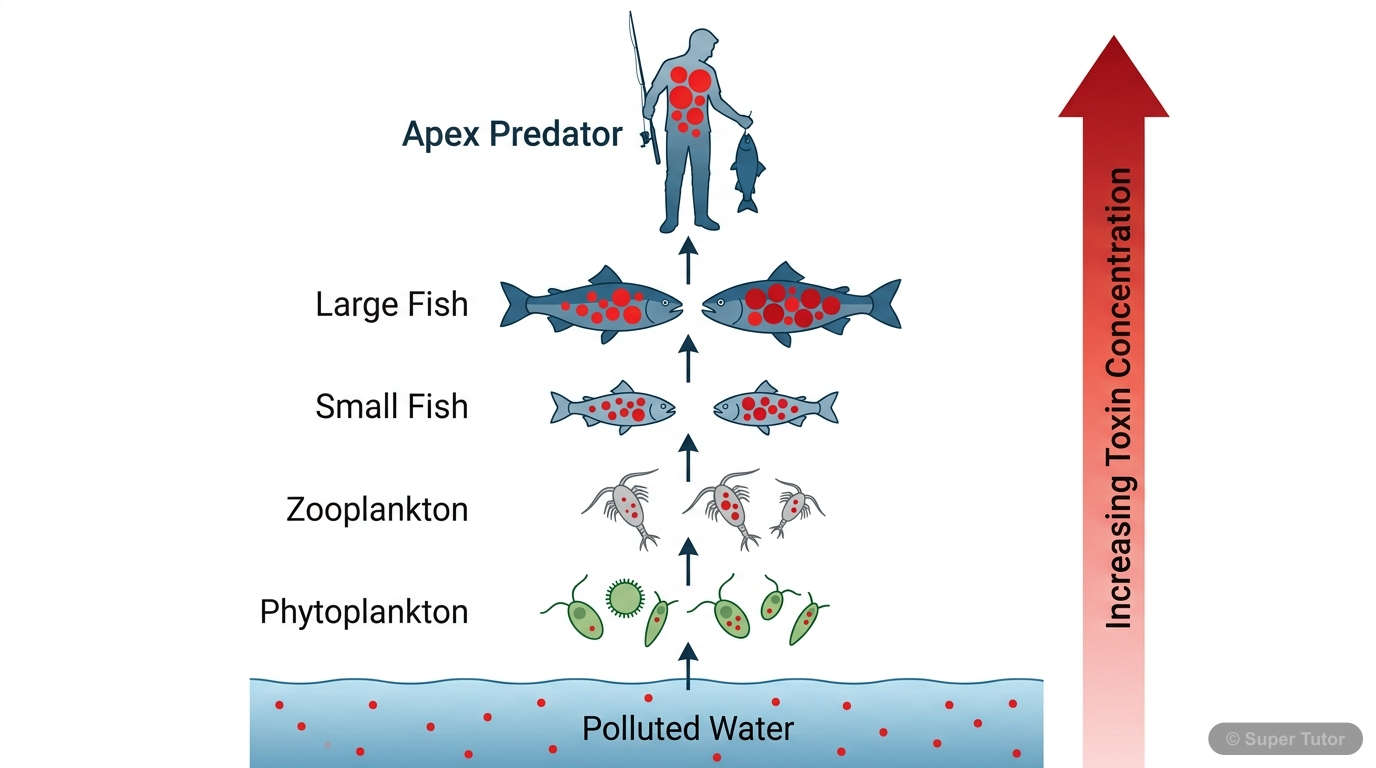
One of 4 illustrations for Waste Management - Impact of Waste Accumulation in Super Tutor — alongside flashcards, concept maps and practice questions.
See them allOverview
Waste is useless or unwanted material that has no further use and so it is thrown away. In nature, waste from living organisms is usually recycled automatically by absorption into soil, consumption, or return to the atmosphere as gas. Human activities, however, produce large amounts of solid, liquid
Key Concepts
Waste generation increases with human activity
Waste generation increases with human activity, urban growth, industrial development, and population rise. When waste is not managed properly, it pile
Heaps of rubbish
Heaps of rubbish, garbage, and trash spoil the beauty of land and create breeding grounds for insects, flies, and mosquitoes. Toxic industrial, mining
Substances causing pollution are called pollutants
Substances causing pollution are called pollutants. They may be solid, liquid, or gaseous and can harm humans and the natural environment.
Air pollution happens when harmful chemicals
Air pollution happens when harmful chemicals, particles, or gases enter the atmosphere. Primary pollutants are directly released, while secondary poll
Waste entering water bodies changes
Waste entering water bodies changes the quality of water and harms living organisms. Sewage, eutrophication, and oil spills are examples of water poll
Learning Objectives
- Understand the meaning and causes of waste accumulation
- Explain how improper disposal spoils landscapes and damages the environment
- Identify major types of pollution caused by waste
- Describe health hazards caused by waste and polluted water
- Explain the effects of waste on terrestrial life and aquatic life
Frequently Asked Questions
What are the important topics in Waste Management - Impact of Waste Accumulation for ICSE Class 10 Geography?
How should I revise Waste Management - Impact of Waste Accumulation for the ICSE Class 10 board exam?
Sources & Official References
Content is aligned to the official syllabus. Refer to the board website for the latest curriculum.
More resources for Waste Management - Impact of Waste Accumulation
For serious students
Get the full Waste Management - Impact of Waste Accumulation chapter — start free.
Quizzes, flashcards, an AI doubt solver and a study plan for ICSE Class 10 Geography. Free to start, no card needed.