Waste Management - Impact of Waste Accumulation — Syllabus
ICSE · Class 10 · Geography
What Waste Management - Impact of Waste Accumulation covers in ICSE Class 10 Geography: 4 topics, for the 2026-27 session.
Interactive on Super Tutor
Studying Waste Management - Impact of Waste Accumulation? Get the full interactive chapter.
Quizzes, flashcards, AI doubt-solver and a step-by-step study plan — built for syllabus and more.
Free trial, no card needed.
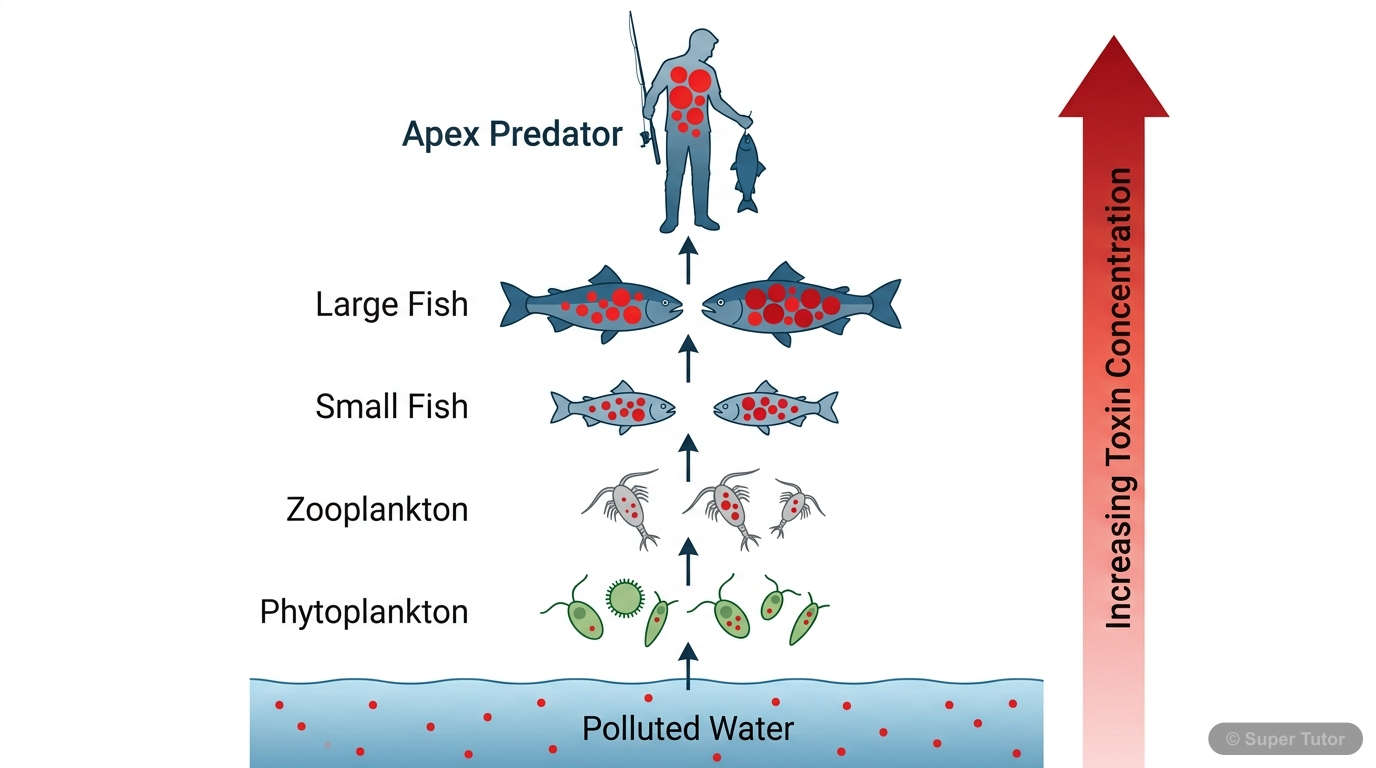
One of 4 illustrations for Waste Management - Impact of Waste Accumulation in Super Tutor — alongside flashcards, concept maps and practice questions.
See them allTopics in Waste Management - Impact of Waste Accumulation
1. Waste, Waste Accumulation, and Landscape Spoilage
- Waste is useless or unwanted material that has no further use and is thrown away.
- Natural waste in the biosphere is recycled automatically by absorption into soil, consumption, or return to the atmosphere as gas.
- Human-generated waste increases with extraction of raw materials, processing, consumption, and other activities.
2. Pollution and Major Pollutants
- Pollutants are substances causing pollution.
- Air, water, and soil are all affected by waste accumulation.
- Ten major pollutants include Carbon dioxide, DDT, Lead, Carbon monoxide, Sulphur dioxide, Oil, Oxides of Nitrogen, Radiation, Mercury, and Phosphate.
3. Water Pollution, Eutrophication, Oil Spills, and Minamata Disease
- Water pollution happens when waste enters ponds, lakes, rivers, groundwater, and other water bodies.
- Sewage, eutrophication, and oil spills are examples of water pollution.
- Eutrophication is the depletion of oxygen from water bodies occurring naturally or due to human activities.
4. Soil Pollution and Biomagnification
- Soil pollution results from disposal of solid and semi-solid wastes in agriculture, industry, and sanitary habits.
- Soil pollutants include fertilizers and pesticides, which remain in soil for a long time and contaminate topsoil and groundwater.
- The problem of land pollution differs from water and air pollution because pollutants remain in place for a longer time.
Key Concepts
Central concept: Waste accumulation and its impact on landscape, pollution, health, living organisms, and the need for effective waste management
Work through every topic in Waste Management - Impact of Waste Accumulation with notes and quizzes
Start This ChapterFrequently Asked Questions
What are the important topics in Waste Management - Impact of Waste Accumulation for ICSE Class 10 Geography?
How should I revise Waste Management - Impact of Waste Accumulation for the ICSE Class 10 board exam?
Sources & Official References
Content is aligned to the official syllabus. Refer to the board website for the latest curriculum.
More resources for Waste Management - Impact of Waste Accumulation
Practice Quiz
Test yourself with a quick quiz
Important Questions
Exam-style questions with answers
Revision Notes
Key points for last-minute revision
Chapter Summary
Understand the chapter at a glance
Concept Maps
See how topics connect
Study Plan
Step-by-step plan for this chapter
Flashcards
Quick-fire cards for active recall
For serious students
Get the full Waste Management - Impact of Waste Accumulation chapter — start free.
Quizzes, flashcards, an AI doubt solver and a study plan for ICSE Class 10 Geography. Free to start, no card needed.