Waste Management - Impact of Waste Accumulation — Flashcards
ICSE · Class 10 · Geography
40 flashcards for Waste Management - Impact of Waste Accumulation (ICSE Class 10 Geography) to test yourself on key terms and facts.
Interactive on Super Tutor
Studying Waste Management - Impact of Waste Accumulation? Get the full interactive chapter.
Quizzes, flashcards, AI doubt-solver and a step-by-step study plan — built for flashcards and more.
Free trial, no card needed.
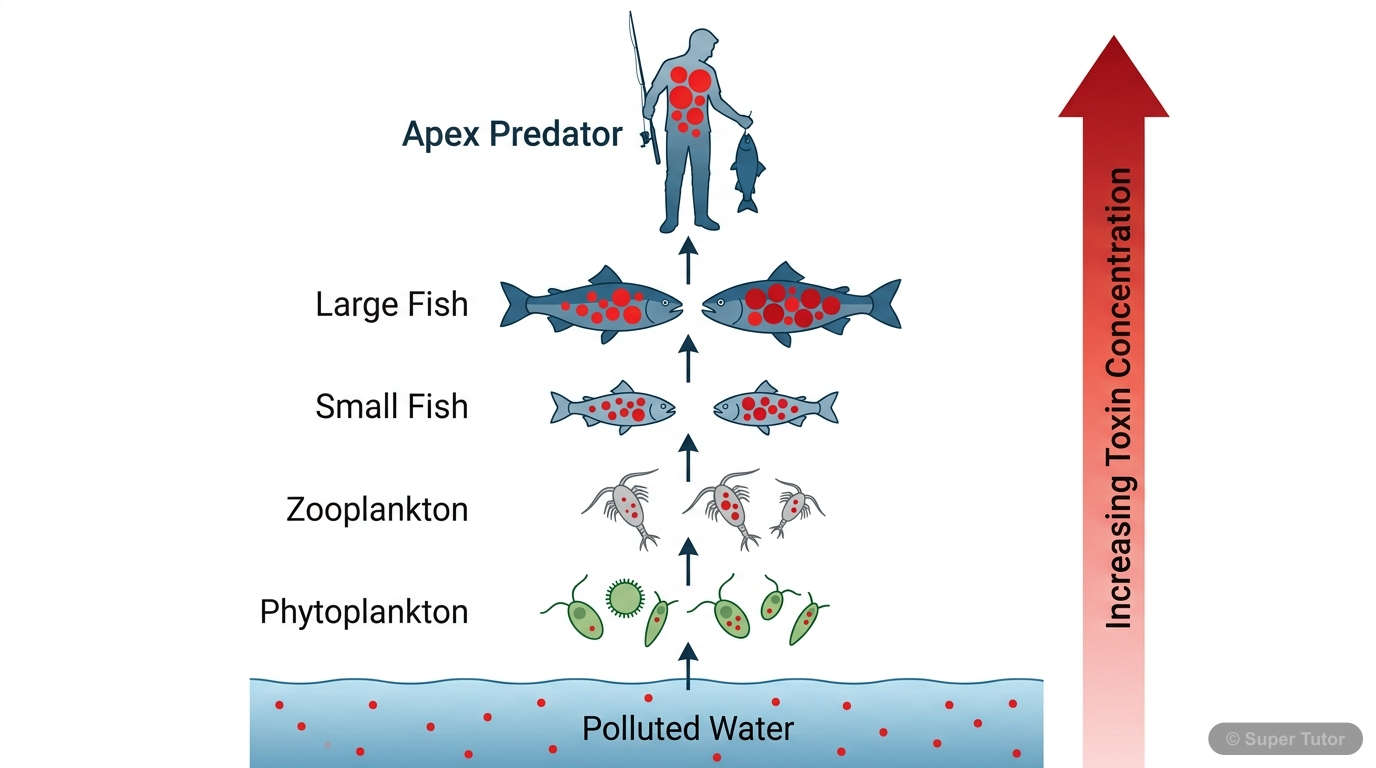
One of 4 illustrations for Waste Management - Impact of Waste Accumulation in Super Tutor — alongside flashcards, concept maps and practice questions.
See them allWhat is waste?
Answer
Waste is useless or unwanted material that has no further use and is thrown away. It may also be called trash, rubbish, refuse, garbage, or junk. In daily life, waste comes from homes, farms, industri…
How is natural waste in the biosphere different from human-made waste?
Answer
Natural waste from plants, animals, and insects is automatically recycled by nature. It is absorbed by soil, consumed, or returned to the atmosphere as gas. Human-made waste often accumulates faster a…
What is spoilage of landscape?
Answer
Spoilage of landscape means heaps of rubbish, garbage, and trash left uncared for in urban areas. It spoils the beauty of the land and damages the environment. Such waste becomes a breeding ground for…
Why does waste accumulation become a major problem in cities?
Answer
Cities produce large amounts of waste because population, industry, and consumption are increasing. Open dumping, lack of proper disposal space, and poorly placed dustbins lead to garbage accumulation…
What is a pollutant? Give examples from air pollution.
Answer
A pollutant is a substance that causes pollution. Examples of air pollutants include carbon monoxide from motor vehicles, sulphur dioxide from factories, and ash from volcanic eruption. These substanc…
What are primary pollutants?
Answer
Primary pollutants are pollutants that are emitted directly into the air. Examples include carbon monoxide, sulphur dioxide, nitrogen oxide, and suspended particulate matter. They enter the atmosphere…
What is a secondary pollutant?
Answer
A secondary pollutant is formed when primary pollutants react with other substances in the atmosphere. Ozone is an example. It is harmful in the lower atmosphere, where it contributes to air pollution…
What are the most common hazards of air pollution?
Answer
The most common hazards of air pollution are acid rain, global warming, ozone depletion, and smog formation. These hazards damage the environment, human health, crops, forests, and buildings.
+32 more flashcards
Practise AllFrequently Asked Questions
What are the important topics in Waste Management - Impact of Waste Accumulation for ICSE Class 10 Geography?
How many flashcards are available for Waste Management - Impact of Waste Accumulation?
How should I revise Waste Management - Impact of Waste Accumulation for the ICSE Class 10 board exam?
Sources & Official References
Content is aligned to the official syllabus. Refer to the board website for the latest curriculum.
More resources for Waste Management - Impact of Waste Accumulation
Practice Quiz
Test yourself with a quick quiz
Important Questions
Exam-style questions with answers
Revision Notes
Key points for last-minute revision
Chapter Summary
Understand the chapter at a glance
Concept Maps
See how topics connect
Study Plan
Step-by-step plan for this chapter
Syllabus
What topics to cover
For serious students
Get the full Waste Management - Impact of Waste Accumulation chapter — start free.
Quizzes, flashcards, an AI doubt solver and a study plan for ICSE Class 10 Geography. Free to start, no card needed.