Sexual Reproduction in Flowering Plants — Syllabus
ICSE · Class 12 · Biology
What Sexual Reproduction in Flowering Plants covers in ICSE Class 12 Biology: 4 topics, for the 2026-27 session.
Interactive on Super Tutor
Studying Sexual Reproduction in Flowering Plants? Get the full interactive chapter.
Quizzes, flashcards, AI doubt-solver and a step-by-step study plan — built for syllabus and more.
Free trial, no card needed.
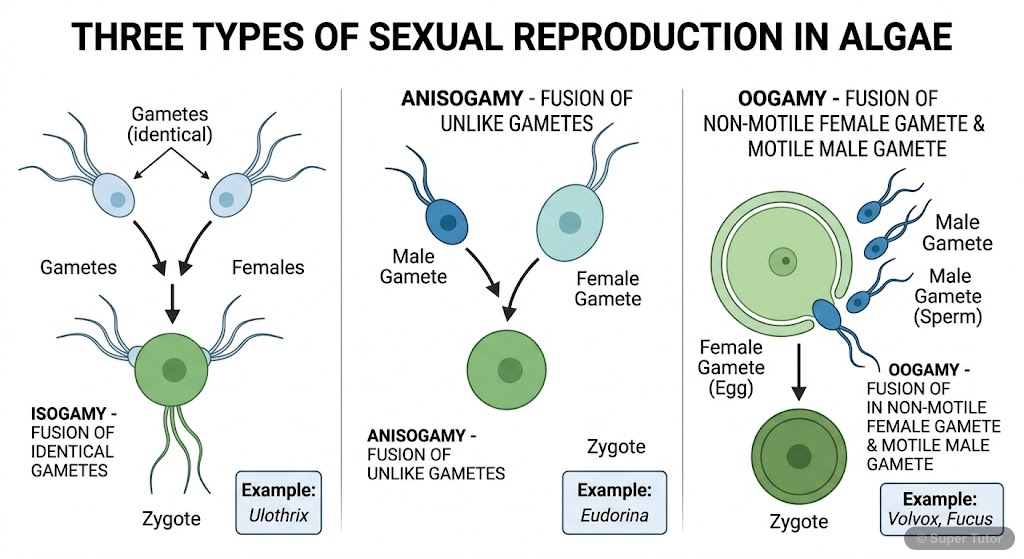
One of 20 illustrations for Sexual Reproduction in Flowering Plants in Super Tutor — alongside flashcards, concept maps and practice questions.
Topics in Sexual Reproduction in Flowering Plants
1. Flower Structure and the Life Cycle of Angiosperms
- A flower is a compressed shoot with sepals, petals, stamens and carpels arranged on the thalamus.
- The outer two whorls are accessory whorls: calyx and corolla.
- The inner two whorls are essential whorls: androecium and gynoecium.
2. Microsporogenesis and Pollen Grain Structure
- Microsporogenesis is the formation of microspores from microspore mother cells by meiosis.
- Each microspore mother cell divides meiotically to form four haploid microspores.
- The callose layer binding the tetrad is dissolved by callase secreted by the tapetum.
3. Development of Male Gametophyte
- The pollen grain is the male gametophyte and develops in two stages: pre-pollination and post-pollination.
- In pre-pollination development, the nucleus divides mitotically to form a larger vegetative cell and a smaller generative cell.
- The vegetative cell has abundant food reserve and a large nucleus called vegetative nucleus or tube nucleus.
4. Ovule Structure and Female Gametophyte
- The ovule is the megasporangium borne on the placenta.
- The ovule contains nucellus, integument or integuments, micropyle, funicle, hilum and chalaza.
- The nucellus is a massive parenchymatous body and the site of megasporogenesis.
Key Concepts
Central concept: Sexual reproduction in angiosperms through flower structure, gametophyte development, pollination, fertilization, and seed and fruit formation
Work through every topic in Sexual Reproduction in Flowering Plants with notes and quizzes
Start This ChapterFrequently Asked Questions
What are the important topics in Sexual Reproduction in Flowering Plants for ICSE Class 12 Biology?
How should I revise Sexual Reproduction in Flowering Plants for the ICSE Class 12 board exam?
Sources & Official References
Content is aligned to the official syllabus. Refer to the board website for the latest curriculum.
More resources for Sexual Reproduction in Flowering Plants
Practice Quiz
Test yourself with a quick quiz
Important Questions
Exam-style questions with answers
Revision Notes
Key points for last-minute revision
Formula Sheet
The chapter's formulas in one place
Chapter Summary
Understand the chapter at a glance
Concept Maps
See how topics connect
Study Plan
Step-by-step plan for this chapter
Flashcards
Quick-fire cards for active recall
For serious students
Get the full Sexual Reproduction in Flowering Plants chapter — start free.
Quizzes, flashcards, an AI doubt solver and a study plan for ICSE Class 12 Biology. Free to start, no card needed.