Sexual Reproduction in Flowering Plants — Flashcards
ICSE · Class 12 · Biology
52 flashcards for Sexual Reproduction in Flowering Plants (ICSE Class 12 Biology) to test yourself on key terms and facts.
Interactive on Super Tutor
Studying Sexual Reproduction in Flowering Plants? Get the full interactive chapter.
Quizzes, flashcards, AI doubt-solver and a step-by-step study plan — built for flashcards and more.
Free trial, no card needed.
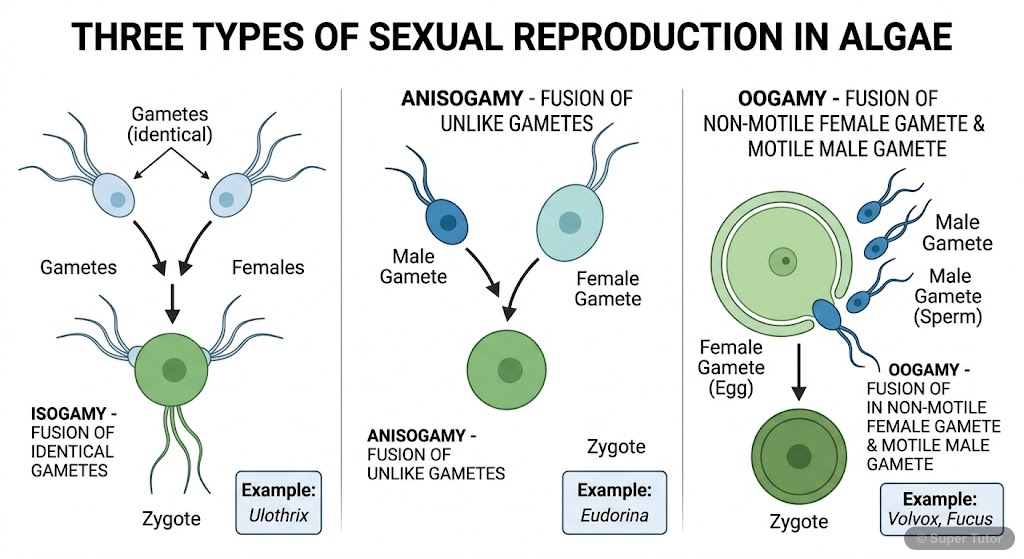
One of 20 illustrations for Sexual Reproduction in Flowering Plants in Super Tutor — alongside flashcards, concept maps and practice questions.
What are the two phases in the life cycle of angiosperms?
Answer
Angiosperms show alternation of generations between a diploid sporophytic phase and a haploid gametophytic phase. The sporophytic phase is (2n) and develops from the diploid zygote. The gametophytic p…
Why are flowers called the reproductive structures of flowering plants?
Answer
Flowers carry the male and female reproductive organs of angiosperms. Stamens produce pollen grains, and carpels contain ovules. Because pollination, fertilization, seed formation, and fruit formation…
What is a typical stamen made of?
Answer
A typical stamen has three parts: filament, anther, and connective. The filament is the stalk, the anther is the fertile terminal part, and the connective is the tissue joining the two anther lobes.
What is a dithecous anther?
Answer
A dithecous anther has two lobes and four pollen sacs, so it is also called tetrasporangiate. It is the common type of anther in flowering plants. Hibiscus and Euphorbia have monothecous anthers inste…
What is the structure of the microsporangium wall?
Answer
The wall of the microsporangium has four layers: epidermis, endothecium, middle layers, and tapetum. The tapetum is the innermost layer, dense in cytoplasm, and nourishes developing microspores.
What is the role of the tapetum in pollen development?
Answer
The tapetum nourishes sporogenous cells, microspore mother cells, and growing pollen grains. It secretes IAA, which is stored in pollen grains for early growth. It also helps form pollenkitt and tryph…
How does microsporogenesis occur?
Answer
Microsporogenesis is the formation of microspores from microspore mother cells by meiosis. Each microspore mother cell divides meiotically to form four haploid microspores. These microspores may remai…
What dissolves the callose wall around a microspore tetrad?
Answer
The callose layer binding the microspore tetrad is dissolved by callase, an enzyme secreted by the tapetum. After this, the microspores separate from one another and develop into pollen grains.
+44 more flashcards
Practise AllFrequently Asked Questions
What are the important topics in Sexual Reproduction in Flowering Plants for ICSE Class 12 Biology?
How many flashcards are available for Sexual Reproduction in Flowering Plants?
How should I revise Sexual Reproduction in Flowering Plants for the ICSE Class 12 board exam?
Sources & Official References
Content is aligned to the official syllabus. Refer to the board website for the latest curriculum.
More resources for Sexual Reproduction in Flowering Plants
Practice Quiz
Test yourself with a quick quiz
Important Questions
Exam-style questions with answers
Revision Notes
Key points for last-minute revision
Formula Sheet
The chapter's formulas in one place
Chapter Summary
Understand the chapter at a glance
Concept Maps
See how topics connect
Study Plan
Step-by-step plan for this chapter
Syllabus
What topics to cover
For serious students
Get the full Sexual Reproduction in Flowering Plants chapter — start free.
Quizzes, flashcards, an AI doubt solver and a study plan for ICSE Class 12 Biology. Free to start, no card needed.