Pollution - Preventive Measures — Flashcards
ICSE · Class 9 · Geography
30 flashcards for Pollution - Preventive Measures (ICSE Class 9 Geography) to test yourself on key terms and facts. Sample: "What is pollution?"
Interactive on Super Tutor
Studying Pollution - Preventive Measures? Get the full interactive chapter.
Quizzes, flashcards, AI doubt-solver and a step-by-step study plan — built for flashcards and more.
Free trial, no card needed.
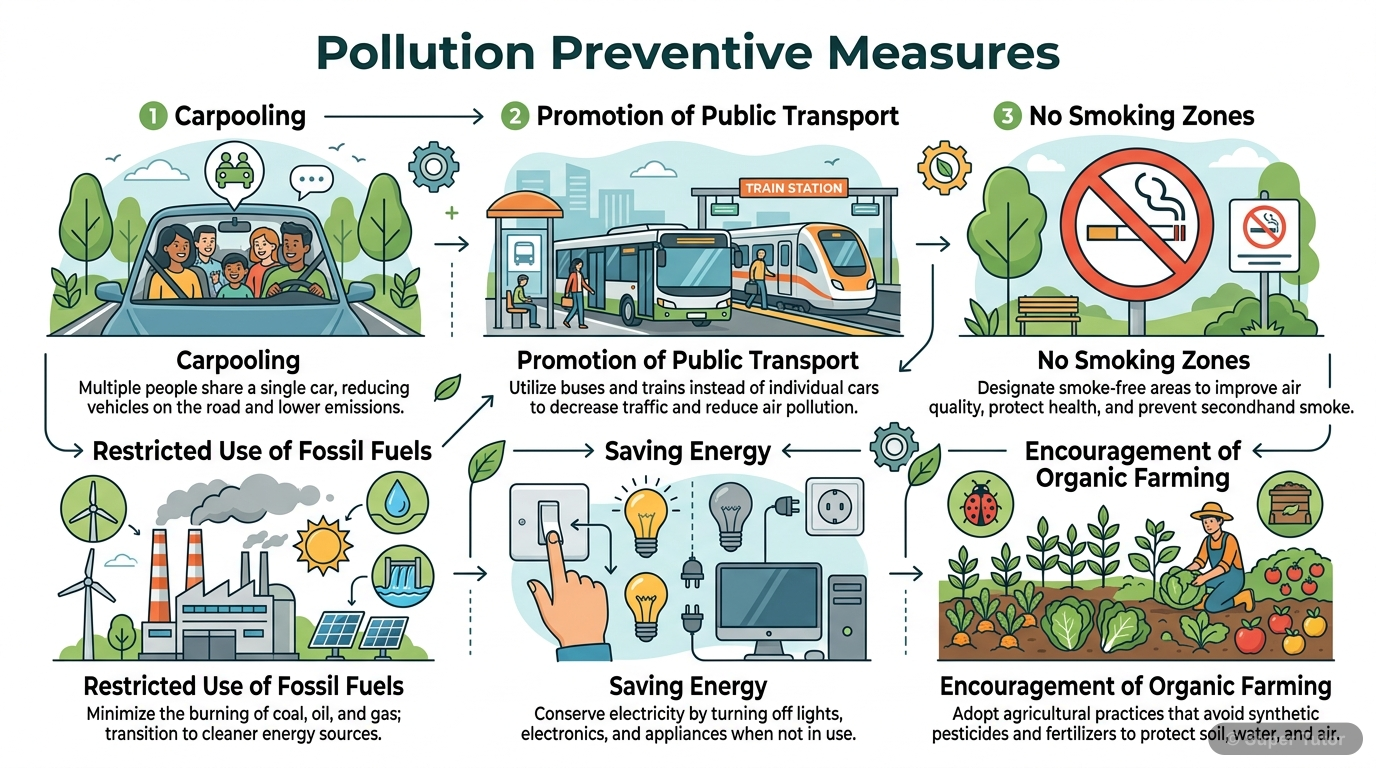
Learn better with visuals Super Tutor pairs illustrations like this with notes and quizzes for Pollution - Preventive Measures.
What is pollution?
Answer
Pollution is the contamination of air, soil, or water by the discharge of harmful substances. It harms living things and disturbs the environment.
What is pollution prevention?
Answer
Pollution prevention is the reduction or elimination of pollution at the source. It is better to stop pollution before it is created than to clean it later.
How does using raw materials more efficiently help prevent pollution?
Answer
Efficient use of raw materials reduces waste, saves resources, and lowers the amount of harmful substances produced. This helps protect human health and the environment.
What is carpooling?
Answer
Carpooling is the sharing of car journeys so that more than one person travels in a car. It is also called car sharing, ride sharing, lift sharing, or covoiturage. It helps reduce travel costs and pol…
How does carpooling reduce pollution and traffic problems?
Answer
Carpooling reduces carbon emissions, traffic congestion, and the need for parking spaces. It also lowers each person's costs, tolls, and driving stress.
When is carpooling especially useful?
Answer
Carpooling is more useful for people who work in places with many jobs nearby and for those who live in areas with high residential density.
What is public transport?
Answer
Public transport includes trains, trams, and buses. It offers an alternative to private vehicles and helps reduce road traffic and air pollution.
Why is promotion of public transport considered a preventive measure against pollution?
Answer
Public transport can relieve traffic congestion and reduce air pollution from road transport. Encouraging it supports a more sustainable transport system.
+22 more flashcards
Practise AllFrequently Asked Questions
What are the important topics in Pollution - Preventive Measures for ICSE Class 9 Geography?
How many flashcards are available for Pollution - Preventive Measures?
How should I revise Pollution - Preventive Measures for Class 9 exams?
Sources & Official References
Content is aligned to the official syllabus. Refer to the board website for the latest curriculum.
More resources for Pollution - Preventive Measures
Practice Quiz
Test yourself with a quick quiz
Important Questions
Exam-style questions with answers
Revision Notes
Key points for last-minute revision
Chapter Summary
Understand the chapter at a glance
Concept Maps
See how topics connect
Study Plan
Step-by-step plan for this chapter
Syllabus
What topics to cover
For serious students
Get the full Pollution - Preventive Measures chapter — start free.
Quizzes, flashcards, an AI doubt solver and a study plan for ICSE Class 9 Geography. Free to start, no card needed.