Life Processes — NCERT Solutions
Madhya Pradesh Board · Class 10 · Science
NCERT Solutions for Life Processes, Madhya Pradesh Board Class 10 Science: 25 textbook questions solved step by step.
Interactive on Super Tutor
Studying Life Processes? Get the full interactive chapter.
Quizzes, flashcards, AI doubt-solver and a step-by-step study plan — built for NCERT solutions and more.
Free trial, no card needed.
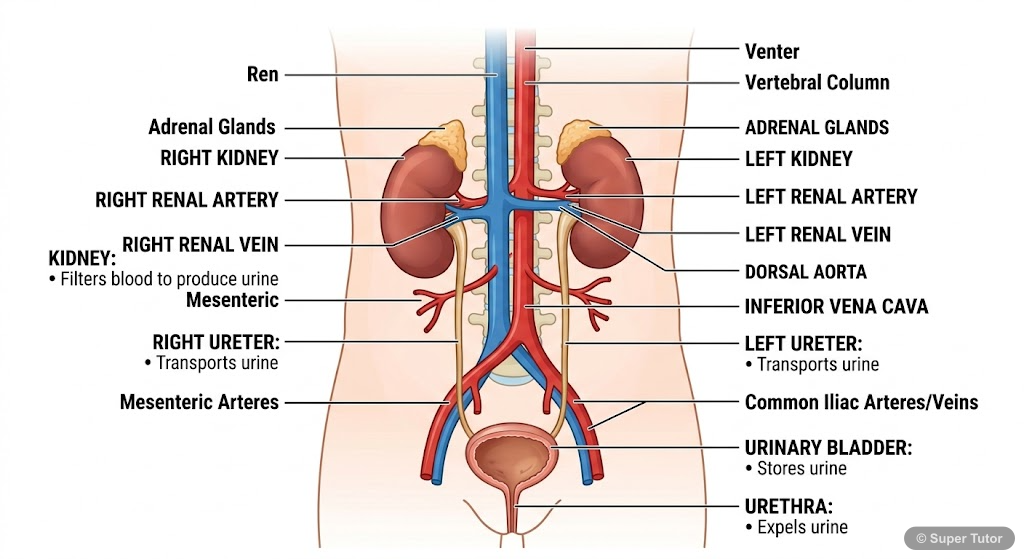
Learn better with visuals Super Tutor pairs illustrations like this with notes and quizzes for Life Processes.
The first 13 solutions are open to read. The other 12 are free with a Super Tutor account.
Questions
1Why is diffusion insufficient to meet the oxygen requirements of multi-cellular organisms like humans?Show solution
Diffusion is too slow to meet the oxygen needs of large multicellular organisms like humans because many cells are not in direct contact with the environment. In such organisms, oxygen has to reach all cells quickly, but simple diffusion over long distances cannot do this efficiently. Also, the body surface is not enough for all cells, so a transport system is needed.
2What criteria do we use to decide whether something is alive?Show solution
We decide something is alive by looking for life processes and movement. Visible movement, growth, breathing, and especially molecular movement are taken as signs of life. A living thing maintains its structure by carrying out processes like nutrition, respiration, transport, and excretion.
3What are outside raw materials used for by an organism?Show solution
Outside raw materials are used to provide energy and materials for growth and repair. Food supplies energy for maintenance processes, and additional raw materials from outside are needed to build body substance and make new tissues.
4What processes would you consider essential for maintaining life?Show solution
The essential processes for maintaining life are nutrition, respiration, transport of materials, and excretion. These processes keep the body supplied with energy and materials and remove harmful wastes.
Questions
2Where do plants get each of the raw materials required for photosynthesis?Show solution
Plants get the raw materials for photosynthesis as follows:
- Carbon dioxide from the air through stomata.
- Water from the soil through the roots.
- Sunlight from the Sun.
- Chlorophyll is present in the chloroplasts of leaf cells.
5How is the small intestine designed to absorb digested food?Show solution
The small intestine is designed for absorption by having a long, coiled structure and an inner lining with many villi. Villi greatly increase the surface area for absorption and contain many blood vessels to carry absorbed food away.
Questions
2Why is it necessary to separate oxygenated and deoxygenated blood in mammals and birds?Show solution
It is necessary because mammals and birds have high energy needs and must maintain a constant body temperature. Separating oxygenated and deoxygenated blood prevents mixing and ensures a highly efficient supply of oxygen to the body.
3What are the components of the transport system in highly organised plants?Show solution
The transport system in highly organised plants consists of xylem and phloem.
- Xylem transports water and minerals.
- Phloem transports food and other substances like amino acids.
4How are water and minerals transported in plants?Show solution
Water and minerals are transported in plants through the xylem. Root cells actively take up ions, water enters the roots from the soil, and then the transpiration pull and root pressure help move the water upward through xylem vessels and tracheids.
QUESTIONS (Intext – Section 5.5.2)
1Describe the structure and functioning of nephrons.Show solution
Given / Context: Nephrons are the structural and functional units of the kidney.
Structure of a Nephron:
Each nephron consists of the following parts:
- Bowman's Capsule: A cup-shaped, double-walled structure at the beginning of the nephron. It encloses a network of capillaries called the glomerulus.
- Glomerulus: A tuft of capillaries formed by the afferent arteriole (bringing blood in) and drained by the efferent arteriole (taking blood out). Together, the glomerulus and Bowman's capsule form the Malpighian corpuscle.
- Proximal Convoluted Tubule (PCT): The first coiled portion of the renal tubule, located in the cortex.
- Loop of Henle: A U-shaped loop that dips into the medulla. It has a descending limb and an ascending limb.
- Distal Convoluted Tubule (DCT): The second coiled portion, located in the cortex.
- Collecting Duct: Several nephrons join into a collecting duct, which carries urine to the renal pelvis.
Functioning of a Nephron:
The nephron performs urine formation in three steps:
Step 1 – Ultrafiltration (Glomerular Filtration):
Blood enters the glomerulus under high pressure through the afferent arteriole. Due to this pressure, water, glucose, amino acids, urea, uric acid, salts, and other small molecules are filtered out of the blood into the Bowman's capsule. This filtrate is called glomerular filtrate. Large molecules like proteins and blood cells are NOT filtered.
Step 2 – Selective Reabsorption:
As the filtrate passes through the PCT, Loop of Henle, and DCT, useful substances such as glucose, amino acids, salts, and a large amount of water are reabsorbed back into the surrounding capillaries. This ensures that useful materials are not lost.
Step 3 – Tubular Secretion:
Certain waste substances like excess salts, hydrogen ions, and some drugs are actively secreted from the blood into the tubular filtrate.
The remaining concentrated liquid — urine — passes into the collecting duct, then to the renal pelvis, ureter, urinary bladder, and is finally expelled through the urethra.
Composition of urine: Water (~95%), urea, uric acid, creatinine, and salts.
2What are the methods used by plants to get rid of excretory products?Show solution
Given / Context: Plants have different strategies for excretion compared to animals.
Plants use the following methods to get rid of excretory products:
- Gaseous exchange through stomata and lenticels:
- Oxygen (produced during photosynthesis) and Carbon dioxide (produced during respiration) are released through stomata in leaves and lenticels in stems.
- Transpiration:
- Excess water is removed in the form of water vapour through the process of transpiration via stomata.
- Storage in vacuoles:
- Many waste products are stored in cellular vacuoles of plant cells where they do not interfere with cell metabolism.
- Storage in leaves:
- Waste products are stored in leaves, which eventually fall off (leaf fall / abscission), thereby removing the wastes from the plant body.
- Storage as resins and gums:
- Some waste products are stored as resins and gums, especially in the cells of old xylem (heartwood).
- Excretion into the soil:
- Plants also excrete some waste substances into the surrounding soil through their roots.
Conclusion: Unlike animals, plants do not have a specialised excretory system; instead, they use a combination of the above strategies.
3How is the amount of urine produced regulated?Show solution
Given / Context: The kidneys produce urine, but the amount produced must be regulated according to the body's needs.
Regulation of urine production:
The amount of urine produced is regulated primarily by the amount of water reabsorbed in the tubules of the nephron, which is controlled by hormonal feedback mechanisms.
Key mechanism:
- When the water level in the blood is low (e.g., on a hot day or after less water intake), the pituitary gland releases ADH (Anti-Diuretic Hormone).
- ADH increases the permeability of the collecting duct and DCT, causing more water to be reabsorbed back into the blood.
- As a result, less urine is produced, and it is more concentrated.
- When the water level in the blood is high (e.g., after drinking a lot of water), less ADH is released.
- Less water is reabsorbed from the tubules.
- As a result, more urine is produced, and it is more dilute.
- The amount of dissolved wastes (like urea) also affects urine volume — more waste requires more water to dissolve and excrete it.
- The glomerular filtration rate also influences the volume of filtrate and hence urine.
Conclusion: The amount of urine is regulated mainly by ADH, which controls water reabsorption in the nephron tubules, ensuring the body maintains water and salt balance (osmoregulation).
Exercises
1The kidneys in human beings are a part of the system for
(a) nutrition.
(b) respiration.
(c) excretion.
(d) transportation.Show solution
Correct Option: (c) excretion.
Justification: The kidneys filter waste products (mainly urea, uric acid, and excess salts) from the blood and excrete them in the form of urine. Therefore, kidneys are the primary organs of the excretory system in human beings.
(a) transport of water.
(b) transport of food.
(c) transport of amino acids.
(d) transport of oxygen.
Free with a Super Tutor account
(a) carbon dioxide and water.
(b) chlorophyll.
(c) sunlight.
(d) all of the above.
Free with a Super Tutor account
(a) cytoplasm.
(b) mitochondria.
(c) chloroplast.
(d) nucleus.
Free with a Super Tutor account
Free with a Super Tutor account
Free with a Super Tutor account
Free with a Super Tutor account
Free with a Super Tutor account
Free with a Super Tutor account
Free with a Super Tutor account
Free with a Super Tutor account
Free with a Super Tutor account
Free with a Super Tutor account
12 more solved questions in Life Processes
They are free with a Super Tutor account, along with practice quizzes and flashcards for this chapter. Free to start, no card needed.
Frequently Asked Questions
What are the important topics in Life Processes for Madhya Pradesh Board Class 10 Science?
Are these NCERT Solutions for Life Processes free?
How should I revise Life Processes for the Madhya Pradesh Board Class 10 board exam?
Sources & Official References
Content is aligned to the official syllabus. Refer to the board website for the latest curriculum.
More resources for Life Processes
Practice Quiz
Test yourself with a quick quiz
Important Questions
Exam-style questions with answers
Revision Notes
Key points for last-minute revision
Chapter Summary
Understand the chapter at a glance
Concept Maps
See how topics connect
Study Plan
Step-by-step plan for this chapter
Flashcards
Quick-fire cards for active recall
Syllabus
What topics to cover
For serious students
Get the full Life Processes chapter — start free.
Quizzes, flashcards, an AI doubt solver and a study plan for Madhya Pradesh Board Class 10 Science. Free to start, no card needed.