Social Movements — Chapter Summary
Madhya Pradesh Board · Class 12 · Sociology
Summary of Social Movements for Madhya Pradesh Board Class 12 Sociology. Part of the Madhya Pradesh Board Class 12 Sociology syllabus.
Interactive on Super Tutor
Studying Social Movements? Get the full interactive chapter.
Quizzes, flashcards, AI doubt-solver and a step-by-step study plan — built for chapter summary and more.
Free trial, no card needed.
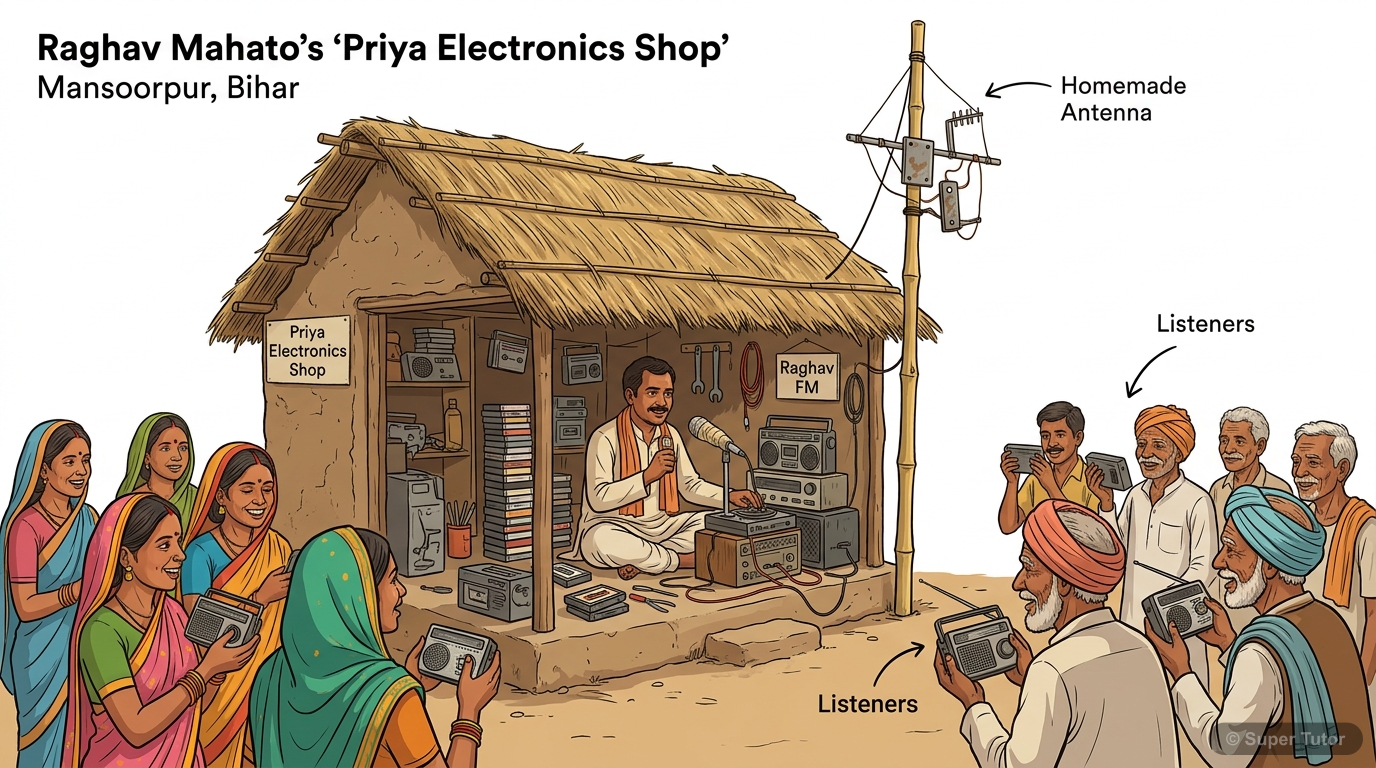
One of 10 illustrations for Social Movements in Super Tutor — alongside flashcards, concept maps and practice questions.
Overview
Social movements are sustained collective actions that seek to bring change in society, public policy, or power relations. They shape rights, protest against injustice, and influence political and social life in India and elsewhere. The chapter shows how movements can be reformist, redemptive, or re
Key Concepts
A social movement is sustained collective
A social movement is sustained collective action with organisation, leadership, shared objectives, and a common ideology. It is usually directed at ch
A counter movement arises to defend
A counter movement arises to defend existing social arrangements when reform or change is being demanded. The response to campaigns against sati is a
Social change is a broad
Social change is a broad and continuous process, while a social movement is a focused and organised effort to bring change. Sanskritisation and wester
A reformist movement tries to bring
A reformist movement tries to bring gradual changes in existing social and political arrangements. The movement for linguistic reorganisation of state
A redemptive or transformatory movement aims
A redemptive or transformatory movement aims to change the personal consciousness and behaviour of members. The Ezhava community movement led by Naray
Learning Objectives
- Understand the meaning and main features of social movements
- Distinguish social movements from general social change
- Identify reformist, redemptive, and revolutionary movements
- Explain the difference between old and new social movements
- Describe major peasant, workers', caste-based, tribal, environmental, and women's movements
Frequently Asked Questions
What are the important topics in Social Movements for Madhya Pradesh Board Class 12 Sociology?
How should I revise Social Movements for the Madhya Pradesh Board Class 12 board exam?
Sources & Official References
Content is aligned to the official syllabus. Refer to the board website for the latest curriculum.
More resources for Social Movements
Practice Quiz
Test yourself with a quick quiz
Important Questions
Exam-style questions with answers
Revision Notes
Key points for last-minute revision
Concept Maps
See how topics connect
Study Plan
Step-by-step plan for this chapter
Flashcards
Quick-fire cards for active recall
Syllabus
What topics to cover
NCERT Solutions
Every textbook question solved step by step
For serious students
Get the full Social Movements chapter — start free.
Quizzes, flashcards, an AI doubt solver and a study plan for Madhya Pradesh Board Class 12 Sociology. Free to start, no card needed.