Cultural Change — Chapter Summary
Madhya Pradesh Board · Class 12 · Sociology
Summary of Cultural Change for Madhya Pradesh Board Class 12 Sociology. Part of the Madhya Pradesh Board Class 12 Sociology syllabus.
Interactive on Super Tutor
Studying Cultural Change? Get the full interactive chapter.
Quizzes, flashcards, AI doubt-solver and a step-by-step study plan — built for chapter summary and more.
Free trial, no card needed.
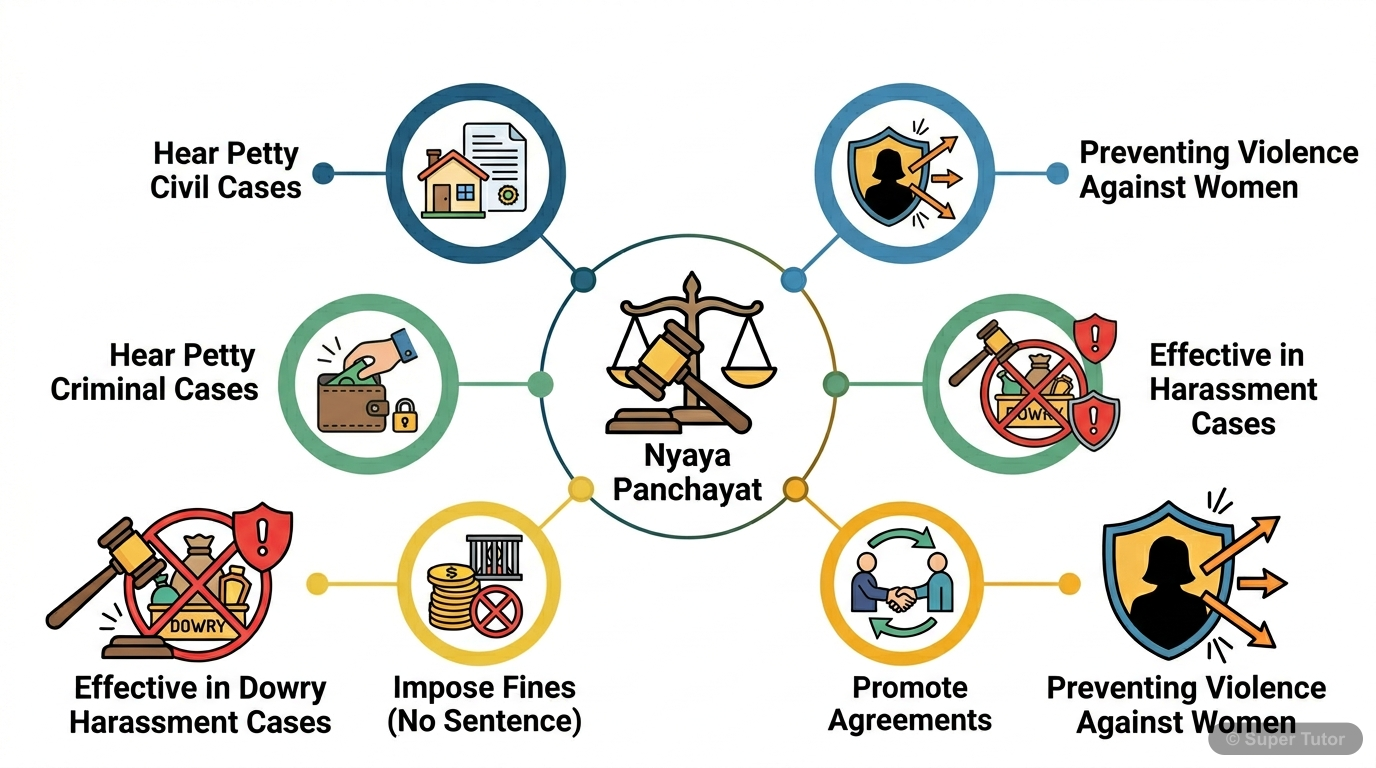
Learn better with visuals Super Tutor pairs illustrations like this with notes and quizzes for Cultural Change.
Overview
Cultural change in colonial and post-colonial India was shaped by two broad developments: social reform movements and wider cultural processes such as sanskritisation, westernisation, modernisation, and secularisation. Colonial rule changed institutions, ideas, communication, and social life. As a r
Key Concepts
These were efforts by reformers
These were efforts by reformers and nationalists to challenge social evils such as sati, child marriage, ban on widow remarriage, and caste discrimina
Raja Ram Mohun Roy attacked sati
Raja Ram Mohun Roy attacked sati using humanitarian and natural rights ideas along with Hindu shastras. The Brahmo Samaj opposed sati, while the ortho
Reformers argued that women needed education
Reformers argued that women needed education for social progress. Jotiba Phule opened the first school for women in Pune. Debates on women’s education
M
M.N. Srinivas coined the term. It is the process by which a low caste, tribe, or other group takes over the customs, rituals, beliefs, ideology, and s
Sanskritisation may improve the position
Sanskritisation may improve the position of individuals or groups, but it does not change the structure of inequality. It can also encourage upper-cas
Learning Objectives
- Understand the main social reform movements of the 19th and early 20th centuries
- Explain how reformers used both modern and traditional ideas to argue for change
- Define sanskritisation, westernisation, modernisation, and secularisation
- Identify how colonialism shaped cultural change in India
- Recognise the role of caste, gender, education, and religion in social transformation
Frequently Asked Questions
What are the important topics in Cultural Change for Madhya Pradesh Board Class 12 Sociology?
How should I revise Cultural Change for the Madhya Pradesh Board Class 12 board exam?
Sources & Official References
Content is aligned to the official syllabus. Refer to the board website for the latest curriculum.
More resources for Cultural Change
Practice Quiz
Test yourself with a quick quiz
Important Questions
Exam-style questions with answers
Revision Notes
Key points for last-minute revision
Concept Maps
See how topics connect
Study Plan
Step-by-step plan for this chapter
Flashcards
Quick-fire cards for active recall
Syllabus
What topics to cover
NCERT Solutions
Every textbook question solved step by step
For serious students
Get the full Cultural Change chapter — start free.
Quizzes, flashcards, an AI doubt solver and a study plan for Madhya Pradesh Board Class 12 Sociology. Free to start, no card needed.