Change and Development in Industrial Society — NCERT Solutions
Madhya Pradesh Board · Class 12 · Sociology
NCERT Solutions for Change and Development in Industrial Society, Madhya Pradesh Board Class 12 Sociology: 2 textbook questions solved step by step.
Interactive on Super Tutor
Studying Change and Development in Industrial Society? Get the full interactive chapter.
Quizzes, flashcards, AI doubt-solver and a step-by-step study plan — built for NCERT solutions and more.
Free trial, no card needed.
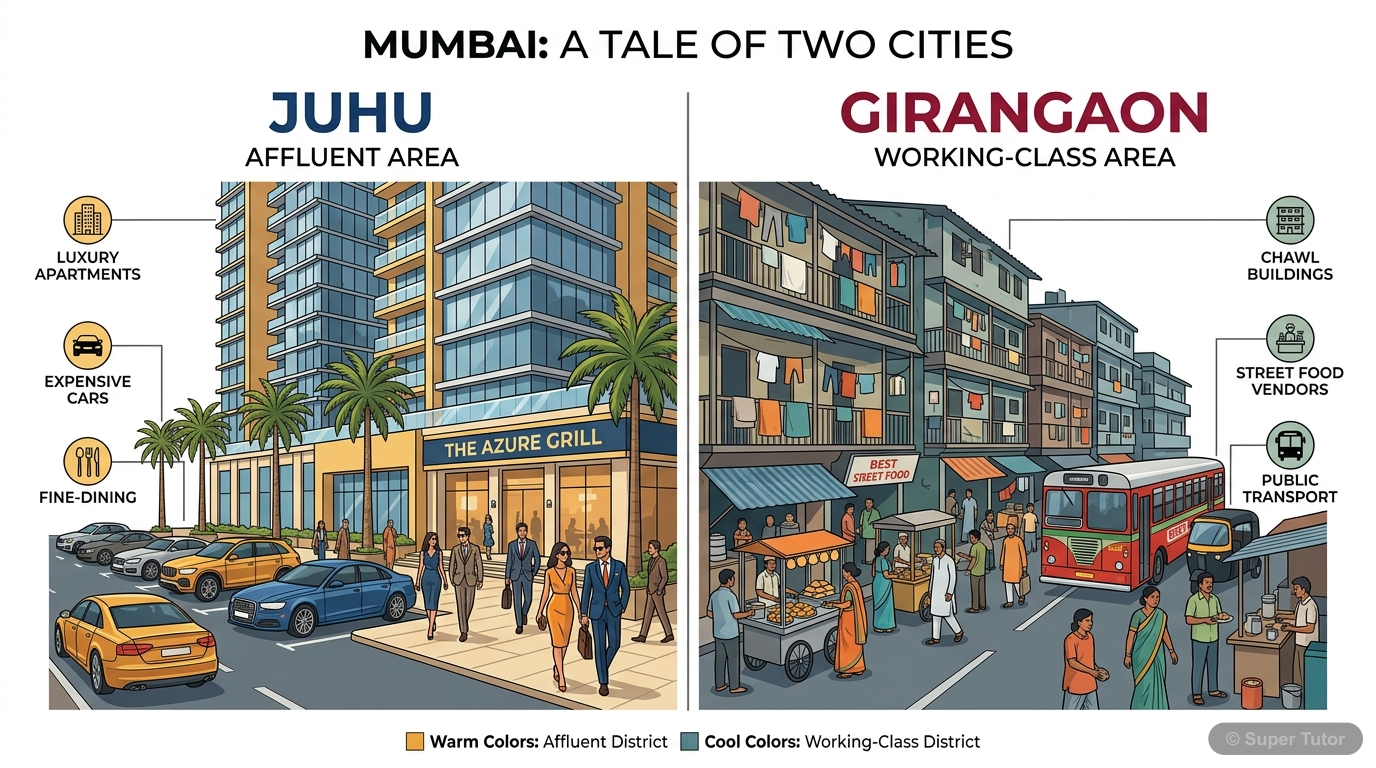
Learn better with visuals Super Tutor pairs illustrations like this with notes and quizzes for Change and Development in Industrial Society.
The first 1 solution is open to read. The other 1 are free with a Super Tutor account.
Exercise Questions
1Choose any occupation you see around you – and describe it along the following lines: a) social composition of the work force – caste, gender, age, region; b) labour process – how the work takes place; c) wages and other benefits; d) working conditions – safety, rest times, working hours, etc.Show solution
Occupation Chosen: Construction Worker (Building/Road Construction)
This is one of the most visible occupations in urban and semi-urban India. Below is a detailed description along the required lines:
a) Social Composition of the Work Force – Caste, Gender, Age, Region:
- Caste: Construction work is predominantly done by workers from Scheduled Castes (SCs), Scheduled Tribes (STs), and Other Backward Classes (OBCs). Upper-caste workers are rarely found in manual construction labour. This reflects the historical association of certain castes with specific forms of manual work.
- Gender: Both men and women work at construction sites. Men typically do heavy work such as mixing cement, laying bricks, and carrying iron rods. Women (often called 'head-load workers') carry bricks, sand, and cement on their heads. Women are usually paid less than men for similar work.
- Age: Workers range from young adults (18–25 years) to middle-aged persons (up to 50 years). Child labour, though illegal, is sometimes observed at smaller, unregulated sites.
- Region: A large proportion of construction workers are migrant labourers from economically backward states such as Uttar Pradesh, Bihar, Jharkhand, Odisha, Rajasthan, and Chhattisgarh. They migrate to cities like Delhi, Mumbai, Bengaluru, and Chennai in search of work. This makes construction labour a highly inter-regional workforce.
b) Labour Process – How the Work Takes Place:
- Work is organised through a contractor–subcontractor system. A main contractor gets the project from the builder/developer and then hires labour through smaller subcontractors or mistris (skilled supervisors).
- Workers are hired on a daily wage (casual) basis — there is no permanent employment.
- The work involves digging foundations, mixing concrete, laying bricks, plastering walls, carrying materials, and finishing work.
- Skilled workers (masons, carpenters, electricians) earn more; unskilled workers (helpers, head-load carriers) earn less.
- There is a clear division of labour based on skill, gender, and sometimes caste.
- Workers often live in temporary shelters (jhuggi/tarpaulin sheds) built right at the construction site.
c) Wages and Other Benefits:
- Wages are paid on a daily or weekly basis, often in cash.
- Unskilled workers typically earn ₹300–₹500 per day; skilled workers (masons) may earn ₹600–₹900 per day, though this varies by region and city.
- There is no job security — workers can be dismissed any day without notice.
- Most construction workers are in the informal/unorganised sector and therefore do not receive:
- Provident Fund (PF)
- Employee State Insurance (ESI)
- Paid leave or sick leave
- Gratuity or pension
- The Building and Other Construction Workers Act, 1996 provides for registration and welfare benefits, but implementation is very poor and most workers remain unregistered.
- Wages for women are almost always lower than for men, even for the same work — a clear example of gender-based wage discrimination.
d) Working Conditions – Safety, Rest Times, Working Hours, etc.:
- Safety: Construction sites are among the most dangerous workplaces. Workers face risks of falls from scaffolding, injuries from heavy machinery, exposure to dust (leading to silicosis), and electric shocks. Helmets, safety harnesses, and gloves are rarely provided or used at smaller sites.
- Working Hours: Workers typically work from sunrise to sunset — approximately 10–12 hours per day, often 6–7 days a week. There is no concept of overtime pay in most cases.
- Rest Times: Short informal breaks are taken during the day; there is usually a lunch break of 30–60 minutes.
- Living Conditions: Workers living on-site have no proper sanitation, clean drinking water, or cooking facilities. Women workers face particular problems regarding privacy and safety.
- Health Hazards: Prolonged exposure to cement dust, heavy lifting, and working in extreme heat or cold leads to serious long-term health problems.
- Legal Protections: Although laws like the Factories Act, Minimum Wages Act, and the Building and Other Construction Workers Act exist, enforcement is weak in the informal construction sector.
Conclusion:
Construction work illustrates many key features of the Indian informal labour market — casualisation, contractor-mediated employment, social marginalisation of the workforce, gender discrimination, and poor enforcement of labour laws. It shows how industrialisation and urbanisation have created a large but highly vulnerable working class.
Free with a Super Tutor account
1 more solved question in Change and Development in Industrial Society
They are free with a Super Tutor account, along with practice quizzes and flashcards for this chapter. Free to start, no card needed.
Frequently Asked Questions
What are the important topics in Change and Development in Industrial Society for Madhya Pradesh Board Class 12 Sociology?
Are these NCERT Solutions for Change and Development in Industrial Society free?
How should I revise Change and Development in Industrial Society for the Madhya Pradesh Board Class 12 board exam?
Sources & Official References
Content is aligned to the official syllabus. Refer to the board website for the latest curriculum.
More resources for Change and Development in Industrial Society
Practice Quiz
Test yourself with a quick quiz
Important Questions
Exam-style questions with answers
Revision Notes
Key points for last-minute revision
Chapter Summary
Understand the chapter at a glance
Concept Maps
See how topics connect
Study Plan
Step-by-step plan for this chapter
Flashcards
Quick-fire cards for active recall
Syllabus
What topics to cover
For serious students
Get the full Change and Development in Industrial Society chapter — start free.
Quizzes, flashcards, an AI doubt solver and a study plan for Madhya Pradesh Board Class 12 Sociology. Free to start, no card needed.