Ancient World — Flashcards
NIOS · Class 10 · Social Studies
55 flashcards for Ancient World (NIOS Class 10 Social Studies) to test yourself on key terms and facts. Part of the NIOS Class 10 Social Studies syllabus.
Interactive on Super Tutor
Studying Ancient World? Get the full interactive chapter.
Quizzes, flashcards, AI doubt-solver and a step-by-step study plan — built for flashcards and more.
Free trial, no card needed.
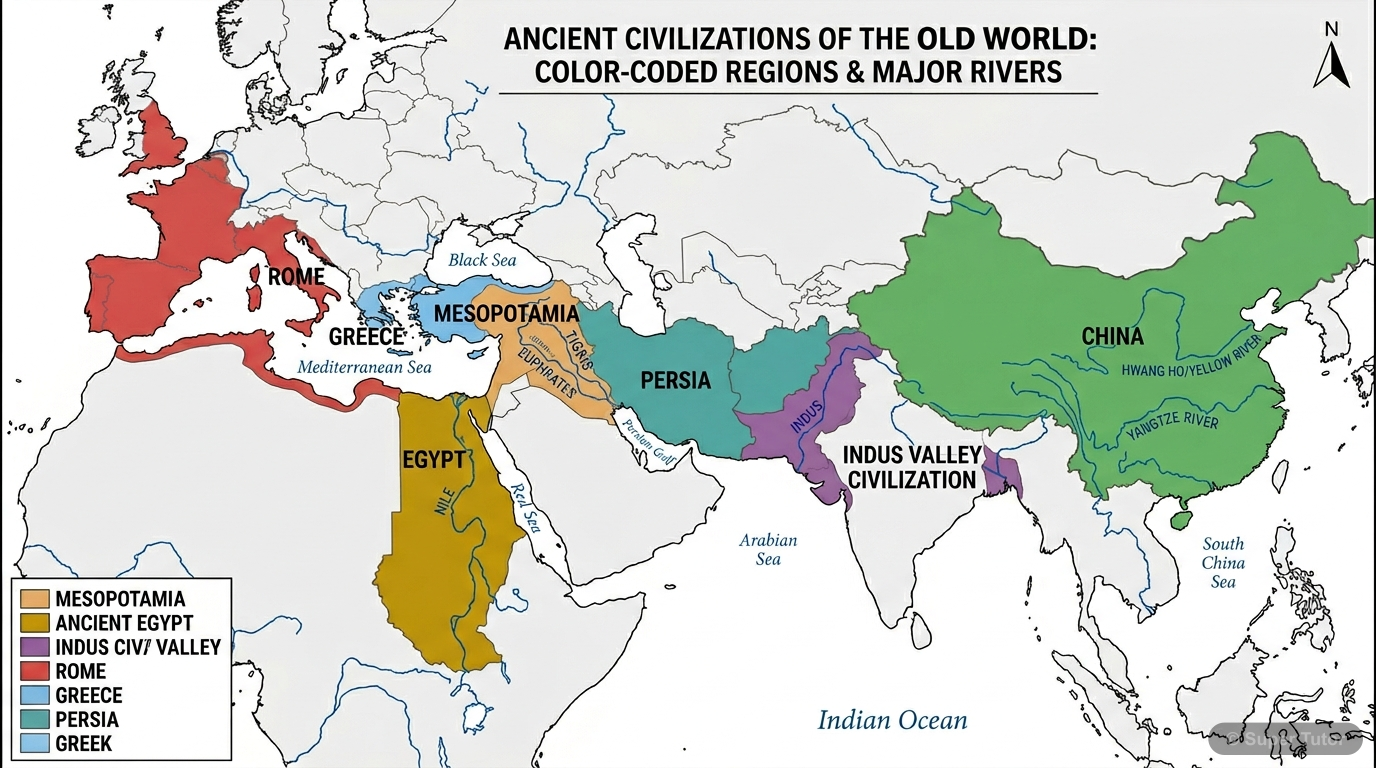
Learn better with visuals Super Tutor pairs illustrations like this with notes and quizzes for Ancient World.
What changed when humans began using metals after the Stone Age?
Answer
Metal use brought major changes in tools, weapons, farming, transport, trade, and settlement life. The Stone Age was followed by the Metal Ages, namely the Bronze Age and the Iron Age.
What is bronze?
Answer
Bronze is an alloy of copper and tin. It became an important metal in early civilisations because it was useful for making tools, weapons, and implements.
What are Chalcolithic cultures?
Answer
Chalcolithic cultures were cultures based on the use of stone and copper. They are also called Bronze Age cultures because bronze was invented in this period.
Why did towns grow during the Bronze Age?
Answer
Town-based civilisations grew for the first time in river valleys because fertile land supported agriculture, surplus food supported craftspeople, and trade and administration became easier in settled…
Where did Mesopotamian civilisation develop?
Answer
Mesopotamia lay between the Tigris and Euphrates rivers in modern-day Iraq. Fertile silt from river floods helped agriculture and led to early urban growth.
What writing system did the Mesopotamians use?
Answer
They used Cuneiform script, a writing system made of wedge-like marks and symbols. It was one of the earliest writing systems in the ancient world.
Why were the Egyptian kings called Pharaohs?
Answer
The rulers of ancient Egypt were called Pharaohs. They ruled with ministers and officers, controlled taxes, and supported the strong religious and administrative system of the kingdom.
Why were the pyramids built in ancient Egypt?
Answer
Pyramids were built as tombs for the mummified bodies of dead kings. Egyptians believed in life after death, so they preserved bodies as mummies and placed them in tombs.
+47 more flashcards
Practise AllFrequently Asked Questions
What are the important topics in Ancient World for NIOS Class 10 Social Studies?
How many flashcards are available for Ancient World?
How should I revise Ancient World for the NIOS Class 10 board exam?
Sources & Official References
Content is aligned to the official syllabus. Refer to the board website for the latest curriculum.
More resources for Ancient World
Practice Quiz
Test yourself with a quick quiz
Important Questions
Exam-style questions with answers
Revision Notes
Key points for last-minute revision
Chapter Summary
Understand the chapter at a glance
Concept Maps
See how topics connect
Study Plan
Step-by-step plan for this chapter
Syllabus
What topics to cover
For serious students
Get the full Ancient World chapter — start free.
Quizzes, flashcards, an AI doubt solver and a study plan for NIOS Class 10 Social Studies. Free to start, no card needed.