Ancient World — Chapter Summary
NIOS · Class 10 · Social Studies
Summary of Ancient World for NIOS Class 10 Social Studies. Key concepts: Human history moved from, Mesopotamia and Mesopotamia lay between.
Interactive on Super Tutor
Studying Ancient World? Get the full interactive chapter.
Quizzes, flashcards, AI doubt-solver and a step-by-step study plan — built for chapter summary and more.
Free trial, no card needed.
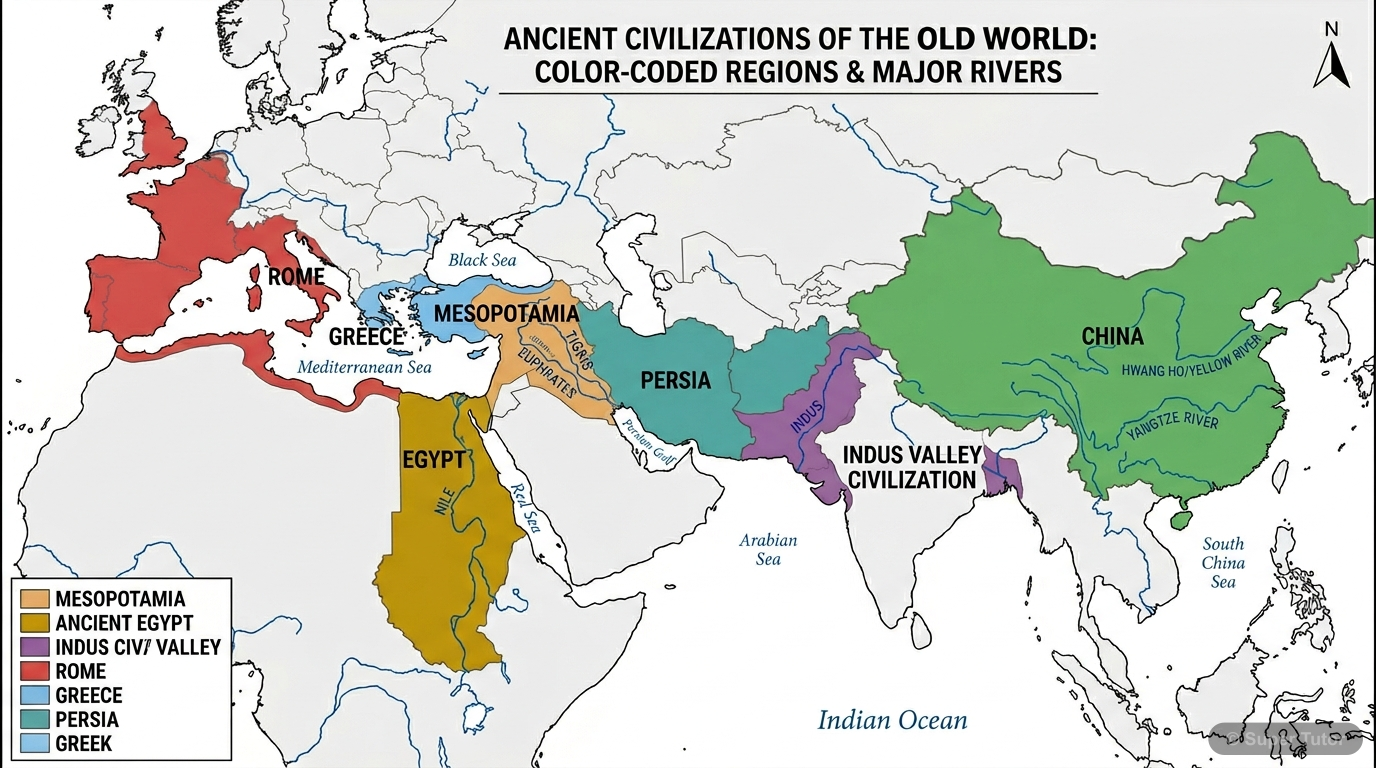
Learn better with visuals Super Tutor pairs illustrations like this with notes and quizzes for Ancient World.
Overview
Ancient world history shows how human society moved from the Stone Age to the Metal Ages, and then to large civilisations with towns, trade, writing, governments, religions, and learning. Bronze Age civilisations developed in Mesopotamia, Egypt, China, and India, while the Iron Age brought major cha
Key Concepts
Human history moved from the Stone
Human history moved from the Stone Age to the Metal Ages, which included the Bronze Age and the Iron Age. The discovery of metals changed tools, agric
Mesopotamia
Mesopotamia, Egypt, China, and India developed as major Bronze Age civilisations. Bronze is an alloy of copper and tin, and these societies grew aroun
Mesopotamia lay between the Tigris
Mesopotamia lay between the Tigris and Euphrates rivers in modern Iraq. Its people developed Cuneiform script, trade, crafts, and city-based administr
Egypt grew along the River Nile
Egypt grew along the River Nile. Egyptian kings were called Pharaohs, they built pyramids as tombs for mummified kings, and used Hieroglyphics as thei
The Shang rulers built China’s first
The Shang rulers built China’s first cities. Later, iron was introduced during Zhou rule. The Han dynasty ruled till AD 220, and Chinese traders used
Learning Objectives
- Understand the shift from the Stone Age to the Bronze Age and Iron Age
- Identify the main features of Mesopotamian, Egyptian, Chinese, and Indus Valley civilisations
- Recognize the achievements of Greek, Roman, and Persian civilisations
- Explain the major changes in the Vedic Age and the rise of new religious ideas
- Trace the rise and achievements of the Mauryan, Kushana, Gupta, and post-Gupta periods
Frequently Asked Questions
What are the important topics in Ancient World for NIOS Class 10 Social Studies?
How should I revise Ancient World for the NIOS Class 10 board exam?
Sources & Official References
Content is aligned to the official syllabus. Refer to the board website for the latest curriculum.
More resources for Ancient World
For serious students
Get the full Ancient World chapter — start free.
Quizzes, flashcards, an AI doubt solver and a study plan for NIOS Class 10 Social Studies. Free to start, no card needed.