Local Governments And Field Administration — Important Questions
NIOS · Class 10 · Social Studies
80 important questions from Local Governments And Field Administration for NIOS Class 10 Social Studies, with answers. Written for the board exams 2027.
Interactive on Super Tutor
Studying Local Governments And Field Administration? Get the full interactive chapter.
Quizzes, flashcards, AI doubt-solver and a step-by-step study plan — built for important questions and more.
Free trial, no card needed.
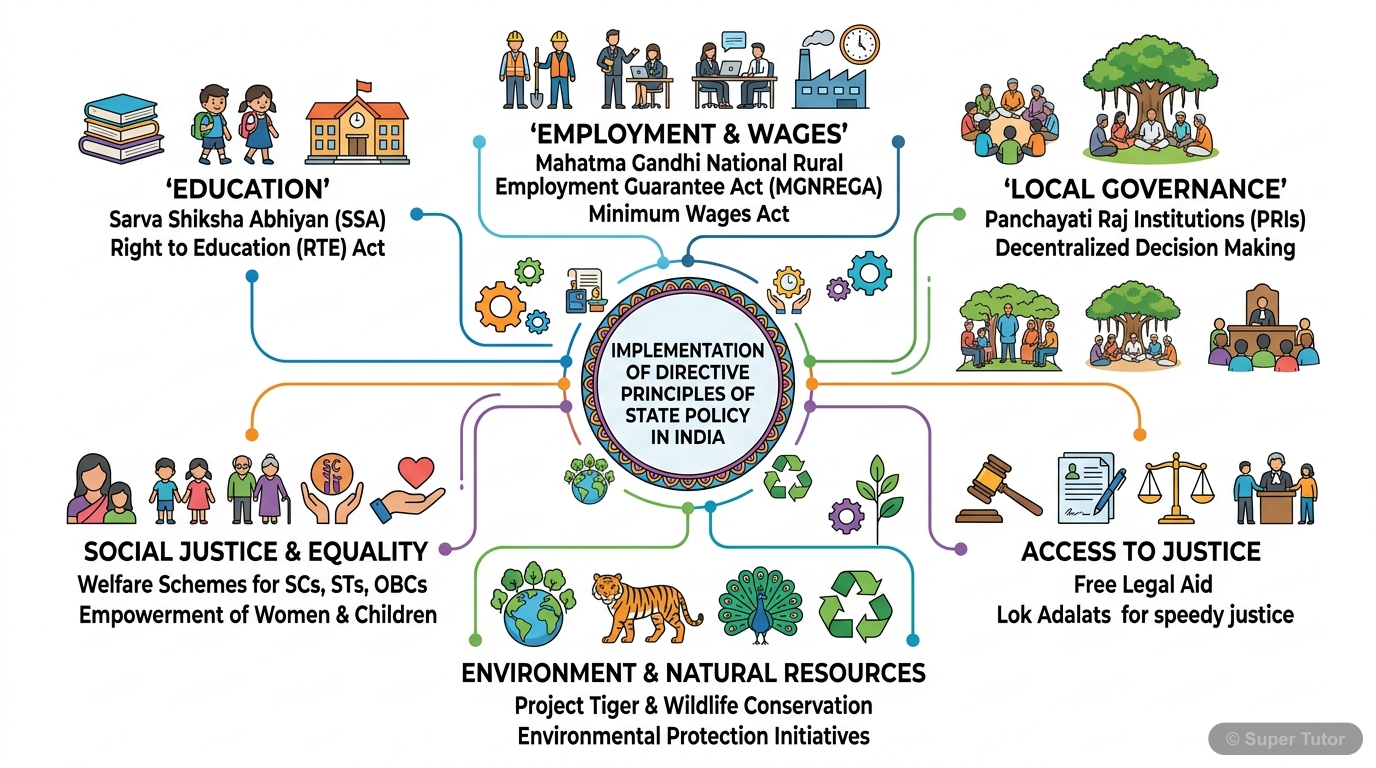
One of 11 illustrations for Local Governments And Field Administration in Super Tutor — alongside flashcards, concept maps and practice questions.
Important Questions from Local Governments And Field Administration
What is Gram Sabha?
Show answer
Village Assembly of all adult voters
Gram Sabha is the village assembly consisting of all adult voters (persons above 18 years) living in the area of a Gram Panchayat. It acts as the legislative body at the village level and holds at least two meetings per year. The Gram Sabha reviews annual accounts, discusses audit reports, and considers the budget of the Gram Panchayat. It is the foundation of democratic participation in rural governance.
Which Constitutional Amendment deals with urban local bodies?
Show answer
74th Amendment
The 74th Constitutional Amendment Act of 1992 deals with urban local bodies and provided constitutional status to Municipal Corporations, Municipal Councils, and Nagar Panchayats. This amendment established provisions for regular elections, reservations for women and marginalized communities in urban areas, and empowerment of urban local bodies. The 73rd Amendment specifically deals with rural Panchayati Raj Institutions.
What is the term of office for Panchayati Raj Institutions?
Show answer
5 years
The term of office for all Panchayati Raj Institutions (Gram Panchayat, Panchayat Samiti, and Zilla Parishad) is 5 years. This is mandated by the 73rd Constitutional Amendment. Regular elections must be held every five years to ensure democratic continuity. If any institution is dissolved before completing its full term, elections must be conducted within six months of dissolution.
Who is the head of district administration?
Show answer
District Magistrate
The District Magistrate (also known as Deputy Commissioner or District Collector) is the head of district administration and belongs to the Indian Administrative Service (IAS). The DM is responsible for implementing government policies, maintaining law and order, coordinating various departments, and ensuring overall development of the district. Other officers like SP, SDO, and BDO work under the DM's supervision.
+76 more questions on Local Governments And Field Administration (NIOS Class 10 Social Studies)
Practise AllFrequently Asked Questions
What are the important topics in Local Governments And Field Administration for NIOS Class 10 Social Studies?
How many important questions are there in Local Governments And Field Administration?
Sources & Official References
Content is aligned to the official syllabus. Refer to the board website for the latest curriculum.
More resources for Local Governments And Field Administration
For serious students
Get the full Local Governments And Field Administration chapter — start free.
Quizzes, flashcards, an AI doubt solver and a study plan for NIOS Class 10 Social Studies. Free to start, no card needed.