Biomolecules — Chapter Summary
Tamil Nadu Board · Class 12 · Chemistry
Summary of Biomolecules for Tamil Nadu Board Class 12 Chemistry. Part of the Tamil Nadu Board Class 12 Chemistry syllabus.
Interactive on Super Tutor
Studying Biomolecules? Get the full interactive chapter.
Quizzes, flashcards, AI doubt-solver and a step-by-step study plan — built for chapter summary and more.
Free trial, no card needed.
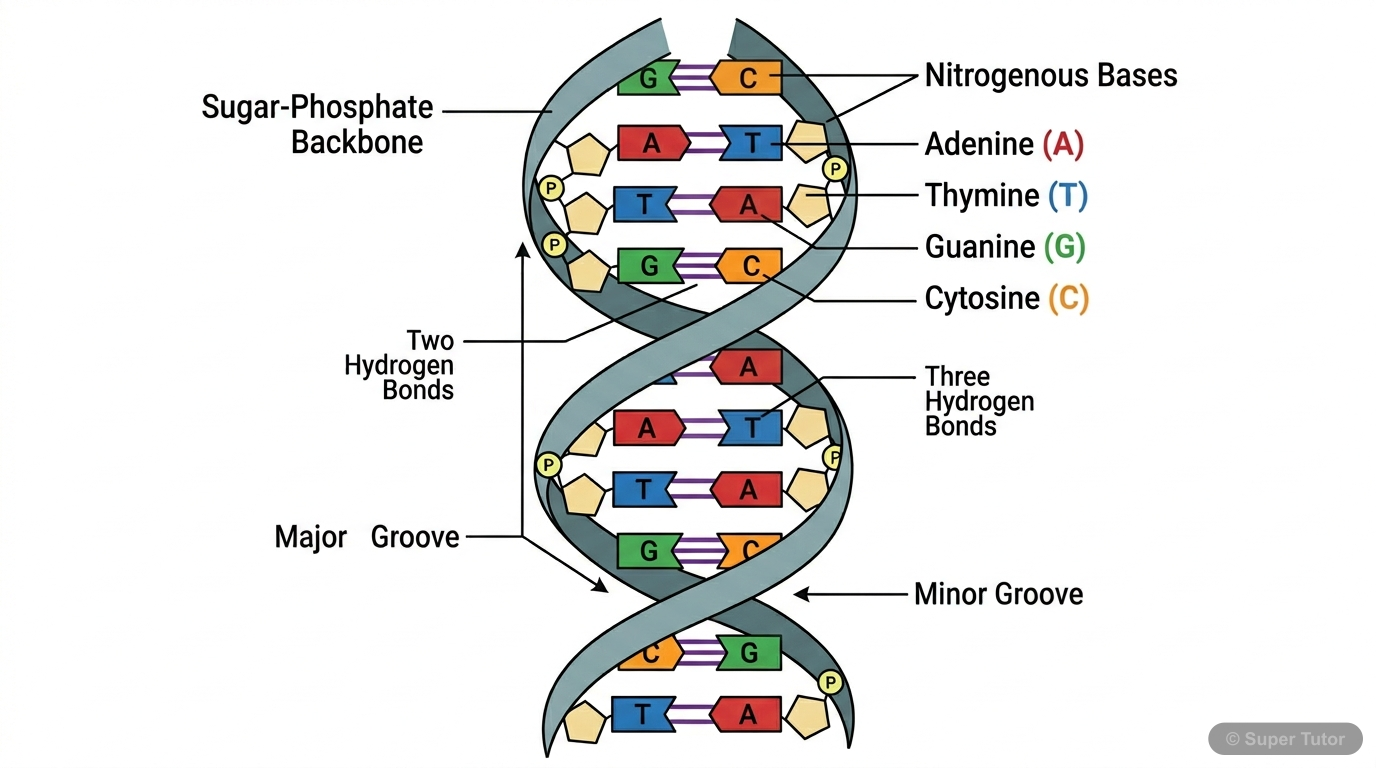
An illustration from Super Tutor's Biomolecules chapter — alongside flashcards, concept maps and practice questions.
Overview
Biomolecules are organic compounds that form the structural and functional basis of all living organisms. They include carbohydrates, proteins, lipids, and nucleic acids - each playing crucial roles in maintaining life processes. These molecules are synthesized primarily from carbon, hydrogen, oxyge
Key Concepts
Carbohydrates are polyhydroxy aldehydes or ketones
Carbohydrates are polyhydroxy aldehydes or ketones with general formula Cn(H2O)n. They are classified into three main categories: (1) Monosaccharides
Glucose (C6H12O6) is an aldohexose
Glucose (C6H12O6) is an aldohexose with four chiral centers. Its open-chain structure was elucidated through multiple lines of evidence: (1) Reduction
Fructose (C6H12O6) is a ketohexose
Fructose (C6H12O6) is a ketohexose with the same molecular formula as glucose but different structural arrangement. Its structure was determined simil
Disaccharides are formed when two monosaccharides
Disaccharides are formed when two monosaccharides link through glycosidic bonds - covalent bonds between the anomeric carbon of one sugar and a hydrox
Polysaccharides are polymers of monosaccharides linked
Polysaccharides are polymers of monosaccharides linked by glycosidic bonds. (1) Starch - plant energy storage polymer containing amylose (unbranched,
Learning Objectives
- Describe the importance and classification of carbohydrates based on their structures and functions
- Explain the structures of glucose and fructose and their elucidation methods
- List the twenty amino acids and explain peptide bond formation
- Explain the four levels of protein structure: primary, secondary, tertiary, and quaternary
- Outline the mechanism of enzyme catalysis and its biological significance
Frequently Asked Questions
What are the important topics in Biomolecules for Tamil Nadu Board Class 12 Chemistry?
How should I revise Biomolecules for the Tamil Nadu Board Class 12 board exam?
Sources & Official References
Content is aligned to the official syllabus. Refer to the board website for the latest curriculum.
More resources for Biomolecules
For serious students
Get the full Biomolecules chapter — start free.
Quizzes, flashcards, an AI doubt solver and a study plan for Tamil Nadu Board Class 12 Chemistry. Free to start, no card needed.