Chemistry in Everyday Life — Chapter Summary
Tamil Nadu Board · Class 12 · Chemistry
Summary of Chemistry in Everyday Life for Tamil Nadu Board Class 12 Chemistry. Part of the Tamil Nadu Board Class 12 Chemistry syllabus.
Interactive on Super Tutor
Studying Chemistry in Everyday Life? Get the full interactive chapter.
Quizzes, flashcards, AI doubt-solver and a step-by-step study plan — built for chapter summary and more.
Free trial, no card needed.
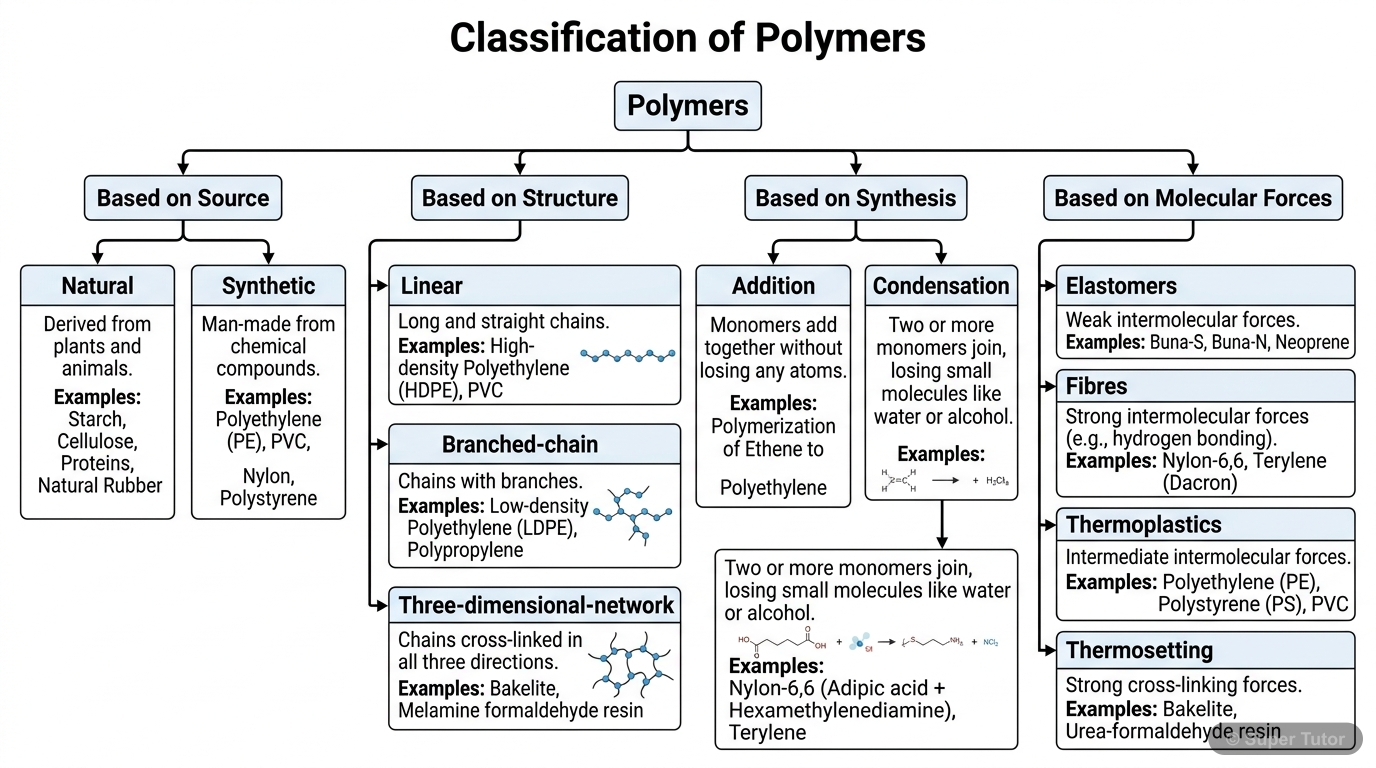
Learn better with visuals Super Tutor pairs illustrations like this with notes and quizzes for Chemistry in Everyday Life.
Overview
Chemistry is not confined to laboratories; it is an integral part of our daily existence. Every aspect of our lives—from the medicines we take to cure diseases, the clothes we wear, the food we eat, to the cleaning agents we use—is fundamentally rooted in chemistry. This chapter explores the fascina
Key Concepts
A drug is a substance used
A drug is a substance used to modify physiological systems or pathological states for diagnosis, prevention, cure, or relief of disease. The therapeut
Drugs can be classified in four
Drugs can be classified in four primary ways: (1) By chemical structure—drugs with similar chemical skeletons are grouped together (e.g., penicillins
Many drugs work by inhibiting enzyme
Many drugs work by inhibiting enzyme activity. In competitive inhibition, a drug molecule structurally similar to the natural substrate binds to the e
Receptors are specific molecules on cell
Receptors are specific molecules on cell membranes that trigger cellular responses when bound by chemical messengers. Drugs can act as antagonists or
Major drug classes include
Major drug classes include: Tranquilizers (e.g., diazepam, haloperidol) acting on the central nervous system to treat anxiety and mental disorders; An
Learning Objectives
- Understand the definition, classification, and therapeutic action of drugs
- Explain drug-target interactions with enzymes and receptors
- Identify important drug classes and their clinical uses
- Recognize the role and types of food additives in food preservation and enhancement
- Understand the chemistry of cleansing agents and how soaps and detergents work
Frequently Asked Questions
What are the important topics in Chemistry in Everyday Life for Tamil Nadu Board Class 12 Chemistry?
How should I revise Chemistry in Everyday Life for the Tamil Nadu Board Class 12 board exam?
Sources & Official References
Content is aligned to the official syllabus. Refer to the board website for the latest curriculum.
More resources for Chemistry in Everyday Life
For serious students
Get the full Chemistry in Everyday Life chapter — start free.
Quizzes, flashcards, an AI doubt solver and a study plan for Tamil Nadu Board Class 12 Chemistry. Free to start, no card needed.