Organic Nitrogen Compounds — Chapter Summary
Tamil Nadu Board · Class 12 · Chemistry
Summary of Organic Nitrogen Compounds for Tamil Nadu Board Class 12 Chemistry. Part of the Tamil Nadu Board Class 12 Chemistry syllabus.
Interactive on Super Tutor
Studying Organic Nitrogen Compounds? Get the full interactive chapter.
Quizzes, flashcards, AI doubt-solver and a step-by-step study plan — built for chapter summary and more.
Free trial, no card needed.
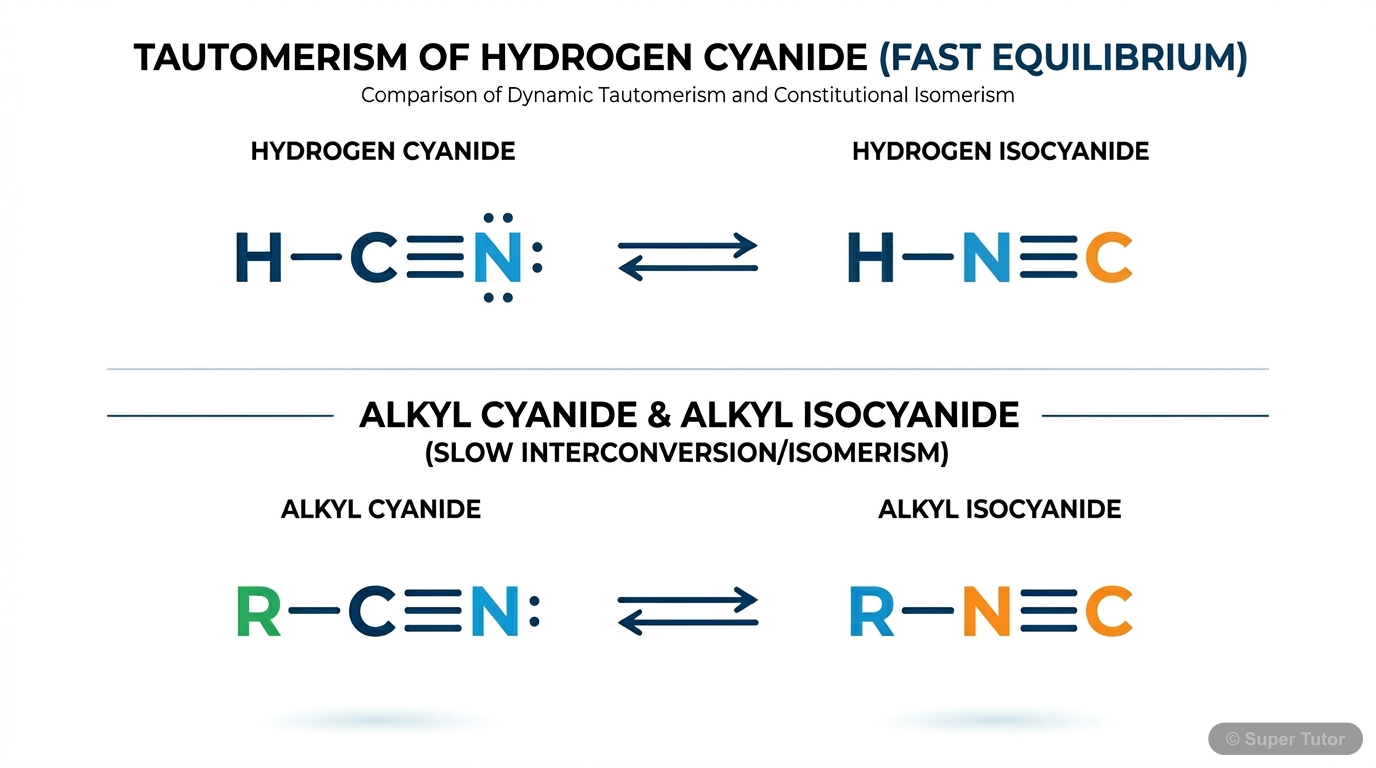
An illustration from Super Tutor's Organic Nitrogen Compounds chapter — alongside flashcards, concept maps and practice questions.
Overview
Organic nitrogen compounds are essential to all living organisms and play crucial roles in biochemistry, medicine, and industry. These compounds contain nitrogen atoms bonded to carbon and hydrogen atoms in various arrangements. The unit explores three major categories: nitro compounds, amines, and
Key Concepts
Nitro compounds (R
Nitro compounds (R-NO₂) are derivatives of hydrocarbons where a hydrogen atom is replaced by a nitro group (-NO₂). They are classified as primary (R-C
Primary and secondary nitroalkanes exhibit tautomerism
Primary and secondary nitroalkanes exhibit tautomerism between the nitro form (R-NO₂) and the aci-form (R-N(OH)=O). The aci-form is more acidic and mo
Amines are organic derivatives of ammonia
Amines are organic derivatives of ammonia (NH₃) where one or more hydrogen atoms are replaced by alkyl or aryl groups. Primary amines (R-NH₂) have one
Amines are weak bases due
Amines are weak bases due to the lone pair on nitrogen that can accept protons. Their basicity is quantified by Kb or pKb values. Aliphatic amines are
Multiple synthetic routes exist for preparing
Multiple synthetic routes exist for preparing amines: (1) Reduction of nitro compounds using H₂/Ni or Sn/HCl, (2) Reduction of nitriles using LiAlH₄ o
Learning Objectives
- Understand isomerism in organic nitro compounds including chain, position, functional, and tautomeric isomerism
- Describe preparation methods of nitro compounds using alkyl halides, vapor phase nitration, and oxidation reactions
- Classify amines as primary, secondary, and tertiary based on nitrogen substitution patterns
- Explain multiple methods of amine preparation from nitro compounds, nitriles, amides, and alkyl halides
- Analyze properties of amines including physical characteristics, basicity, and chemical reactivity
Frequently Asked Questions
What are the important topics in Organic Nitrogen Compounds for Tamil Nadu Board Class 12 Chemistry?
How should I revise Organic Nitrogen Compounds for the Tamil Nadu Board Class 12 board exam?
Sources & Official References
Content is aligned to the official syllabus. Refer to the board website for the latest curriculum.
More resources for Organic Nitrogen Compounds
For serious students
Get the full Organic Nitrogen Compounds chapter — start free.
Quizzes, flashcards, an AI doubt solver and a study plan for Tamil Nadu Board Class 12 Chemistry. Free to start, no card needed.