Chemistry in Everyday Life — Flashcards
Tamil Nadu Board · Class 12 · Chemistry
40 flashcards for Chemistry in Everyday Life (Tamil Nadu Board Class 12 Chemistry) to test yourself on key terms and facts.
Interactive on Super Tutor
Studying Chemistry in Everyday Life? Get the full interactive chapter.
Quizzes, flashcards, AI doubt-solver and a step-by-step study plan — built for flashcards and more.
Free trial, no card needed.
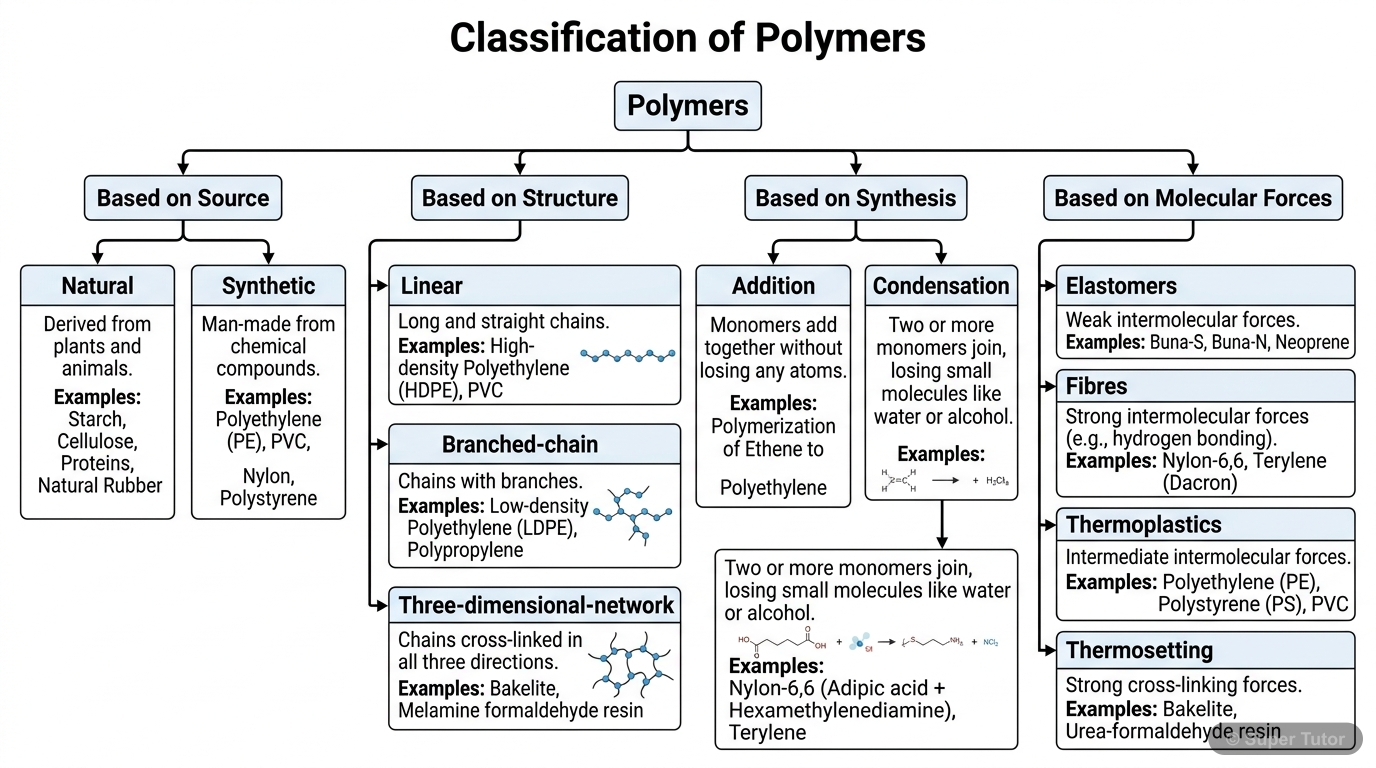
Learn better with visuals Super Tutor pairs illustrations like this with notes and quizzes for Chemistry in Everyday Life.
What is a drug and how is it defined in chemistry?
Answer
A drug is a substance used to modify or explore physiological systems or pathological states for the benefit of the recipient. It is used for diagnosis, prevention, cure, or relief of disease. A drug …
Define therapeutic index and explain its importance in drug safety.
Answer
Therapeutic index is the ratio between the maximum tolerated dose (MTD) of a drug (above which it becomes toxic) and the minimum curative dose (MCD) below which the drug is ineffective. Formula: Thera…
Classify drugs based on chemical structure and give two examples.
Answer
Drugs are classified by grouping compounds with similar chemical skeletons into single groups. Example 1: Penicillins (ampicillin, amoxicillin, methicillin) - all have the beta-lactam ring structure.
What is pharmacological classification of drugs? Give an example.
Answer
Pharmacological classification groups drugs based on their biological effect on the recipient. Drugs are grouped by the disease they treat or condition they manage. Example: Antibiotics - drugs that k…
Explain drug-target interaction using enzyme inhibition as an example.
Answer
Drug-target interaction occurs when drug molecules bind to biomolecules (enzymes or receptors) to modify biochemical reactions. For enzyme inhibition: A drug with similar geometry to the substrate can…
Differentiate between agonist and antagonist drugs using examples.
Answer
Agonist drugs: Mimic natural chemical messengers by binding to receptors and switching them ON. They activate the receptor to produce a biological response. Example: Morphine binds to opioid receptors…
What are tranquilizers and how do they work? Give examples.
Answer
Tranquilizers are neurologically active drugs that act on the central nervous system. They work by blocking the neurotransmitter dopamine in the brain. Classification: (1) Major tranquilizers (for sev…
Compare analgesics (non-narcotic) and opioids as pain relief drugs.
Answer
Non-narcotic Analgesics (e.g., Aspirin, Paracetamol, Ibuprofen): Reduce pain by reducing local inflammatory response. Work on peripheral nerves without causing consciousness impairment. Also reduce fe…
+32 more flashcards
Practise AllFrequently Asked Questions
What are the important topics in Chemistry in Everyday Life for Tamil Nadu Board Class 12 Chemistry?
How many flashcards are available for Chemistry in Everyday Life?
How should I revise Chemistry in Everyday Life for the Tamil Nadu Board Class 12 board exam?
Sources & Official References
Content is aligned to the official syllabus. Refer to the board website for the latest curriculum.
More resources for Chemistry in Everyday Life
For serious students
Get the full Chemistry in Everyday Life chapter — start free.
Quizzes, flashcards, an AI doubt solver and a study plan for Tamil Nadu Board Class 12 Chemistry. Free to start, no card needed.