Chemistry in Everyday Life — Revision Notes
Tamil Nadu Board · Class 12 · Chemistry
Chemistry in Everyday Life revision notes for Tamil Nadu Board Class 12 Chemistry: 4 topics in quick points. Includes 1 DRUGS AND CHEMOTHERAPY, 1.1 DRUG.
Interactive on Super Tutor
Studying Chemistry in Everyday Life? Get the full interactive chapter.
Quizzes, flashcards, AI doubt-solver and a step-by-step study plan — built for revision notes and more.
Free trial, no card needed.
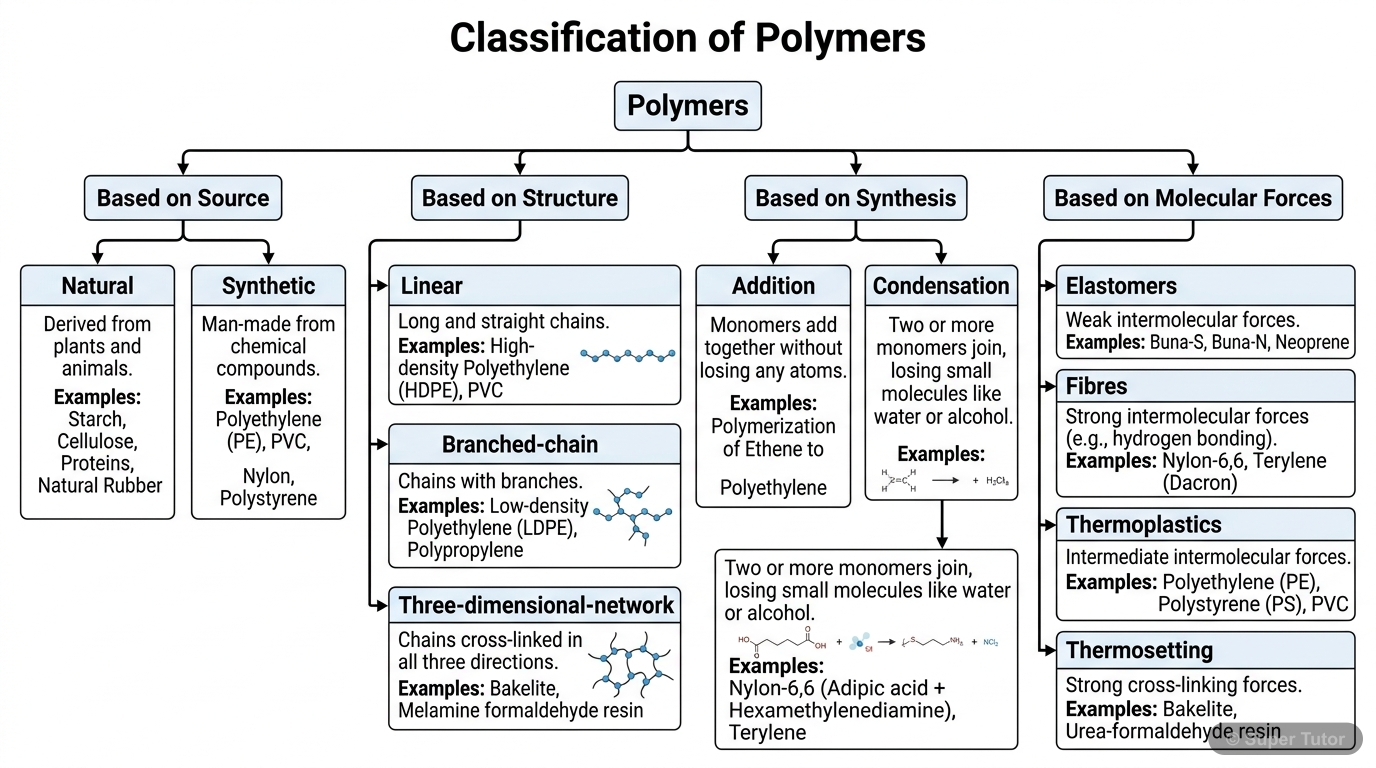
Learn better with visuals Super Tutor pairs illustrations like this with notes and quizzes for Chemistry in Everyday Life.
Key Topics to Revise
15.1 DRUGS AND CHEMOTHERAPY
- A drug is a substance used to modify physiological systems or treat pathological states for diagnosis, prevention, or cure of disease
- Medicine is a drug that interacts with macromolecular targets (proteins) to produce therapeutic biological response
- Chemotherapy is the specific treatment of disease using medicine
15.1.1 DRUG CLASSIFICATION SYSTEMS
- Classification by chemical structure groups drugs with similar molecular frameworks (e.g., penicillins all have beta-lactam ring)
- Penicillins include: Penicillin G, V, ampicillin, amoxicillin, methicillin - all share core structure but have different R-groups
- Classification by pharmacological effect groups drugs by their biological actions (e.g., all antibiotics kill bacteria)
15.1.2 IMPORTANT DRUG CLASSES AND THERAPEUTIC ACTIONS
- TRANQUILIZERS: Act on CNS by blocking dopamine; major (haloperidol, clozapine) for psychosis; minor (diazepam, alprazolam) for anxiety
- ANALGESICS (non-narcotic): Reduce pain without consciousness impairment; include NSAIDs, antipyretics
- Aspirin: NSAID that relieves pain, reduces fever, prevents platelet coagulation (heart attack prevention)
15.2 FOOD ADDITIVES
- Food additives are non-naturally occurring substances added to food to improve quality, appearance, or shelf-life
- Main categories: aroma compounds, artificial sweeteners, food colours, antioxidants, preservatives, buffering substances, stabilizers, vitamins, minerals
- Preservatives inhibit fermentation, acidification, and decomposition by preventing microbial growth
Get complete notes with diagrams and examples
Full NotesKey Concepts
Frequently Asked Questions
What are the important topics in Chemistry in Everyday Life for Tamil Nadu Board Class 12 Chemistry?
How should I revise Chemistry in Everyday Life for the Tamil Nadu Board Class 12 board exam?
Sources & Official References
Content is aligned to the official syllabus. Refer to the board website for the latest curriculum.
More resources for Chemistry in Everyday Life
For serious students
Get the full Chemistry in Everyday Life chapter — start free.
Quizzes, flashcards, an AI doubt solver and a study plan for Tamil Nadu Board Class 12 Chemistry. Free to start, no card needed.