Applications of Recombinant DNA Technology — Study Plan
CBSE · Class 12 · Biotechnology
A step-by-step study plan for Applications of Recombinant DNA Technology, CBSE Class 12 Biotechnology: what to learn first, what to practise and when.
Interactive on Super Tutor
Studying Applications of Recombinant DNA Technology? Get the full interactive chapter.
Quizzes, flashcards, AI doubt-solver and a step-by-step study plan — built for study plan and more.
Free trial, no card needed.
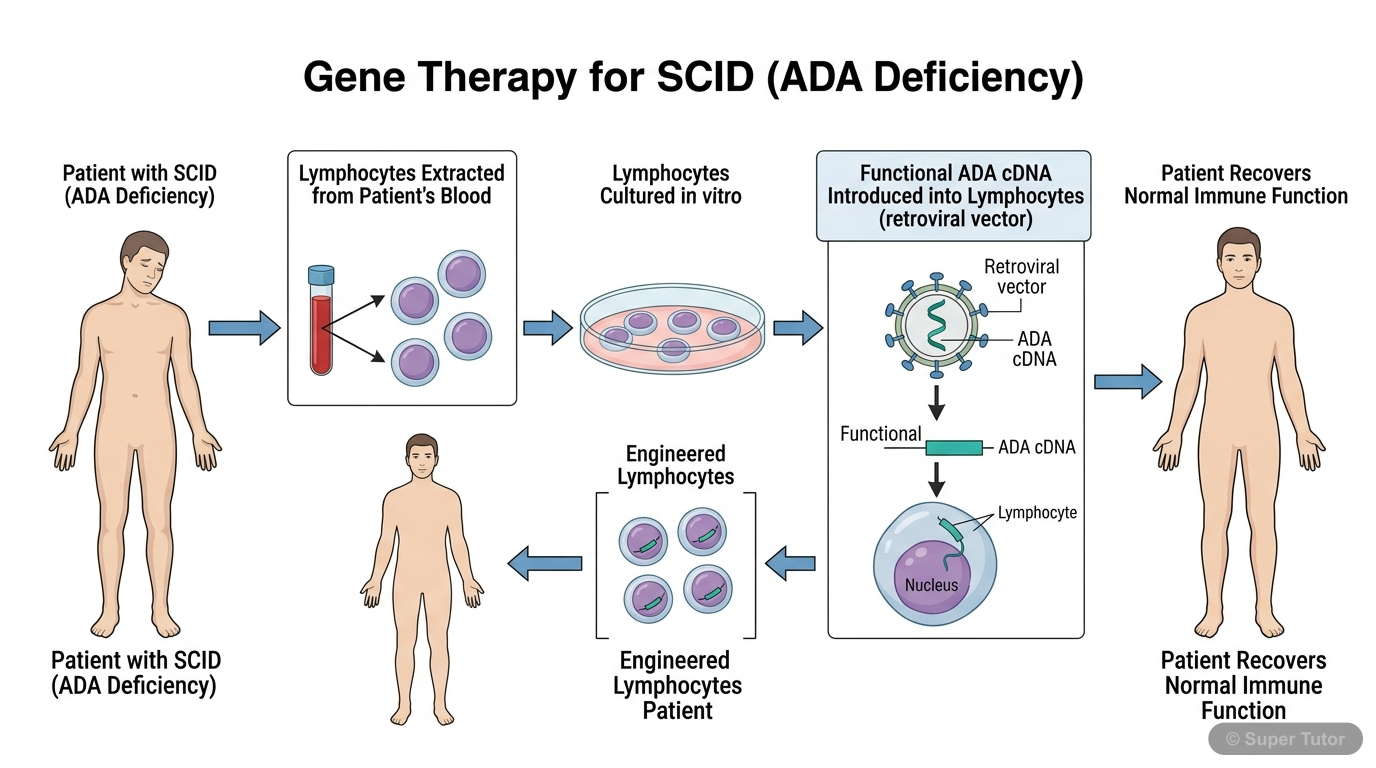
One of 28 illustrations for Applications of Recombinant DNA Technology in Super Tutor — alongside flashcards, concept maps and practice questions.
See them allStudy Plan
Learn the Theory
Read the textbook chapter carefully. Note down definitions, formulas and key ideas. Focus on: DNA Fingerprinting, Transgenic Organisms, Gene Therapy.
Practise
Solve the textbook exercises and extra practice questions. There are 79 questions available for this chapter.
Revise & Test
Revise key points without looking at your notes. Take a practice quiz and mark weak areas for another pass.
Spaced Revision
Come back to Applications of Recombinant DNA Technology after a week. Use flashcards for quick recall and try past exam questions on this chapter.
What to Focus On
- DNA fingerprinting identifies inherited variation in DNA.
- It is based on VNTR polymorphism.
- VNTRs are subdivided into microsatellites and minisatellites.
- A transgene is a foreign gene introduced into an organism.
- Agrobacterium tumefaciens naturally transfers DNA and is called the Natural Genetic Engineer.
- Particle bombardment uses gold or tungsten particles of 1 µm to 3 µm size.
- Gene therapy repairs faulty genes using correct genetic material.
- The first gene therapy was done in 1990 for SCID caused by ADA deficiency.
- Main approaches are gene replacement, gene inhibition, and gene repair/editing.
Common Mistakes to Avoid
DNA fingerprinting works by comparing the whole DNA sequence of two people.
Microsatellites and minisatellites are the same type of repeat with no important difference.
Agrobacterium tumefaciens is just a harmful plant pathogen and is not useful in biotechnology.
Memory Tips
Sir Alec Jeffreys developed DNA fingerprinting in 1984 at the University of Leicester
99.9% of human genome is same and 0.1% shows inherited variation
VNTR family includes microsatellites and minisatellites
PCR increases sensitivity in DNA fingerprinting by amplifying DNA regardless of amount
Want a personalised study plan?
Super Tutor builds a day-by-day plan for CBSE Class 12 Biotechnology that fits your exam date and pace.
Create My Study PlanFrequently Asked Questions
What are the important topics in Applications of Recombinant DNA Technology for CBSE Class 12 Biotechnology?
How should I revise Applications of Recombinant DNA Technology for the CBSE Class 12 board exam?
Sources & Official References
- NCERT Official — ncert.nic.in
- CBSE Academic — cbseacademic.nic.in
- CBSE Official — cbse.gov.in
- National Education Policy 2020 — education.gov.in
Content is aligned to the official syllabus. Refer to the board website for the latest curriculum.
More resources for Applications of Recombinant DNA Technology
Practice Quiz
Test yourself with a quick quiz
Important Questions
Exam-style questions with answers
Revision Notes
Key points for last-minute revision
Chapter Summary
Understand the chapter at a glance
Concept Maps
See how topics connect
Flashcards
Quick-fire cards for active recall
Syllabus
What topics to cover
NCERT Solutions
Every textbook question solved step by step
For serious students
Get the full Applications of Recombinant DNA Technology chapter — start free.
Quizzes, flashcards, an AI doubt solver and a study plan for CBSE Class 12 Biotechnology. Free to start, no card needed.