Applications of Recombinant DNA Technology
CBSE · Class 12 · Biotechnology
NCERT Solutions for Applications of Recombinant DNA Technology — CBSE Class 12 Biotechnology.
Interactive on Super Tutor
Studying Applications of Recombinant DNA Technology? Get the full interactive chapter.
Quizzes, flashcards, AI doubt-solver and a step-by-step study plan — built for ncert solutions and more.
1,000+ Class 12 students started this chapter today

Super Tutor has 28+ illustrations like this for Applications of Recombinant DNA Technology alone — flashcards, concept maps, and step-by-step visuals.
See them allEXERCISES
1What do you mean by DNA fingerprinting? Explain it through RFLP.Show solution
Definition: DNA fingerprinting is a technique developed by Sir Alec Jeffreys in 1984 at the University of Leicester, used to identify inherited variations in human DNA without sequencing. It exploits the fact that certain regions of DNA (mini-satellites) vary greatly between individuals.
Explanation through RFLP (Restriction Fragment Length Polymorphism):
Step 1 – DNA Extraction: High-molecular-weight DNA is extracted from the biological sample (blood, hair, saliva, etc.).
Step 2 – Restriction Digestion: The extracted DNA is cut using specific restriction endonucleases. These enzymes cut DNA at specific recognition sequences. The number and position of these cut sites vary between individuals due to polymorphism, producing fragments of different lengths — this is the basis of RFLP.
Step 3 – Gel Electrophoresis: The restriction fragments are separated by size using agarose gel electrophoresis. Smaller fragments migrate faster and farther.
Step 4 – Southern Blotting: The separated DNA fragments are transferred from the gel onto a nitrocellulose or nylon membrane (Southern blotting).
Step 5 – Hybridisation with Probe: A radioactively or chemiluminescently labelled probe (complementary to VNTR — Variable Number Tandem Repeats) is added. The probe hybridises specifically to the complementary mini-satellite sequences.
Step 6 – Autoradiography: The membrane is exposed to X-ray film. The probe-bound fragments appear as dark bands, producing a unique banding pattern — the DNA fingerprint.
Role of VNTR: VNTR are short, non-coding, repetitive sequences arranged in tandem. The number of repeats at a given locus varies from person to person (polymorphic). After restriction digestion, individuals with more repeats produce larger fragments and those with fewer repeats produce smaller fragments. This variation in fragment length is the molecular basis of DNA fingerprinting.
Applications: Forensic identification, paternity testing, evolutionary studies, and identification of criminals.
Conclusion: DNA fingerprinting through RFLP exploits the variation in VNTR copy numbers among individuals to generate unique banding patterns that serve as a molecular identity card for each person.
2What are GMOs? Describe the method of development of transgenic plants.Show solution
GMOs are organisms whose genetic material has been altered using genetic engineering techniques. The modification involves insertion of one or more foreign genes (transgenes) from another organism into the genome of the host organism. Examples include Bt cotton, Golden Rice, Flavr Savr tomato.
Development of Transgenic Plants — Step-by-Step:
Step 1 – Identification and Isolation of Gene of Interest:
The desired gene (e.g., Bt toxin gene, herbicide resistance gene) is identified and isolated from the donor organism using restriction endonucleases or PCR.
Step 2 – Construction of Recombinant Vector (Ti plasmid or other vectors):
The isolated gene is inserted into a suitable genetic vehicle (vector), most commonly the Ti plasmid of *Agrobacterium tumefaciens*. The gene is flanked by:
- A promoter (to initiate transcription)
- A terminator (to stop transcription)
- A selectable marker gene (e.g., antibiotic resistance) for identification of transformed cells.
Step 3 – Gene Transfer into Plant Cells:
Two main approaches are used:
(A) Indirect/Vector-mediated Gene Transfer:
- ***Agrobacterium tumefaciens*-mediated transformation:** The bacterium naturally infects dicot plants and transfers T-DNA from its Ti plasmid into the plant genome. The gene of interest is cloned into the T-DNA region. Disarmed (non-tumour-forming) *Agrobacterium* is used to infect plant explants (leaf discs). The T-DNA integrates into the plant nuclear genome.
- In planta transformation: Direct inoculation of *Agrobacterium* into the plant without tissue culture.
- Plant virus-mediated transfer: Plant viruses act as vectors to deliver the transgene.
(B) Direct/Vectorless Gene Transfer:
- Particle bombardment (Gene gun/Biolistics): DNA-coated gold or tungsten microparticles are bombarded into plant cells at high velocity using a gene gun.
- Protoplast transformation: Plant cell walls are removed enzymatically to form protoplasts; DNA is introduced by PEG (polyethylene glycol) treatment or electroporation.
- Microinjection: DNA is directly injected into the nucleus of a plant cell using a fine glass needle.
Step 4 – Selection of Transformed Cells:
Transformed plant cells are selected on a medium containing the antibiotic or herbicide corresponding to the selectable marker gene. Only transformed cells survive.
Step 5 – Regeneration (Tissue Culture):
Selected transformed cells are cultured on appropriate media containing plant growth regulators (auxins, cytokinins) to regenerate whole transgenic plants via somatic embryogenesis or organogenesis.
Step 6 – Confirmation of Transgene Integration and Expression:
The presence and expression of the transgene is confirmed by:
- PCR (Polymerase Chain Reaction)
- Southern blotting
- Western blotting / ELISA (for protein expression)
Conclusion: The resulting plant carrying and expressing the foreign gene in all its cells and transmitting it to progeny is called a transgenic plant or genetically modified (GM) plant.
3Differentiate between direct and indirect method of gene transfer. Name one indirect method suitable for gene transfer in dicot plants.Show solution
| Feature | Direct (Vectorless) Gene Transfer | Indirect (Vector-mediated) Gene Transfer |
|---|---|---|
| Definition | Transfer of foreign DNA directly into plant cells without using a biological vector | Transfer of foreign DNA using a biological vector (bacterium or virus) as an intermediary |
| Vector used | No biological vector; physical or chemical methods used | Biological vectors like *Agrobacterium tumefaciens* or plant viruses |
| Examples | Particle bombardment (gene gun), protoplast transformation, microinjection, electroporation | *Agrobacterium*-mediated transformation, in planta transformation, plant virus-mediated transfer |
| Host range | Broad — applicable to both monocots and dicots | *Agrobacterium*-mediated is mainly limited to dicots (though modified strains can infect monocots) |
| Efficiency | Generally lower integration efficiency; may cause multiple insertions | Higher efficiency with stable, single-copy integration |
| Technical requirement | Requires specialised equipment (e.g., gene gun) | Requires knowledge of bacterial biology and vector construction |
| Tissue damage | Particle bombardment can cause physical damage to cells | Relatively less physical damage |
Indirect method suitable for gene transfer in dicot plants:
*Agrobacterium tumefaciens* is a soil bacterium that naturally infects dicot plants and causes crown gall disease. It carries a Ti (Tumour-inducing) plasmid, a portion of which (T-DNA) integrates into the plant nuclear genome. By cloning the gene of interest into the T-DNA region of a disarmed Ti plasmid, this bacterium is used as a natural vector to transfer genes into dicot plants such as tobacco, tomato, soybean, etc.
4What is molecular pharming? Give applications of transgenic animals in molecular pharming.Show solution
Molecular pharming (also called 'biopharming') refers to the use of genetically modified (transgenic) organisms — particularly animals and plants — as biological factories for the large-scale production of valuable pharmaceutical proteins, industrial enzymes, and other therapeutic agents. The term combines 'molecular biology' and 'farming'.
In transgenic animals, the gene of interest (encoding a therapeutic protein) is expressed under the control of a tissue-specific promoter (e.g., mammary gland-specific promoter), so that the protein is secreted in milk, making it easy to harvest.
Applications of Transgenic Animals in Molecular Pharming:
1. Production of -Antitrypsin:
Transgenic sheep have been engineered to produce human -antitrypsin in their milk. This protein is used to treat emphysema (a lung disease) caused by -antitrypsin deficiency.
2. Production of Human -Lactalbumin:
Transgenic cows have been developed to produce human -lactalbumin in their milk. This protein improves the nutritional quality of milk for infant formula.
3. Production of Clotting Factors:
Transgenic animals (e.g., sheep, pigs) have been engineered to produce human blood clotting factors (Factor VIII, Factor IX) in their milk for treatment of haemophilia.
4. Production of Tissue Plasminogen Activator (tPA):
Transgenic goats produce tPA in their milk. tPA is used as a thrombolytic agent to dissolve blood clots in heart attack and stroke patients.
5. Production of Human Serum Albumin:
Transgenic animals are used to produce human serum albumin, used in blood volume expansion and treatment of burns.
6. Production of Antibodies:
Transgenic mice and other animals are used to produce human monoclonal antibodies for therapeutic use.
Advantages of Molecular Pharming using Transgenic Animals:
- Large-scale, cost-effective production
- Proteins are correctly folded and post-translationally modified
- Easy harvesting from milk without harming the animal
- Proteins are biologically active and safe for human use
5Differentiate between gene gun and gene therapy.Show solution
| Feature | Gene Gun | Gene Therapy |
|---|---|---|
| Definition | A physical device used to deliver DNA into cells by bombarding DNA-coated microparticles at high velocity | A medical technique designed to repair or replace faulty genes in humans to treat genetic diseases |
| Purpose | Used primarily for genetic transformation of plant cells (and sometimes animal cells) in research/agriculture | Used to treat or prevent diseases caused by defective genes in humans |
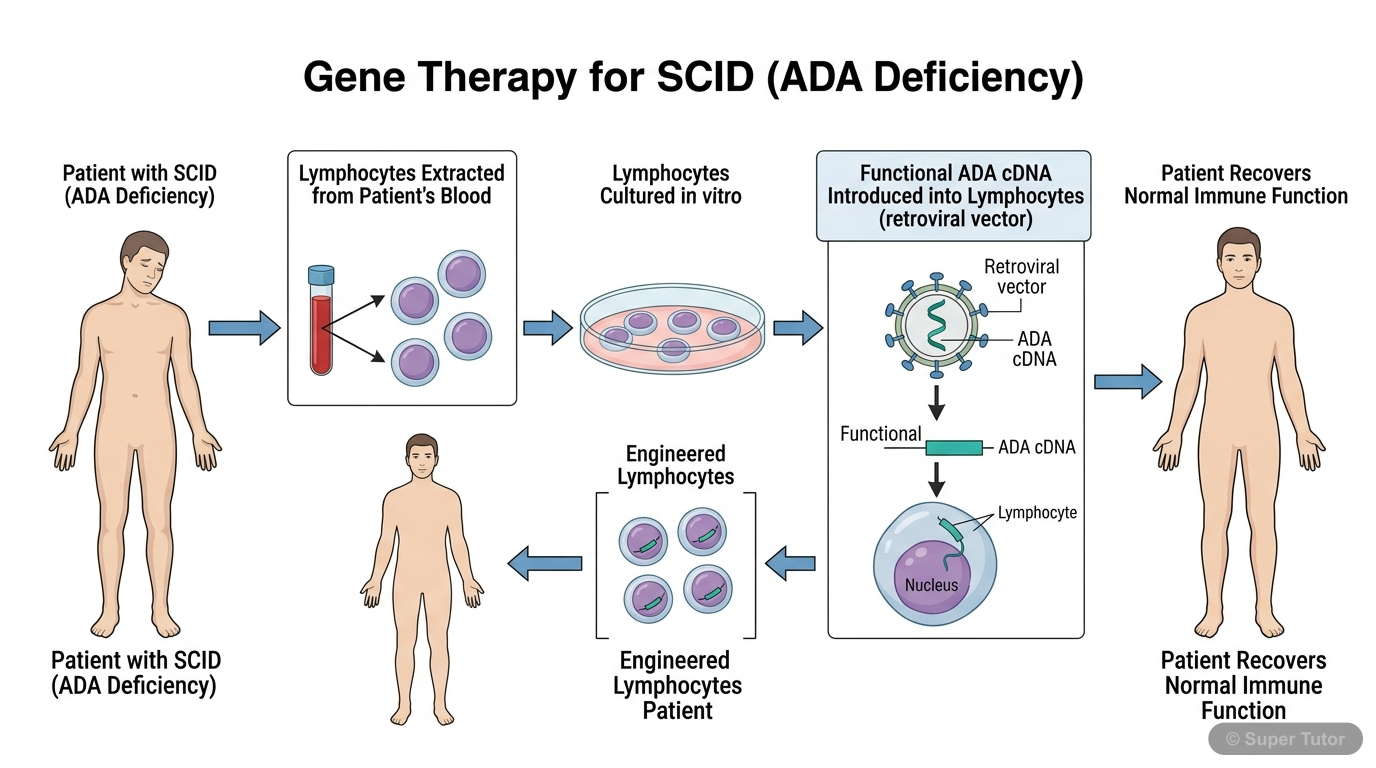
| Mechanism | Gold or tungsten microparticles coated with DNA are accelerated using helium gas pressure into target cells | Correct genetic material is introduced into target cells using viral vectors (retroviruses, adenoviruses) or non-viral methods |
| Target | Mainly plant cells; also used for animal cells and tissues | Human somatic cells (somatic gene therapy) or germ cells (germ-line gene therapy) |
| Nature | A laboratory/agricultural tool (physical method of gene transfer) | A clinical/medical procedure |
| Outcome | Produces transgenic plants or organisms with new traits | Corrects genetic defects to restore normal function in patients |
| Examples | Used to develop Bt crops, herbicide-resistant crops | Used to treat ADA-SCID (Adenosine Deaminase — Severe Combined Immunodeficiency), cystic fibrosis |
| Heritability | Transgene is heritable in plants | Somatic gene therapy is non-heritable; germ-line therapy is heritable |
Summary: A gene gun is a physical tool/technique for introducing DNA into cells, whereas gene therapy is a broader medical strategy aimed at treating human genetic disorders by correcting defective genes.
6Give the procedure of development of recombinant subunit vaccines.Show solution
Recombinant subunit vaccines contain specific antigenic proteins (subunits) of a pathogen, produced using rDNA technology, rather than the whole pathogen. They are safe because they do not contain live or killed pathogens.
Procedure of Development:
Step 1 – Identification of Antigen:
The gene encoding the specific antigenic protein (surface protein, coat protein, or toxin) of the pathogen that elicits a strong immune response is identified. For example, the surface antigen (HBsAg) of Hepatitis B virus.
Step 2 – Isolation of the Antigen Gene:
The gene encoding the antigenic protein is isolated from the pathogen's genome using restriction endonucleases or synthesised chemically (if the sequence is known).
Step 3 – Cloning into an Expression Vector:
The isolated gene is inserted into a suitable expression vector (plasmid) containing:
- A strong promoter for high-level expression
- A selectable marker gene
- Appropriate regulatory sequences (enhancer, terminator)
Step 4 – Introduction into Host Expression System:
The recombinant expression vector is introduced into a suitable host organism:
- Bacteria (*E. coli*) — for simple proteins
- Yeast (*Saccharomyces cerevisiae*) — for glycoproteins (e.g., HBsAg)
- Mammalian cells — for complex proteins requiring post-translational modifications
- Transgenic plants — for edible vaccines
Step 5 – Expression and Production of Antigenic Protein:
The host organism expresses the cloned gene and produces large quantities of the antigenic protein.
Step 6 – Extraction and Purification:
The antigenic protein is extracted from the host cells and purified using chromatographic techniques (affinity chromatography, ion-exchange chromatography) to remove host cell proteins and contaminants.
Step 7 – Formulation of Vaccine:
The purified antigenic protein is formulated with adjuvants (substances that enhance immune response) and stabilisers to prepare the final vaccine.
Step 8 – Testing:
The vaccine is tested for safety, immunogenicity, and efficacy in animal models and then in clinical trials before approval.
Example: Recombinant Hepatitis B vaccine — HBsAg gene is expressed in yeast; the purified surface antigen is used as vaccine (marketed as Recombivax HB®, Engerix-B®).
Advantages: Safe (no live pathogen), highly pure, can be produced in large quantities, no risk of reversion to virulence.
7Write a short note on DNA vaccines.Show solution
Definition: DNA vaccines (also called nucleic acid vaccines or genetic vaccines) are a type of recombinant vaccine in which a plasmid DNA encoding the antigen of a pathogen is directly introduced into the host's cells. The host's own cellular machinery then produces the antigenic protein, which stimulates an immune response.
Principle:
Instead of injecting the antigen protein directly, a gene encoding the antigen is delivered. The host cells transcribe and translate the gene, producing the antigen intracellularly. This mimics a natural infection and stimulates both humoral (antibody-mediated) and cell-mediated immunity.
Procedure of Development:
1. The gene encoding the pathogen's antigen is identified and isolated.
2. The gene is cloned into a plasmid expression vector under the control of a strong mammalian promoter (e.g., CMV promoter).
3. The recombinant plasmid DNA is purified and formulated.
4. The DNA vaccine is administered by intramuscular injection, gene gun (biolistics), or intradermal delivery.
5. Host cells take up the plasmid, express the antigen, and present it to the immune system.
6. Both B-cells (antibody production) and cytotoxic T-cells are activated, providing long-lasting immunity.
Advantages of DNA Vaccines:
- Stimulate both humoral and cell-mediated immunity
- Stable at room temperature (no cold chain required)
- Easy and rapid to design and manufacture
- No risk of infection (no live pathogen used)
- Can be designed against multiple antigens simultaneously
- Cost-effective large-scale production
Examples:
- COVID-19 mRNA vaccines (Pfizer-BioNTech, Moderna) are based on a similar principle using mRNA.
- DNA vaccines against HIV, influenza, and malaria are under development.
- ZyCoV-D (India) — first DNA vaccine approved for COVID-19.
Limitations: Lower immunogenicity compared to live vaccines; may require adjuvants or multiple doses; concerns about integration into host genome (though rare).
8Describe the advantages of monoclonal antibodies developed by rDNA technology over that developed by Hybridoma technology.Show solution
Hybridoma Technology: In this technique, B-lymphocytes (antibody-producing cells) from an immunised mouse are fused with immortal myeloma cells to form hybridoma cells. These hybridoma cells produce monoclonal antibodies (MAbs) that are entirely of mouse origin.
rDNA Technology for MAbs: Using rDNA technology, chimeric antibodies or humanised antibodies are produced by replacing mouse antibody sequences with human sequences.
Advantages of rDNA-derived Monoclonal Antibodies over Hybridoma-derived MAbs:
1. Reduced Immunogenicity (Human Anti-Mouse Antibody — HAMA response):
- Hybridoma-derived MAbs are of mouse origin and are recognised as foreign by the human immune system, triggering HAMA response.
- rDNA-derived humanised/chimeric antibodies contain mostly human sequences, greatly reducing immunogenicity and allergic reactions in patients.
2. Longer Half-life in Human Body:
- Mouse antibodies are rapidly cleared from human circulation.
- Humanised antibodies have a longer half-life as they are recognised as 'self' by the human immune system.
3. Higher Efficacy:
- Humanised antibodies can more effectively recruit human immune effector functions (complement activation, ADCC — antibody-dependent cell-mediated cytotoxicity).
- This results in better therapeutic outcomes.
4. Chimeric and Humanised Antibodies:
- Chimeric antibodies: Variable regions (antigen-binding) are of mouse origin; constant regions are human. Approximately 65–70% human.
- Fully humanised antibodies: Only the complementarity-determining regions (CDRs) are of mouse origin; rest is human. Approximately 95% human.
- These modifications improve safety and efficacy.
5. Large-scale Production:
- rDNA technology allows expression of antibody genes in bacteria, yeast, or mammalian cell lines for large-scale, cost-effective production.
6. Ability to Engineer Antibody Properties:
- rDNA technology allows modification of antibody structure to improve binding affinity, specificity, and pharmacokinetics.
- Bispecific antibodies (binding two different antigens) can be engineered.
Examples of rDNA-derived therapeutic MAbs:
- Trastuzumab (Herceptin®) — for breast cancer
- Rituximab — for non-Hodgkin's lymphoma
- Adalimumab (Humira®) — for rheumatoid arthritis
Conclusion: rDNA-derived monoclonal antibodies are safer, more efficacious, longer-lasting, and better tolerated in humans compared to hybridoma-derived mouse monoclonal antibodies.
9Briefly describe the development of Humulin through rDNA technology.Show solution
Background: Insulin is a peptide hormone produced by -cells of the islets of Langerhans in the pancreas. It regulates blood glucose levels. Deficiency of insulin causes diabetes mellitus. Before rDNA technology, insulin was extracted from pig or cow pancreas, which caused allergic reactions in some patients.
Structure of Insulin:
Human insulin (Humulin) consists of two polypeptide chains:
- Chain A — 21 amino acids
- Chain B — 30 amino acids
The two chains are linked by two disulfide bridges (between chain A and B) and one disulfide bridge within chain A.
Insulin is synthesised as preproinsulin → proinsulin → insulin (after removal of C-peptide).
Steps in Development of Humulin:
Step 1 – Isolation of Insulin Gene:
The genes encoding chain A and chain B of human insulin were isolated from a human gene library.
Step 2 – Chemical Synthesis of Insulin Genes:
Since the insulin gene is small, the DNA sequences encoding chain A (63 nucleotides) and chain B (90 nucleotides) were chemically synthesised in the laboratory.
Step 3 – Insertion into Expression Vectors:
Each synthetic gene was separately inserted into a plasmid expression vector of *E. coli*, downstream of the -galactosidase gene (lacZ), so that the insulin chains were produced as fusion proteins with -galactosidase.
**Step 4 – Transformation of *E. coli*:**
The recombinant plasmids were introduced into *E. coli* cells by transformation. The bacteria expressed the recombinant genes and produced fusion proteins containing chain A or chain B.
Step 5 – Extraction and Purification:
The fusion proteins were extracted from bacterial cells. The insulin chains were cleaved from -galactosidase using cyanogen bromide (CNBr) treatment.
Step 6 – Combination of Chains:
Purified chain A and chain B were mixed under appropriate oxidising conditions. The disulfide bridges formed spontaneously between the two chains, producing biologically active human insulin.
Step 7 – Purification and Formulation:
The assembled insulin was purified and formulated for pharmaceutical use.
Result: The first genetically engineered human insulin, marketed as Humulin®, was manufactured by Eli Lilly and Company in 1982. It was the first recombinant DNA-derived pharmaceutical product approved for human use.
Significance: Humulin is identical to human insulin, non-allergenic, and can be produced in unlimited quantities, overcoming the limitations of animal-derived insulin.
10Write a short note on Humatrope and Protropin.Show solution
Human Growth Hormone (HGH):
Human Growth Hormone (also called somatotropin) is a 191-amino acid protein hormone secreted by the anterior pituitary gland. It stimulates growth, cell reproduction, and regeneration. Deficiency of HGH in children causes pituitary dwarfism (short stature).
Before rDNA Technology:
HGH was extracted from the pituitary glands of human cadavers. This method was:
- Extremely limited in supply
- Expensive
- Associated with risk of transmission of Creutzfeldt-Jakob disease (CJD — a fatal prion disease)
Development using rDNA Technology:
In 1985, the gene encoding human growth hormone was isolated and cloned into *E. coli* expression vectors. The recombinant bacteria produced large quantities of biologically active HGH.
Humatrope®:
- Developed by Eli Lilly and Company
- Approved by the US FDA in 1987
- Produced by recombinant DNA technology using *E. coli*
- Contains 191 amino acids, identical to pituitary-derived HGH
- Used for treatment of growth hormone deficiency in children and adults, Turner syndrome, chronic renal insufficiency, and short stature
Protropin® (Somatrem):
- Developed by Genentech Inc.
- First recombinant HGH to be marketed (approved in 1985)
- Contains 192 amino acids (191 amino acids of HGH + one additional methionine at the N-terminus due to bacterial expression)
- Used for treatment of growth failure in children due to HGH deficiency
- Later replaced by Humatrope (191 aa) which is identical to natural HGH
Advantages of Recombinant HGH:
- Unlimited supply
- No risk of CJD transmission
- Highly pure and consistent quality
- Cost-effective compared to cadaver-derived HGH
Conclusion: Humatrope and Protropin represent landmark achievements of rDNA technology in producing safe, pure, and effective therapeutic proteins for clinical use.
11Briefly describe the applications of rDNA technology in crop improvement.Show solution
rDNA technology has revolutionised agriculture by enabling the development of transgenic plants with improved agronomic traits. Major applications include:
1. Resistance to Biotic Stresses:
(a) Insect Resistance (Bt crops):
- Genes (*cry* genes) from *Bacillus thuringiensis* encoding Bt toxin (Cry proteins) have been introduced into crops like cotton (Bt cotton), maize, and brinjal.
- Bt toxin is lethal to specific insect pests (e.g., bollworm in cotton) but safe for humans and other organisms.
- Reduces the need for chemical pesticides.
(b) Virus Resistance:
- Genes encoding viral coat proteins or antisense RNA have been introduced to confer resistance against plant viruses.
- Example: Papaya ringspot virus-resistant papaya.
(c) Fungal and Bacterial Resistance:
- Genes encoding chitinase, glucanase, or pathogenesis-related (PR) proteins have been introduced to enhance resistance to fungal and bacterial pathogens.
2. Resistance to Abiotic Stresses:
- Genes conferring tolerance to drought, salinity, extreme temperatures, and heavy metals have been introduced.
- Example: Overexpression of genes encoding osmoprotectants (proline, betaine) improves drought and salt tolerance.
3. Herbicide Tolerance:
- The *EPSPS* gene from *Agrobacterium* (conferring resistance to glyphosate herbicide) has been introduced into soybean, maize, and cotton (Roundup Ready® crops).
- Allows application of herbicide to kill weeds without harming the crop.
4. Improved Nutritional Quality:
- Golden Rice: -carotene biosynthesis genes (*psy* and *crtI*) were introduced into rice to produce Golden Rice, which is rich in provitamin A (addressing Vitamin A deficiency).
- High-lysine maize: Maize engineered to produce higher levels of essential amino acid lysine.
- High-oleic soybean: Modified fatty acid composition for healthier oil.
5. Delayed Fruit Ripening:
- Flavr Savr tomato — the first commercially approved GM food (1994). The gene encoding polygalacturonase (enzyme responsible for fruit softening) was silenced using antisense RNA technology, resulting in delayed ripening and longer shelf life.
6. Male Sterility for Hybrid Seed Production:
- Barnase gene (encoding RNase) expressed in tapetum cells causes male sterility, facilitating hybrid seed production.
7. Molecular Farming (Edible Vaccines):
- Transgenic plants (banana, potato, tomato) have been engineered to produce vaccine antigens (e.g., Hepatitis B surface antigen) that can be delivered orally as edible vaccines.
8. Biofuel Production:
- Transgenic crops with modified starch or cellulose content are being developed for improved biofuel production.
Conclusion: rDNA technology has provided powerful tools for crop improvement, addressing challenges of food security, nutritional deficiency, and sustainable agriculture.
12List the ethical issues related to the use of transgenic animals.Show solution
1. Animal Welfare and Suffering:
- The process of creating transgenic animals involves invasive procedures (microinjection, embryo manipulation, surgery) that may cause pain and distress to animals.
- Transgenic animals may suffer from unexpected health problems due to insertional mutagenesis or overexpression of transgenes.
2. Unpredictable Effects of Transgene:
- Random integration of the transgene into the genome may disrupt normal genes, causing developmental abnormalities, disease, or premature death in transgenic animals.
3. Biodiversity and Ecological Concerns:
- If transgenic animals escape into the wild, they may interbreed with wild populations, potentially disrupting natural gene pools and threatening biodiversity.
- Transgenic fish (e.g., fast-growing salmon) could outcompete wild species.
4. Ethical Concerns about 'Playing God':
- Many people, particularly from religious communities, object to the genetic modification of animals on the grounds that it interferes with nature and the natural order of creation.
5. Risk of Zoonotic Diseases:
- Transgenic animals used in xenotransplantation (e.g., pigs with human genes for organ transplantation) may carry animal viruses (e.g., porcine endogenous retroviruses — PERVs) that could infect human recipients.
6. Commercialisation and Patenting of Life:
- The patenting of transgenic animals raises ethical questions about the commodification of living organisms and the monopolisation of biological resources by corporations.
7. Welfare of Animals used in Research:
- Large numbers of transgenic animals are used and sacrificed in biomedical research, raising concerns about the ethical treatment of animals.
8. Lack of Informed Consent:
- Unlike human subjects, animals cannot give consent to being genetically modified or used in experiments.
9. Unintended Consequences:
- The long-term effects of genetic modifications on animal health, behaviour, and ecology are not fully understood.
10. Regulatory and Oversight Concerns:
- Inadequate regulation may lead to misuse of transgenic animal technology.
- In India, the Genetic Engineering Approval Committee (GEAC) under the Ministry of Environment, Forest and Climate Change regulates the use of GMOs.
Conclusion: While transgenic animals offer significant benefits in medicine and research, their development and use must be governed by strict ethical guidelines, regulatory oversight, and the 3Rs principle (Replacement, Reduction, Refinement) to minimise animal suffering.
13What is the role of vaccinia virus in the development of recombinant vaccine?Show solution
About Vaccinia Virus:
Vaccinia virus is a large, complex DNA virus belonging to the family Poxviridae. It is closely related to the smallpox virus (Variola) and cowpox virus. Vaccinia virus was historically used as the live vaccine to eradicate smallpox worldwide.
Role as a Vector in Recombinant Vaccine Development:
Vaccinia virus serves as a live viral vector for the development of recombinant vaccines. Its role includes:
1. Large Genome Capacity:
Vaccinia virus has a large double-stranded DNA genome (~190 kb), which can accommodate large foreign gene inserts (up to 25 kb) without affecting viral viability. This allows multiple foreign antigen genes to be inserted simultaneously.
2. Construction of Recombinant Vaccinia Virus:
- The gene encoding the antigen of the target pathogen (e.g., HIV envelope protein, rabies glycoprotein, Hepatitis B surface antigen) is identified and isolated.
- The foreign gene is inserted into a non-essential region of the vaccinia virus genome (e.g., thymidine kinase gene locus) by homologous recombination.
- The resulting recombinant vaccinia virus carries and expresses the foreign antigen gene.
3. Delivery of Antigen:
- When the recombinant vaccinia virus is administered as a vaccine, it infects host cells and expresses the foreign antigen.
- The antigen is presented to the immune system, stimulating both humoral (antibody) and cell-mediated immune responses.
- This provides protection against both vaccinia virus and the target pathogen.
4. Multivalent Vaccine:
- Multiple foreign genes can be inserted into vaccinia virus, creating a multivalent vaccine that provides protection against several diseases simultaneously.
5. Examples:
- Recombinant vaccinia virus expressing rabies glycoprotein — used as oral vaccine for wildlife rabies control.
- Recombinant vaccinia virus expressing HIV antigens — under investigation as HIV vaccine.
Advantages of Vaccinia Virus as Vector:
- Well-characterised biology
- Induces strong immune response
- Thermostable
- Can be administered by multiple routes (intradermal, oral)
Limitations:
- Can cause serious adverse effects in immunocompromised individuals
- Pre-existing immunity to vaccinia may reduce efficacy
Conclusion: Vaccinia virus plays a crucial role as a live viral vector in recombinant vaccine development by delivering foreign antigens to the immune system, thereby providing protection against multiple pathogens.
14Write a short note on recombinant therapeutic agents.Show solution
Definition: Recombinant therapeutic agents are biologically active molecules (proteins, hormones, antibodies, enzymes) produced using recombinant DNA (rDNA) technology for the treatment, prevention, or diagnosis of diseases.
rDNA technology enables the large-scale production of pure, safe, and effective therapeutic agents that were previously difficult or impossible to obtain in sufficient quantities.
Major Categories of Recombinant Therapeutic Agents:
1. Recombinant Hormones:
- Humulin® (Human Insulin): Produced in *E. coli*; used for treatment of diabetes mellitus. First approved recombinant therapeutic protein (1982).
- Humatrope® / Protropin® (Human Growth Hormone): Used for treatment of growth hormone deficiency and pituitary dwarfism.
- Recombinant Erythropoietin (EPO): Stimulates red blood cell production; used for treatment of anaemia in chronic kidney disease.
2. Recombinant Clotting Factors:
- Factor VIII and Factor IX: Produced by rDNA technology for treatment of haemophilia A and B respectively, replacing plasma-derived factors that carried risk of HIV and hepatitis transmission.
3. Recombinant Thrombolytics:
- Tissue Plasminogen Activator (tPA): Dissolves blood clots; used in treatment of myocardial infarction (heart attack) and stroke.
4. Monoclonal Antibodies (MAbs):
- Produced by hybridoma technology and further improved by rDNA technology (chimeric/humanised antibodies).
- Examples: Trastuzumab (Herceptin®) for breast cancer; Rituximab for lymphoma; Adalimumab (Humira®) for rheumatoid arthritis.
5. Recombinant Cytokines:
- Interferons (, , ): Antiviral and anticancer agents; used for treatment of hepatitis C, multiple sclerosis, and certain cancers.
- Interleukins: Immune modulators used in cancer immunotherapy.
6. Recombinant Vaccines:
- Hepatitis B vaccine (HBsAg produced in yeast)
- HPV vaccine (Gardasil®, Cervarix®)
7. Recombinant Enzymes:
- Dornase alfa (Pulmozyme®): Recombinant DNase used to treat cystic fibrosis.
- Imiglucerase (Cerezyme®): Recombinant glucocerebrosidase for Gaucher's disease.
Advantages of Recombinant Therapeutic Agents:
- High purity and consistency
- Large-scale production
- No risk of contamination with human pathogens
- Identical to natural human proteins (reduced immunogenicity)
- Can be engineered for improved properties
Conclusion: Recombinant therapeutic agents represent one of the most significant contributions of rDNA technology to medicine, transforming the treatment of numerous diseases.
15Write a short note on humanised antibodies.Show solution
Background:
Monoclonal antibodies (MAbs) produced by hybridoma technology are entirely of mouse origin. When administered to humans, they are recognised as foreign proteins and trigger an immune response called HAMA (Human Anti-Mouse Antibody) response, leading to rapid clearance, reduced efficacy, and allergic reactions.
Definition:
Humanised antibodies are genetically engineered antibodies in which the mouse-derived sequences are replaced with human antibody sequences to the maximum possible extent, retaining only the antigen-binding regions (CDRs — Complementarity Determining Regions) of mouse origin.
Types of Engineered Antibodies:
1. Chimeric Antibodies:
- The variable regions (VH and VL — antigen-binding domains) are of mouse origin.
- The constant regions (CH and CL) are replaced with human sequences.
- Approximately 65–70% human in composition.
- Example: Rituximab (anti-CD20, for lymphoma).
2. Humanised Antibodies:
- Only the CDRs (Complementarity Determining Regions) — the actual antigen-binding loops — are of mouse origin.
- All framework regions and constant regions are human.
- Approximately 90–95% human in composition.
- Example: Trastuzumab (Herceptin®), Bevacizumab (Avastin®).
3. Fully Human Antibodies:
- Entirely human sequences; produced using transgenic mice carrying human immunoglobulin genes or phage display technology.
- Example: Adalimumab (Humira®).
Production of Humanised Antibodies using rDNA Technology:
1. The CDR sequences from the mouse MAb (responsible for antigen binding) are identified.
2. These CDR sequences are grafted onto a human antibody framework using recombinant DNA techniques (CDR grafting).
3. The humanised antibody gene is cloned into an expression vector and expressed in mammalian cell lines (CHO cells).
4. The produced humanised antibody is purified and tested for antigen-binding activity and therapeutic efficacy.
Advantages of Humanised Antibodies:
- Reduced immunogenicity (minimal HAMA response)
- Longer half-life in human circulation
- Better recruitment of human immune effector functions (ADCC, complement)
- Higher therapeutic efficacy and safety
- Better tolerated by patients
Applications:
- Cancer therapy (Trastuzumab for HER2+ breast cancer)
- Autoimmune diseases (Adalimumab for rheumatoid arthritis)
- Inflammatory diseases (Bevacizumab for colorectal cancer)
Conclusion: Humanised antibodies represent a major advancement in antibody engineering, combining the specificity of mouse-derived CDRs with the safety and efficacy of human antibody frameworks, making them highly effective therapeutic agents.
16Assertion: In hybridoma technology, B cells are fused with myeloma cells.
Reason: Myeloma cells are immortal.
(a) Both assertion and reason are true and the reason is the correct explanation of the assertion.
(b) Both assertion and reason are true but the reason is not the correct explanation of the assertion.
(c) Assertion is true but reason is false.
(d) Both assertion and reason are false.Show solution
Justification:
- The Assertion is TRUE: In hybridoma technology, B-lymphocytes (antibody-producing cells) from an immunised animal are fused with myeloma cells (cancerous plasma cells) to form hybridoma cells.
- The Reason is TRUE and it IS the correct explanation: Myeloma cells are immortal (they can divide indefinitely in culture). B-cells alone cannot survive indefinitely in culture. By fusing B-cells with immortal myeloma cells, the resulting hybridoma cells acquire both the ability to produce specific antibodies (from B-cells) AND the ability to grow indefinitely (from myeloma cells). Thus, the immortality of myeloma cells is precisely the reason why they are chosen for fusion with B-cells in hybridoma technology.
17Assertion: In Humulin, polypeptide A and polypeptide B are linked with disulfide bridges.
Reason: C peptide is removed from proinsulin to form biologically active insulin.
(a) Both assertion and reason are true and the reason is the correct explanation of the assertion.
(b) Both assertion and reason are true but the reason is not the correct explanation of the assertion.
(c) Assertion is true but reason is false.
(d) Both assertion and reason are false.Show solution
Justification:
- The Assertion is TRUE: In Humulin (recombinant human insulin), chain A (21 amino acids) and chain B (30 amino acids) are linked by two disulfide bridges between the chains, and one additional disulfide bridge is present within chain A.
- The Reason is also TRUE: Proinsulin (the precursor of insulin) consists of chain A, chain B, and a connecting C-peptide. The C-peptide is proteolytically removed during post-translational processing to yield biologically active insulin consisting of only chain A and chain B.
- However, the reason is NOT the correct explanation of the assertion. The removal of C-peptide explains how proinsulin is converted to active insulin, but it does not explain why/how chain A and chain B are linked by disulfide bridges. The disulfide bridges are formed by oxidation of cysteine residues present in both chains — this is a separate structural feature independent of C-peptide removal.
- Therefore, both statements are independently true but the reason does not explain the assertion.
18DNA fingerprinting depends on identifying specific:
(a) Coding sequences
(b) Non-coding sequences
(c) mRNA
(d) PromoterShow solution
Justification: DNA fingerprinting exploits Variable Number Tandem Repeats (VNTRs), which are short, repetitive, non-coding sequences (mini-satellites) present in the genome. These sequences are highly polymorphic between individuals (vary in the number of repeats) and are located in the non-coding regions of DNA. The variation in these non-coding sequences forms the basis of unique DNA fingerprint patterns for each individual.
19Short stretch of DNA used to identify complementary sequences in a sample is called:
(a) Probe
(b) Marker
(c) VNTR
(d) MinisatelliteShow solution
Justification: A probe is a short, single-stranded DNA (or RNA) sequence that is labelled (radioactively or chemiluminescently) and used to identify and locate complementary sequences in a DNA sample through hybridisation. In DNA fingerprinting, probes complementary to VNTR sequences are used to detect specific banding patterns on Southern blots.
20Variable number tandem repeat (VNTR) are:
(a) Repetitive coding short DNA sequences
(b) Non-repetitive non-coding short DNA sequences
(c) Repetitive non-coding short DNA sequences
(d) Non-repetitive coding short DNA sequencesShow solution
Justification: VNTRs (Variable Number Tandem Repeats) are short DNA sequences (typically 10–100 bp per repeat unit) that are arranged in tandem (one after another) in the non-coding regions of the genome. They are repetitive (the same sequence is repeated multiple times) and non-coding (they do not encode any protein). The number of repeats at a given locus varies between individuals, making them highly polymorphic and useful for DNA fingerprinting.
21Cry genes or Bt genes are obtained from:
(a) Cotton pest
(b) Tobacco plant
(c) Bacillus thuringiensis
(d) E. coliShow solution
Justification: *Cry* genes (also called Bt genes) are obtained from the soil bacterium *Bacillus thuringiensis*. These genes encode Cry proteins (crystal proteins / -endotoxins), which are insecticidal toxins. When ingested by susceptible insect larvae, the Cry proteins are activated in the alkaline gut environment and bind to specific receptors in the gut epithelium, causing cell lysis and death of the insect. These genes have been introduced into crop plants (e.g., Bt cotton, Bt maize) to confer insect resistance.
22When gene therapy is done in somatic cells, it is
(a) non-heritable
(b) heritable
(c) rarely heritable
(d) not related to heritabilityShow solution
Justification: Somatic gene therapy involves introducing the correct gene into somatic (body) cells of the patient. Since somatic cells are not involved in reproduction (they do not give rise to gametes), the genetic change is not transmitted to the offspring. Therefore, somatic gene therapy is non-heritable. Only germ-line gene therapy (involving egg, sperm, or early embryo cells) would be heritable.
23In gene augmentation therapy, genetic material is
(a) modified
(b) replaced
(c) suppressed
(d) removedShow solution
Justification: Gene augmentation therapy (also called gene addition therapy) involves introducing a functional copy of a defective or missing gene into the patient's cells. The correct/functional gene is added (replaced/supplemented) to compensate for the non-functional mutant gene. The defective gene is not removed; rather, a working copy is added. This approach is used for recessive loss-of-function disorders such as ADA-SCID (Adenosine Deaminase deficiency).
24Germ cell therapy is used for _______.
(a) RBC
(b) Stomach cells
(c) Egg cells
(d) Bone marrow cellsShow solution
Justification: Germ cell (germ-line) gene therapy involves the genetic modification of germ cells — the reproductive cells, i.e., egg cells (oocytes) and sperm cells. Modifications made to germ cells are heritable and are transmitted to all cells of the offspring and subsequent generations. RBCs, stomach cells, and bone marrow cells are somatic cells, not germ cells.
25For the first time, from which animal material was isolated for vaccination?
(a) Cat
(b) Cow
(c) Goat
(d) HorseShow solution
Justification: Edward Jenner, in 1796, observed that milkmaids who contracted cowpox (a mild disease) from cows did not get smallpox. He inoculated a boy with material from cowpox lesions of a milkmaid, and the boy was subsequently protected against smallpox. This was the first vaccination, and the material was isolated from cows (*Vacca* = cow in Latin, hence the term 'vaccine').
26Vaccination was invented by:
(a) Jenner
(b) Pasteur
(c) Watson
(d) CrickShow solution
Justification: Edward Jenner (1749–1823) invented vaccination in 1796. He demonstrated that inoculation with cowpox material protected against smallpox, laying the foundation for the science of immunology and vaccinology. Louis Pasteur later developed the germ theory of disease and extended vaccination to other diseases (rabies, anthrax). Watson and Crick discovered the double helix structure of DNA.
27For the production of insulin by rDNA technology, which bacterium was used?
(a) Saccharomyces
(b) Rhizobium
(c) Escherichia
(d) MycobacteriumShow solution
Justification: For the production of recombinant human insulin (Humulin), the genes encoding insulin chain A and chain B were cloned into plasmid expression vectors and introduced into *Escherichia coli* (*E. coli*). The bacterium expressed the recombinant insulin genes and produced the insulin polypeptide chains, which were then extracted, purified, and assembled into functional insulin. *Saccharomyces* is a yeast (used for Hepatitis B vaccine production); *Rhizobium* is a nitrogen-fixing bacterium; *Mycobacterium* is a pathogenic bacterium.
28Genetically engineered insulin is called _______.
(a) Humulin
(b) Promulin
(c) Bovulin
(d) ProculinShow solution
Justification: The first genetically engineered human insulin produced by rDNA technology was marketed as Humulin® by Eli Lilly and Company in 1982. The name 'Humulin' is derived from 'Human Insulin'. It was the first recombinant DNA-derived pharmaceutical product approved for human therapeutic use.
29Monoclonal antibodies are produced by _______.
(a) Mutations
(b) Transfection
(c) Hybridoma technology
(d) RNA interferenceShow solution
Justification: Monoclonal antibodies (MAbs) are produced by hybridoma technology, developed by Georges Köhler and César Milstein in 1975 (Nobel Prize 1984). In this technique, antibody-producing B-lymphocytes from an immunised animal are fused with immortal myeloma cells to form hybridoma cells. These hybridoma cells can grow indefinitely in culture and produce large quantities of identical (monoclonal) antibodies specific to a single antigen. Mutations, transfection, and RNA interference are unrelated to MAb production.
Stuck on a step?
Ask Super Tutor AI to explain any solution on this page in a simpler way — free, 24x7.
Ask a Doubt FreeFrequently Asked Questions
What are the important topics in Applications of Recombinant DNA Technology for CBSE Class 12 Biotechnology?
How to score full marks in Applications of Recombinant DNA Technology — CBSE Class 12 Biotechnology?
Where can I get free NCERT Solutions for Applications of Recombinant DNA Technology Class 12 Biotechnology?
Sources & Official References
- NCERT Official — ncert.nic.in
- CBSE Academic — cbseacademic.nic.in
- CBSE Official — cbse.gov.in
- National Education Policy 2020 — education.gov.in
Content is aligned to the official syllabus. Refer to the board website for the latest curriculum.
More resources for Applications of Recombinant DNA Technology
Important Questions
Practice with board exam-style questions
Syllabus
What topics to cover
Revision Notes
Key points for last-minute revision
Study Plan
Step-by-step plan to ace this chapter
Flashcards
Quick-fire cards for active recall
Formula Sheet
All formulas in one place
Chapter Summary
Understand the chapter at a glance
Practice Quiz
Test yourself with a quick quiz
Concept Maps
See how topics connect visually
For serious students
Get the full Applications of Recombinant DNA Technology chapter — for free.
Quizzes, flashcards, AI doubt-solver and a step-by-step study plan for CBSE Class 12 Biotechnology.