Bioprocessing and Biomanufacturing — Study Plan
CBSE · Class 12 · Biotechnology
A step-by-step study plan for Bioprocessing and Biomanufacturing, CBSE Class 12 Biotechnology: what to learn first, what to practise and when to revise.
Interactive on Super Tutor
Studying Bioprocessing and Biomanufacturing? Get the full interactive chapter.
Quizzes, flashcards, AI doubt-solver and a step-by-step study plan — built for study plan and more.
Free trial, no card needed.
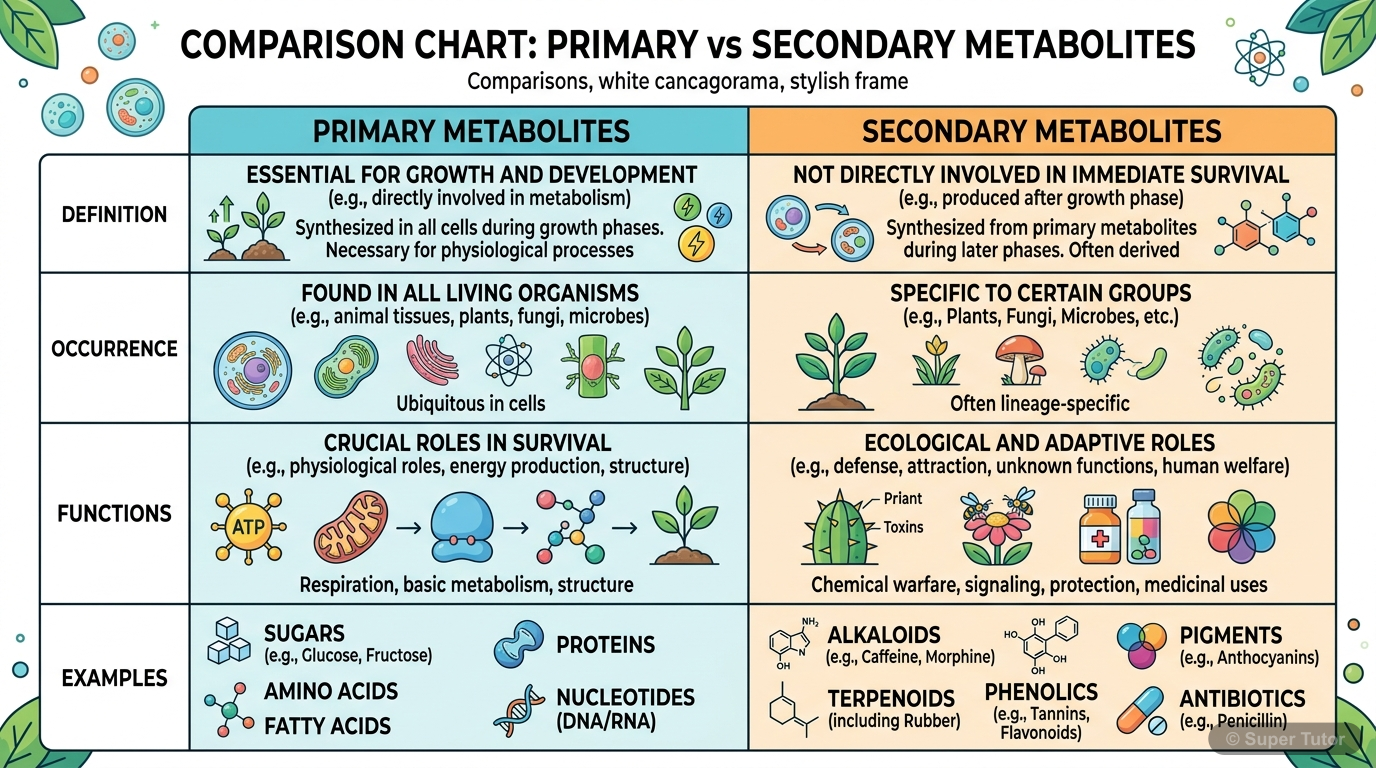
One of 14 illustrations for Bioprocessing and Biomanufacturing in Super Tutor — alongside flashcards, concept maps and practice questions.
See them allStudy Plan
Learn the Theory
Read the textbook chapter carefully. Note down definitions, formulas and key ideas. Focus on: 1. Core Ideas and Historical Background, 2. Bioreactor and Fermenter Design, 3. Upstream Processing and Operating Conditions.
Practise
Solve the textbook exercises and extra practice questions. There are 56 questions available for this chapter.
Revise & Test
Revise key points without looking at your notes. Take a practice quiz and mark weak areas for another pass.
Spaced Revision
Come back to Bioprocessing and Biomanufacturing after a week. Use flashcards for quick recall and try past exam questions on this chapter.
What to Focus On
- Primary metabolites support essential cellular functions like growth and development.
- Secondary metabolites are formed by different pathways and often have industrial value.
- Commercial production is needed because natural amounts are not sufficient.
- Penicillin discovery showed the medical value of microbial products.
- Fleming observed antibacterial activity around a contaminating mould.
- Penicillium notatum secretes penicillin.
- Bioreactors support cell growth and product formation under controlled conditions.
- Sterility is essential to prevent contamination.
- Adequate aeration is needed for cellular respiration.
Common Mistakes to Avoid
Penicillin was first discovered as a planned laboratory product from Penicillium chrysogenum.
Fed-batch mode means the substrate concentration keeps changing freely while the culture is fed.
Continuous mode is the same as fed-batch mode because both involve adding fresh medium.
Memory Tips
Primary metabolites
Secondary metabolites
Historical discovery of penicillin
Penicillin discovery entities
Want a personalised study plan?
Super Tutor builds a day-by-day plan for CBSE Class 12 Biotechnology that fits your exam date and pace.
Create My Study PlanFrequently Asked Questions
What are the important topics in Bioprocessing and Biomanufacturing for CBSE Class 12 Biotechnology?
How should I revise Bioprocessing and Biomanufacturing for the CBSE Class 12 board exam?
Sources & Official References
- NCERT Official — ncert.nic.in
- CBSE Academic — cbseacademic.nic.in
- CBSE Official — cbse.gov.in
- National Education Policy 2020 — education.gov.in
Content is aligned to the official syllabus. Refer to the board website for the latest curriculum.
More resources for Bioprocessing and Biomanufacturing
Practice Quiz
Test yourself with a quick quiz
Important Questions
Exam-style questions with answers
Revision Notes
Key points for last-minute revision
Formula Sheet
The chapter's formulas in one place
Chapter Summary
Understand the chapter at a glance
Concept Maps
See how topics connect
Flashcards
Quick-fire cards for active recall
Syllabus
What topics to cover
NCERT Solutions
Every textbook question solved step by step
For serious students
Get the full Bioprocessing and Biomanufacturing chapter — start free.
Quizzes, flashcards, an AI doubt solver and a study plan for CBSE Class 12 Biotechnology. Free to start, no card needed.