Bioprocessing and Biomanufacturing — Revision Notes
CBSE · Class 12 · Biotechnology
Bioprocessing and Biomanufacturing revision notes for CBSE Class 12 Biotechnology: 4 topics in quick points. Includes Core Ideas and Historical.
Interactive on Super Tutor
Studying Bioprocessing and Biomanufacturing? Get the full interactive chapter.
Quizzes, flashcards, AI doubt-solver and a step-by-step study plan — built for revision notes and more.
Free trial, no card needed.
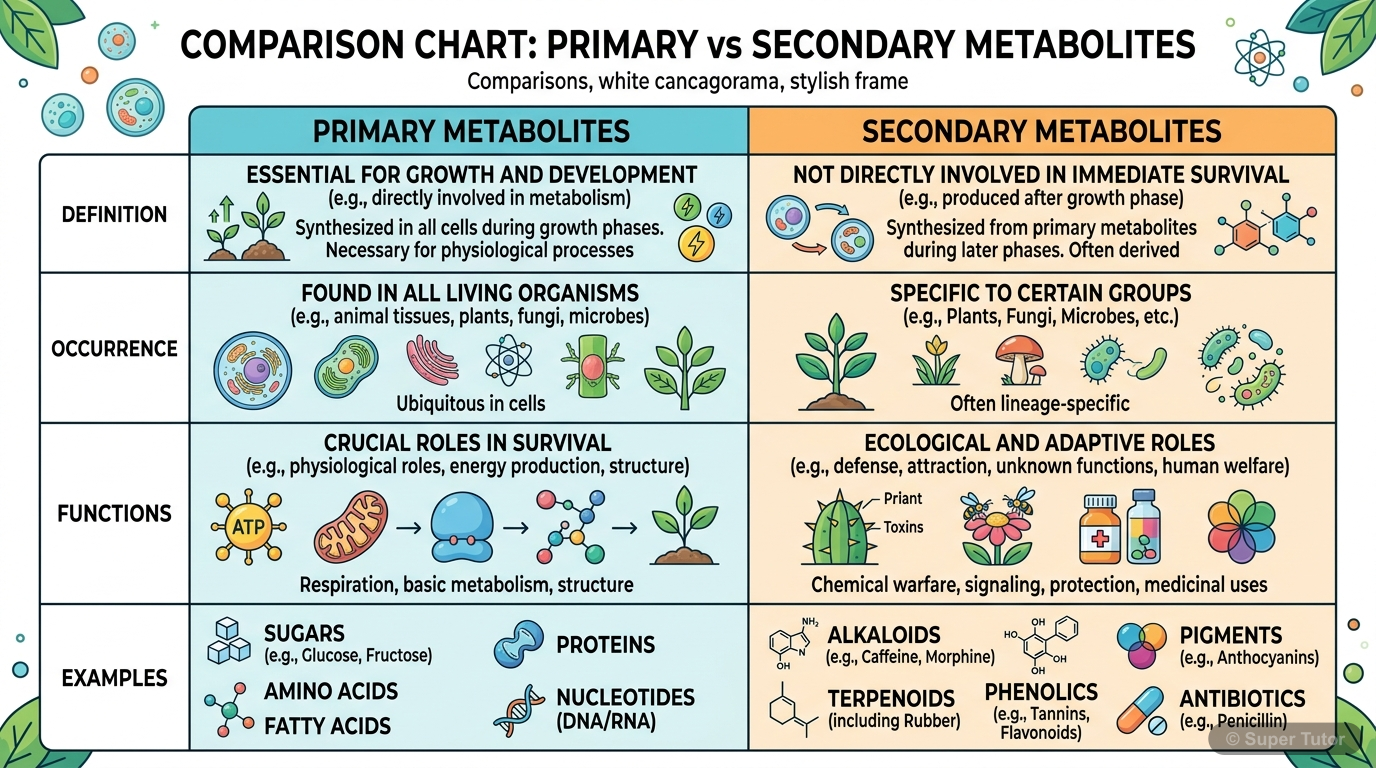
One of 14 illustrations for Bioprocessing and Biomanufacturing in Super Tutor — alongside flashcards, concept maps and practice questions.
See them allKey Topics to Revise
1. Core Ideas and Historical Background
- Metabolites are chemical compounds formed by living organisms and are broadly of two types: primary metabolites and secondary metabolites.
- Primary metabolites are produced directly from primary metabolic pathways and are linked to essential cellular functions such as growth and development.
- Secondary metabolites are produced by different secondary metabolic pathways and often help in defence, stress tolerance, attraction of pollinators or dispersal agents, and protection against unwanted
2. Bioreactor and Fermenter Design
- At the industrial stage, bioprocesses are carried out in vessels called fermenters or bioreactors.
- A bioreactor is an engineered vessel made of glass or steel that supports a biologically active environment under aseptic conditions.
- A bioreactor must provide sterility, adequate air supply, uniform mixing, optimum temperature, and monitoring of pH and dissolved oxygen.
3. Upstream Processing and Operating Conditions
- A bioprocess has two main stages: upstream processing and downstream processing.
- Upstream processing includes medium formulation, sterilisation, inoculum preparation, and optimisation of environmental conditions.
- Culture media are prepared to support maximum growth and product formation.
4. Modes of Bioprocess Operation
- The three modes of bioprocess operation are batch mode, fed-batch mode, and continuous mode.
- Batch mode is a closed culture system with a fixed initial amount of nutrients.
- In batch culture, cells pass through phases of growth and convert substrates into product.
Get complete notes with diagrams and examples
Full NotesKey Concepts
Frequently Asked Questions
What are the important topics in Bioprocessing and Biomanufacturing for CBSE Class 12 Biotechnology?
How should I revise Bioprocessing and Biomanufacturing for the CBSE Class 12 board exam?
Sources & Official References
- NCERT Official — ncert.nic.in
- CBSE Academic — cbseacademic.nic.in
- CBSE Official — cbse.gov.in
- National Education Policy 2020 — education.gov.in
Content is aligned to the official syllabus. Refer to the board website for the latest curriculum.
More resources for Bioprocessing and Biomanufacturing
Practice Quiz
Test yourself with a quick quiz
Important Questions
Exam-style questions with answers
Formula Sheet
The chapter's formulas in one place
Chapter Summary
Understand the chapter at a glance
Concept Maps
See how topics connect
Study Plan
Step-by-step plan for this chapter
Flashcards
Quick-fire cards for active recall
Syllabus
What topics to cover
NCERT Solutions
Every textbook question solved step by step
For serious students
Get the full Bioprocessing and Biomanufacturing chapter — start free.
Quizzes, flashcards, an AI doubt solver and a study plan for CBSE Class 12 Biotechnology. Free to start, no card needed.