Bioprocessing and Biomanufacturing — Chapter Summary
CBSE · Class 12 · Biotechnology
Summary of Bioprocessing and Biomanufacturing for CBSE Class 12 Biotechnology. Part of the CBSE Class 12 Biotechnology syllabus.
Interactive on Super Tutor
Studying Bioprocessing and Biomanufacturing? Get the full interactive chapter.
Quizzes, flashcards, AI doubt-solver and a step-by-step study plan — built for chapter summary and more.
Free trial, no card needed.
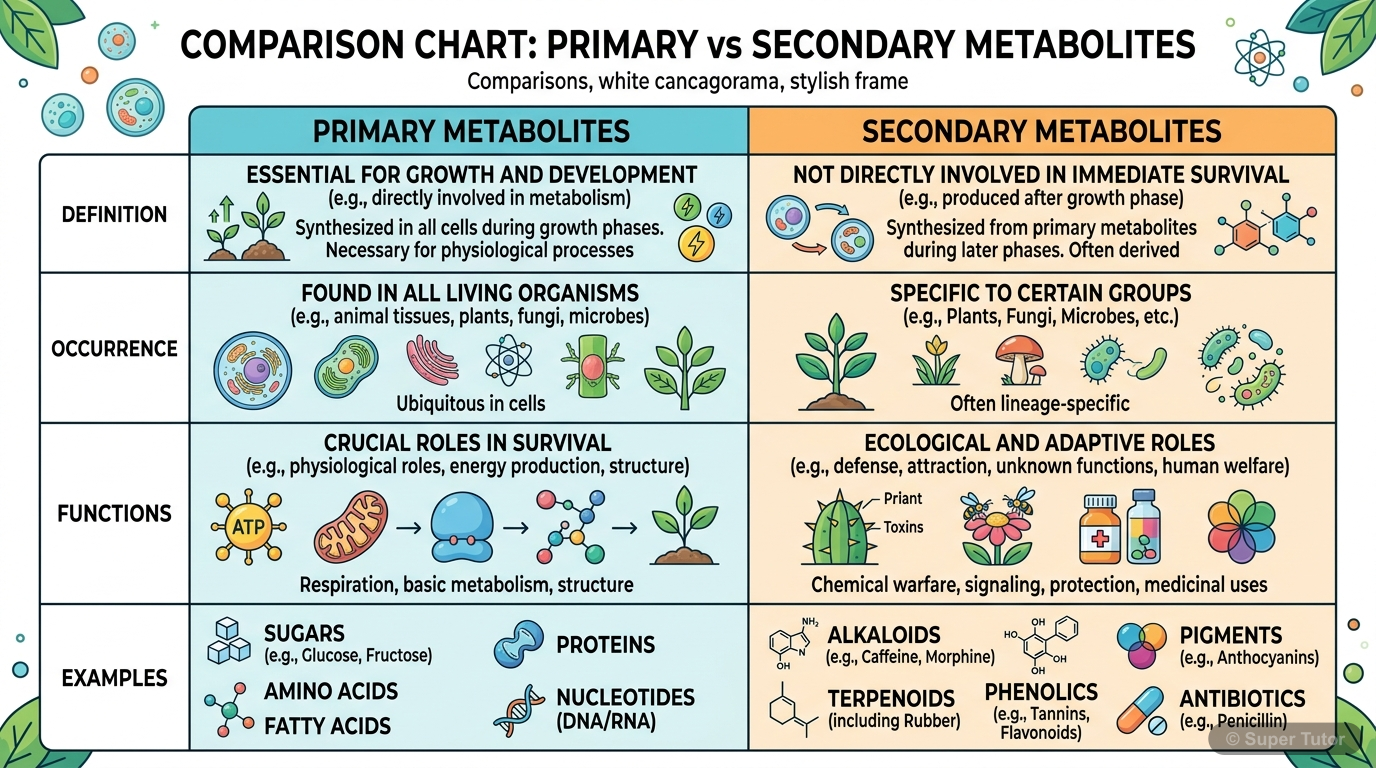
One of 14 illustrations for Bioprocessing and Biomanufacturing in Super Tutor — alongside flashcards, concept maps and practice questions.
See them allOverview
Bioprocessing and biomanufacturing use living organisms, cells, or their components to produce useful products on a commercial scale. These products include alcohols, antibiotics, amino acids, organic acids, enzymes, vitamins, vaccines, recombinant proteins, pigments, and plant alkaloids. The chapte
Key Concepts
Primary metabolites are compounds produced directly
Primary metabolites are compounds produced directly from primary metabolic pathways and are linked with essential cellular functions such as growth an
Secondary metabolites are indirect products formed
Secondary metabolites are indirect products formed through different secondary metabolic pathways. They often help in defence, stress tolerance, attra
Bioprocessing combines living systems and chemical
Bioprocessing combines living systems and chemical engineering methods to obtain desired products at commercial level.
A bioreactor is an engineered vessel
A bioreactor is an engineered vessel made of glass or steel that provides sterile conditions, nutrients, air, proper temperature, and monitoring of pH
Bioprocesses operate in batch
Bioprocesses operate in batch, fed-batch, or continuous mode. Batch uses a fixed amount of nutrients. Fed-batch adds nutrients intermittently or conti
Learning Objectives
- Understand the difference between primary and secondary metabolites
- Explain the need for bioprocessing at commercial scale
- Describe the design and working of a bioreactor
- Compare batch, fed-batch, and continuous modes of operation
- Understand upstream and downstream processing
Frequently Asked Questions
What are the important topics in Bioprocessing and Biomanufacturing for CBSE Class 12 Biotechnology?
How should I revise Bioprocessing and Biomanufacturing for the CBSE Class 12 board exam?
Sources & Official References
- NCERT Official — ncert.nic.in
- CBSE Academic — cbseacademic.nic.in
- CBSE Official — cbse.gov.in
- National Education Policy 2020 — education.gov.in
Content is aligned to the official syllabus. Refer to the board website for the latest curriculum.
More resources for Bioprocessing and Biomanufacturing
Practice Quiz
Test yourself with a quick quiz
Important Questions
Exam-style questions with answers
Revision Notes
Key points for last-minute revision
Formula Sheet
The chapter's formulas in one place
Concept Maps
See how topics connect
Study Plan
Step-by-step plan for this chapter
Flashcards
Quick-fire cards for active recall
Syllabus
What topics to cover
NCERT Solutions
Every textbook question solved step by step
For serious students
Get the full Bioprocessing and Biomanufacturing chapter — start free.
Quizzes, flashcards, an AI doubt solver and a study plan for CBSE Class 12 Biotechnology. Free to start, no card needed.