Tissues in Action — NCERT Solutions
CBSE · Class 9 · Science
NCERT Solutions for Tissues in Action, CBSE Class 9 Science: 49 textbook questions solved step by step. Part of the CBSE Class 9 Science syllabus.
Interactive on Super Tutor
Studying Tissues in Action? Get the full interactive chapter.
Quizzes, flashcards, AI doubt-solver and a step-by-step study plan — built for NCERT solutions and more.
Free trial, no card needed.
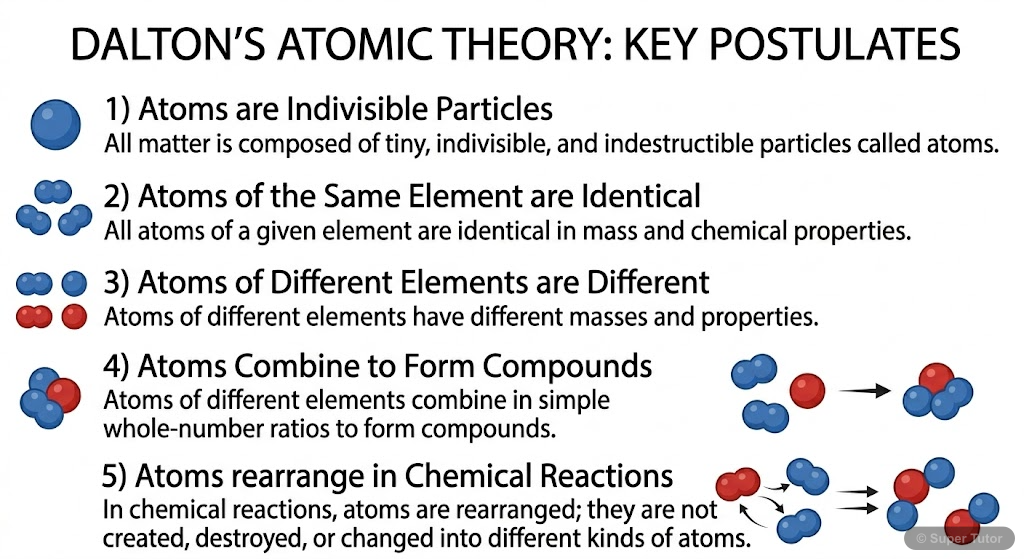
An illustration from Super Tutor's Tissues in Action chapter — alongside flashcards, concept maps and practice questions.
The first 25 solutions are open to read. The other 24 are free with a Super Tutor account.
Think It Over
1How is the study of cells and tissues significant for understanding the life processes and human welfare?Show solution
The study of cells and tissues helps us understand how living organisms grow, develop and perform life processes. Since cells are the basic unit of life and tissues are groups of cells working together, this study explains the structure–function relationship in plants and animals. It is also significant for human welfare because knowledge of tissues helps researchers understand growth, repair, movement, transport and control in the body, and it supports advances such as plant tissue culture, crop improvement, and medical use of stem cells and transplants.
2How are tissues in plants and animals different, and why?Show solution
Plant and animal tissues are different because plants and animals have different body structures, life styles and needs. Plants are usually fixed in one place, so they need tissues for support, protection, transport of water and food, and growth at certain regions. Animals move from place to place, so they have tissues for movement, coordination, sensory functions, and internal support. Also, plant cells have a cell wall, while animal cells do not, so plant tissues are generally more rigid and animal tissues are more flexible. These differences arise because the structure and function of tissues are adapted to the way plants and animals live.
3How is the division of labour at various levels of organisation in multicellular organisms correlated with their structure and function?Show solution
In multicellular organisms, there is a division of labour at different levels. Cells of similar type form a tissue, tissues form organs, organs form organ systems, and organ systems together form the organism. Each level is specialised for certain functions, so the body works more efficiently. For example, in animals muscle tissue helps movement and nervous tissue carries messages, while in plants xylem transports water and minerals and phloem transports food. Thus, the structure of each tissue or organ is closely related to its function, and specialisation increases efficiency and allows complex life processes.
Activity 3.1: Let us design experiments
6What trend do you observe in the data you recorded in Table 3.1? Are your observations similar to those presented in the graphical representation (Fig. 3.2)? What do you infer?Show solution
The data show that roots in Jar A continue to grow in length, but roots in Jar B stop growing after the tips are cut. Yes, this is similar to the graph in Fig. 3.2. The inference is that roots grow only from their tips because the tips contain actively dividing cells. This means the apical meristem at the root tip is responsible for growth in length.
Pause and Ponder
1You may have noticed that fibres of coconut husk are hard and brittle, whereas the leaf stalks of coriander are soft and flexible. Find out the reason.Show solution
Coconut husk fibres are made of sclerenchyma. Sclerenchyma cells have thick, lignified walls, so they are hard and brittle. Coriander leaf stalks are soft and flexible because they have more collenchyma/parenchyma, which provide flexibility instead of hardness.
2Why do you think that a thick cuticle on the outer wall of epidermis is advantageous for a plant living in the desert but disadvantageous for a plant living underwater?Show solution
A thick cuticle is useful for a desert plant because it reduces water loss by transpiration, helping the plant survive in dry conditions. But underwater plants do not need to conserve water, so a thick cuticle is unnecessary and disadvantageous because it can hinder exchange with the surrounding water and is not helpful for water conservation.
3Once water is absorbed by plant roots, it has to travel against gravity through xylem. How do the 'dead' cells of the xylem work together with the living cells of leaves at the top to keep the water moving?Show solution
The dead xylem cells form tubes that transport water upward from the roots. At the top, the living cells of the leaves lose water through transpiration. This creates a transpiration pull that helps draw more water up through the xylem against gravity. So, xylem conducts water, and transpiration in the leaves keeps the water moving continuously.
4What do you think will happen if there were no stomata in the epidermis of the stem or leaves?Show solution
If there were no stomata in the epidermis of stems or leaves, the plant would have serious problems in gas exchange and transpiration. Carbon dioxide would not enter easily for photosynthesis, oxygen exchange would be affected, and transpiration pull would be reduced, so water transport would also be disturbed. The plant would also lose an important way of removing water vapour and wastes.
5Look at the picture given below (Fig. 3.17). Carefully observe the various poses of classical and folk dances of India. Can you identify which joints are involved? Also, what type of movement each joint allows?Show solution
The poses of dances involve movements at different joints such as the shoulder, elbow, wrist, neck, hip, knee and ankle. The shoulder and hip are ball-and-socket joints, allowing movement in many directions. The elbow, knee, ankle and finger joints mainly act as hinge joints, allowing bending and straightening in one plane. The neck has a pivot joint, which allows the head to turn side to side. These joints make the various dance movements possible.
Activity 3.2: Let us understand further
4What causes blood to clot?Show solution
Platelets help in blood clotting at the site of injury.
Activity 3.4: Let us investigate
6Discuss why do bone and muscle mass differ between individuals, and how do they contribute to the overall body weight?Show solution
Bone and muscle mass differ between individuals because of differences in age, gender, body composition, nutrition, and physical activity. For example, adult males usually have a higher muscle percentage than adult females, while bone mass is about 12–15% in adults on average. Together, bones and muscles contribute a large part of the body weight: bones give support and rigidity, while muscles provide movement and also add to body mass. Their proportions vary from person to person, so total body weight differs.
Activity 3.5: Let us observe
2You may have noticed that some parts of our body can move easily in many directions, while others move only in a single direction. Why does this happen? The difference is due to the types of joints present. A joint is a junction between two or more bones. Joints allow movement but they cannot move the bones on their own. So, what actually causes the bones to move?Show solution
The bones move because of the action of muscles, especially the skeletal muscles attached to bones by tendons. Joints only allow movement; they do not move the bones by themselves. When a muscle contracts, it pulls on the bone through the tendon, producing movement at the joint. Different kinds of joints also limit the direction of movement, so some body parts move in many directions while others move in only one direction.
3Why does this happen?Show solution
This happens because the body has different types of joints. Some joints, like the shoulder and hip, are ball-and-socket joints, so they allow movement in many directions. Others, like the elbow, knee and ankle, are hinge joints, so they allow movement mainly in one direction. Joints do not move the bones themselves; muscles cause the movement.
Revise, Reflect, Refine
1Meristematic tissues divide repeatedly. What property of their cells allows them to do this?Show solution
Meristematic cells divide repeatedly because they have thin cell walls, dense cytoplasm, and a large prominent nucleus. These features support rapid cell division and continuous growth.
2If a plant is unable to transport food from leaves to roots which tissue is malfunctioning?Show solution
Food is transported from leaves to roots by phloem. So if the plant cannot transport food, phloem is malfunctioning.
3Why are the epithelial tissues that line an animal's internal organs usually only one or a few cells thick?Show solution
Epithelial tissues lining internal organs are usually only one or a few cells thick so that substances can pass across them quickly and efficiently. Thin layers are best for rapid exchange of gases, nutrients and wastes.
4You can perform these two jumps (Fig. 3.21):
Straight-leg jump — keep knees and ankles stiff.
Normal jump — bend knees and ankles naturally.
How did your ankle, knee and hip positions differ between the two jumps?Show solution
In the straight-leg jump, the knees and ankles remain stiff, so there is very little bending at those joints and the hips also move less naturally. In the normal jump, the ankles, knees and hips bend to help absorb the force and make the jump smoother. So the difference is that the normal jump uses flexion at the joints, while the straight-leg jump keeps them rigid.
5Which type of joint is involved when you bend your knees and ankles?Show solution
When you bend your knees and ankles, the joints involved are hinge joints, because they allow movement mainly in one direction.
6In each of the following cases (A, B, C and D), choose the correct option as given below:Show solution
- A: Epithelium for gas exchange is true, but the reason is false because gas exchange needs a single thin layer, not multiple tall layers. So (iii).
- B: Cardiac muscle can contract continuously without fatigue is true, and the reason is also true and explains it. So (i).
- C: Tendons connect muscle to bone, not bone to bone, so the assertion is false. The reason is true. So (iv).
- D: In a hinge joint, movement is mainly in one plane is true. The reason is false because the bone ends are not shaped to allow sliding in all directions. So (iii) would be expected for D if using the standard list, but since the correct matching from the statement is that the assertion is true and the reason is false, the option is (iii).
Therefore the answers are: A-iii, B-i, C-iv, D-iii.
7Plot a graph between the age of a tree (in years) on the x-axis and the diameter of the tree (in cm) along with the number of annual rings formed over time on the y-axis, using the data given in the Table 3.7.Show solution
Plot a graph with age of the tree on the x-axis and diameter and number of annual rings on the y-axis using the data points:
- Age 5 years → diameter 4 cm, rings 5
- Age 10 years → diameter 8 cm, rings 10
- Age 20 years → diameter 24 cm, rings 20
- Age 25 years → diameter 28 cm, rings 25
- Age 30 years → diameter 32 cm, rings 30
- Age 40 years → diameter 40 cm, rings 40
Join the points smoothly or as separate line graphs for diameter and annual rings. The graph will show an increasing trend for both diameter and rings with age.
7(i)Analyse the graph in terms of the diameter of the stem over time and share the interpretation.Show solution
The graph shows that the diameter of the stem increases with age. In young trees the increase may be slower, and with time the trunk becomes thicker. This means the tree grows in girth as it gets older, and the increase in diameter reflects the activity of lateral meristem.
7(ii)What is the relation between the diameter of the teak tree to the annual rings formed?Show solution
The relation is that as the diameter of the teak tree increases, the number of annual rings also increases. In the given data, the number of annual rings is equal to the age of the tree, and wider or narrower rings reflect growth conditions during different years. So, annual rings can be used to estimate the tree’s age, while the diameter shows its increase in girth.
7(iii)Which specialised tissue is responsible for the girth of the stem and where is it located?Show solution
The specialised tissue responsible for the girth of the stem is the lateral meristem. It is located in a ring along the circumference of the stem.
8In a forest, it was observed that one of the trees was severely debarked by an elephant to meet its food requirements, as the bark is a rich source of nutrients (Fig. 3.22). Based on your learning, answer the following:Show solution
Debarking would hamper the tree’s protection and transport of food because the bark protects the inner tissues and the tissues beneath the bark include conducting tissues. If the damage goes deeper, the tree may not be able to transport water and food properly, and the stem may also lose support and become vulnerable to injury and disease.
8(i)Which function(s) of the tree is/are hampered by debarking?Show solution
Debarking hampers the tree’s protective function because the outer covering is removed, exposing inner tissues to injury and infection. It may also disturb transport if tissues like phloem are damaged, because bark region includes tissues involved in movement of food.
Free with a Super Tutor account
Free with a Super Tutor account
Free with a Super Tutor account
Free with a Super Tutor account
Free with a Super Tutor account
Free with a Super Tutor account
Free with a Super Tutor account
Free with a Super Tutor account
Free with a Super Tutor account
Free with a Super Tutor account
Free with a Super Tutor account
Free with a Super Tutor account
Free with a Super Tutor account
Free with a Super Tutor account
Free with a Super Tutor account
Free with a Super Tutor account
The Journey Beyond
Free with a Super Tutor account
Free with a Super Tutor account
Free with a Super Tutor account
Think as a Scientist
Free with a Super Tutor account
Free with a Super Tutor account
Free with a Super Tutor account
Free with a Super Tutor account
Activity 3.6: Let us investigate
Free with a Super Tutor account
24 more solved questions in Tissues in Action
They are free with a Super Tutor account, along with practice quizzes and flashcards for this chapter. Free to start, no card needed.
Frequently Asked Questions
What are the important topics in Tissues in Action for CBSE Class 9 Science?
Are these NCERT Solutions for Tissues in Action free?
How should I revise Tissues in Action for Class 9 exams?
Sources & Official References
- NCERT Official — ncert.nic.in
- CBSE Academic — cbseacademic.nic.in
- CBSE Official — cbse.gov.in
- National Education Policy 2020 — education.gov.in
Content is aligned to the official syllabus. Refer to the board website for the latest curriculum.
More resources for Tissues in Action
Practice Quiz
Test yourself with a quick quiz
Important Questions
Exam-style questions with answers
Revision Notes
Key points for last-minute revision
Chapter Summary
Understand the chapter at a glance
Concept Maps
See how topics connect
Study Plan
Step-by-step plan for this chapter
Flashcards
Quick-fire cards for active recall
Syllabus
What topics to cover
For serious students
Get the full Tissues in Action chapter — start free.
Quizzes, flashcards, an AI doubt solver and a study plan for CBSE Class 9 Science. Free to start, no card needed.