Cell :The Building Block of Life — NCERT Solutions
CBSE · Class 9 · Science
NCERT Solutions for Cell :The Building Block of Life, CBSE Class 9 Science: 60 textbook questions solved step by step.
Interactive on Super Tutor
Studying Cell :The Building Block of Life? Get the full interactive chapter.
Quizzes, flashcards, AI doubt-solver and a step-by-step study plan — built for NCERT solutions and more.
Free trial, no card needed.
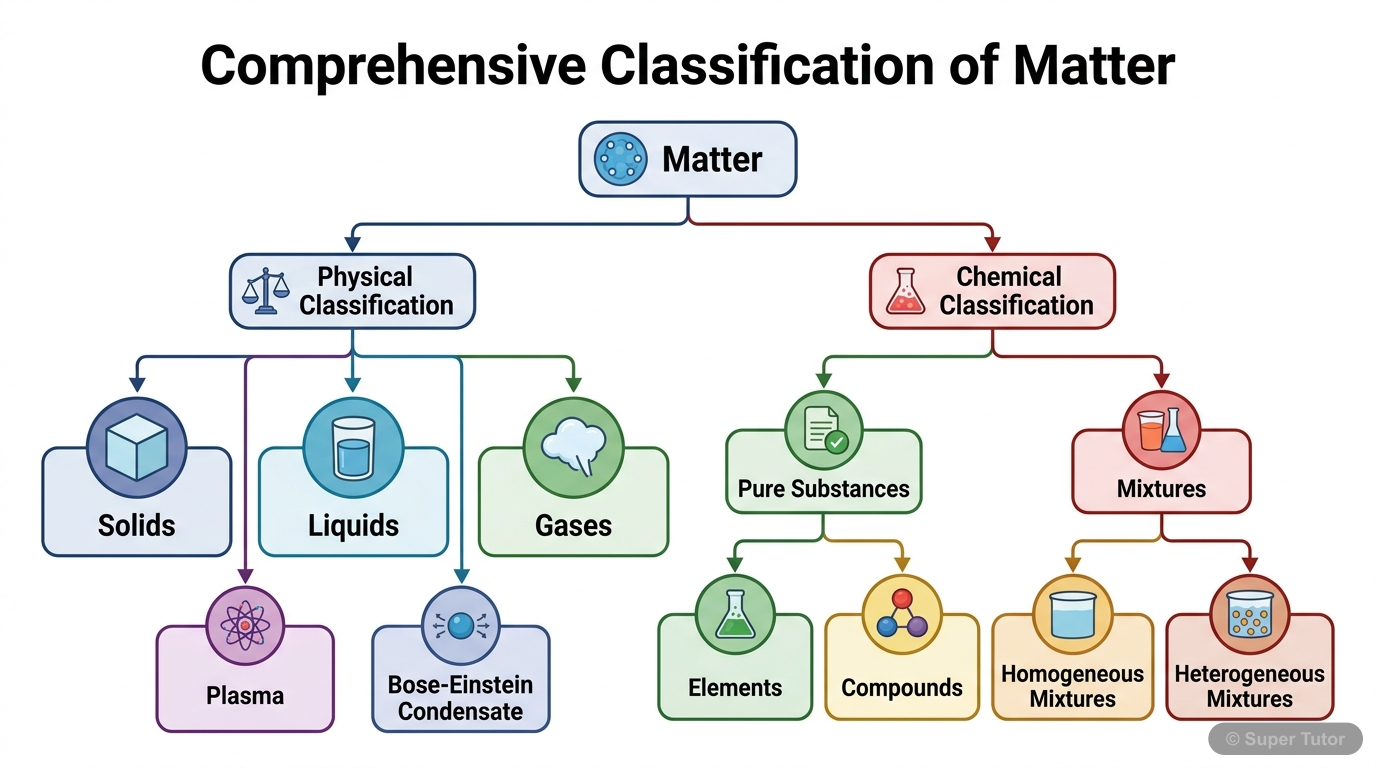
Learn better with visuals Super Tutor pairs illustrations like this with notes and quizzes for Cell :The Building Block of Life.
The first 30 solutions are open to read. The other 30 are free with a Super Tutor account.
Think It Over
1Where does a cell come from?Show solution
According to Cell Theory, new cells are formed only from pre-existing cells. So a cell comes from another cell by cell division.
2How have technological interventions facilitated the creation of new knowledge in understanding the world beyond the naked eye?Show solution
Technological interventions, especially the development of the microscope, helped scientists study cells and other tiny structures that are beyond the limit of resolution of the naked eye. Robert Hooke first observed cells using a microscope, and later electron microscopes revealed fine details of cell structure at the nanometre scale. These tools improved magnification, resolution, and contrast, creating new knowledge about the cell and the world beyond what we can see directly.
3How is the cell structural and functional unit of life?Show solution
The cell is the structural and functional unit of life because all living organisms are made of cells, and all life activities are carried out by cells. In multicellular organisms, groups of similar cells form tissues, tissues form organs, and organs form organ systems, but the cell still remains the basic unit. Cells perform essential functions such as taking in materials, producing energy, making substances, removing wastes, communicating, growing, and dividing. Therefore, life exists and functions at the level of the cell.
4How does a cell multiply?Show solution
A cell multiplies by cell division. The chapter states that cell division is the process by which new cells are formed from pre-existing cells. In body cells this usually occurs by mitosis.
Ready to Go Beyond
1How do flowers, fruits, and vegetables acquire varied colours?Show solution
Flowers, fruits, and vegetables acquire varied colours because their plastids contain pigments other than chlorophyll. These plastids are called chromoplasts. Their pigments may be yellow, orange, or red, and these pigments give bright colours to petals, fruits, and vegetables. Such colours also help attract pollinators and fruit-eating animals.
2If the estimated size of an onion peel cell is 200 μm, how much does a light microscope magnify this cell?Show solution
If the eyepiece has magnification 10X and the objective lens also has 10X, then total magnification is:
So the light microscope magnifies the cell 100 times.
5How do cells monitor their growth to maintain a balance?Show solution
Cells maintain a balance by controlled growth and death. The chapter explains that cells grow and divide in a controlled manner, stay in the right place, carry out their functions, and eventually die when they are no longer needed. This programmed cell death (PCD) helps with normal development, cellular quality control, and immune function. In this way, the body keeps a balance between making new cells and removing old ones.
6Can you estimate its actual size?Show solution
The chapter gives the example directly: if 25 cells are seen along the diameter of a visible field of 5000 μm, then the size of one onion cell is:
So the actual size of the cell is 200 μm.
9What will happen to them?Show solution
If mung bean seeds are soaked in water and then kept in a concentrated solution, they will lose water by osmosis and shrink. Their weight will decrease because water moves out from the seeds into the more concentrated surrounding solution.
10Are there any other plastids in plant cells that contain any pigments other than the green pigments?Show solution
Yes. The chapter says that in flower petals and fruits, plastids contain pigments other than chlorophyll; these are called chromoplasts. Their pigments can be yellow, orange, or red. So there are other plastids in plant cells that contain pigments other than the green pigment chlorophyll.
16What if...Show solution
If a cell is kept in salt or sugar solutions of different concentrations, water moves in or out of the cell by osmosis:
- In an isotonic solution, the solute concentration inside and outside is equal, so there is no net movement of water.
- In a hypotonic solution, the outside has less solute, so water enters the cell and it swells.
- In a hypertonic solution, the outside has more solute, so water leaves the cell and it shrinks.
This explains why cells change size in different solutions.
Activity 2.1: Let us estimate the size of a cell
6Estimate the real size of the cell using the formula:Show solution
Using the formula given in the chapter:
Estimated size of onion peel cell = $
\frac{\text{Diameter of the visible field in micrometre}}{\text{Number of cells along the diameter}}$
If the diameter is 5000 μm and 25 cells are along the diameter:
So the estimated real size of the cell is 200 μm.
What if...
1mung bean seeds are kept in a concentrated solution after soaking in water for 12 hours? What will happen to them?Show solution
If mung bean seeds are kept in a concentrated solution after soaking in water for 12 hours, they will lose water because the concentrated solution is hypertonic compared with the seed cells. By osmosis, water moves out of the seeds, so they will shrink and become less firm. Their weight will also decrease.
2a cell is kept in salt or sugar solutions of different concentrations?Show solution
The chapter explains three kinds of solutions based on solute concentration relative to the cell:
- Isotonic: extracellular and intracellular concentrations are equal.
- Hypotonic: extracellular concentration is less than intracellular concentration.
- Hypertonic: extracellular concentration is greater than intracellular concentration.
3What do you infer?Show solution
The inference is that water movement depends on solute concentration. A cell in a dilute medium takes in water and swells, while a cell in a concentrated medium loses water and shrinks. This movement of water through a selectively permeable membrane is called osmosis. So the cell membrane controls the movement of water in response to the surrounding solution.
4What do you think is the necessity of the cell wall in these cells?Show solution
The cell wall is necessary in plant cells because plants are usually fixed in one place and must withstand environmental stresses like wind and rain. The rigid cell wall gives shape, firmness, and support and helps the plant stay upright. It also helps protect the cell and, along with the cell membrane, allows water and some dissolved minerals to pass through for absorption.
Activity 2.2: Let us experiment
7Calculate the difference between the initial and their final weights.Show solution
To find the difference between the initial and final weights, subtract one from the other:
- Difference = final weight − initial weight if the weight increased
- Difference = initial weight − final weight if the weight decreased
The chapter says to calculate the difference between the initial and final weights of each potato piece.
Activity 2.3: Let us investigate
6What do you observe?Show solution
The observation is that the potato piece in plain water swells and the potato piece in 20% salt or sugar solution shrinks. The increase in weight in plain water and decrease in weight in concentrated solution happen because of osmosis.
7Why do you think this difference exists?Show solution
This difference exists because of osmosis. The cell membrane allows water to move in and out, but not salt or sugar molecules. In plain water, water enters the potato cells and the piece swells. In concentrated solution, water leaves the cells and the piece shrinks.
Pause and Ponder
1What argument would you give for the necessity of a cell wall in plants usually fixed in one place versus in animals usually moving from one place to the other?Show solution
Plant cells need a cell wall because plants are usually fixed in one place and must remain upright and resist external forces like wind and rain. In animals, cells need more flexibility because the body and tissues often move and change shape. So the rigid cell wall is useful in plants for support and protection, while animals function without it and their cells can change shape more easily.
2What consequences would you predict for a plant cell if its cell wall were to become as flexible as a cell membrane?Show solution
If a plant cell’s cell wall became as flexible as the cell membrane, the cell would lose its rigid shape and support. It would not be able to stay firm, withstand wind and rain, or maintain the plant’s upright form. The chapter states that the rigid wall keeps plant cells firm and in their original shape, so without it the plant would likely become weak and wilt easily.
3Why is it important to cut the two potato pieces in roughly equal size and measure their initial weight before placing them in different liquids?Show solution
It is important to cut the two potato pieces in roughly equal size and measure their initial weight so that the experiment is fair. Then any change in weight can be compared properly and attributed to the liquid they were placed in, not to differences in size or mass of the potato pieces.
4Do white flowers contain any pigment? Give reasons.Show solution
White flowers may still contain pigment, but usually they do not contain green chlorophyll. The chapter explains that plastids in petals and fruits can have pigments like yellow, orange, or red, and some flowers may appear white because they lack visible coloured pigments or because pigments are absent in the petals. So white flowers are not necessarily pigment-free, but they do not show coloured pigments strongly.
6Instead of many small ones, why does a cell not have a single giant mitochondrion? How does this relate to the concept of surface area?Show solution
A cell does not have a single giant mitochondrion because many small mitochondria provide a much larger surface area for reactions and energy production. The inner membrane is folded into cristae to increase surface area. More surface area means more room for the chemical reactions of cellular respiration, so many smaller mitochondria are more efficient than one giant one.
7If the skin cells start dividing by meiosis instead of mitosis, what do you think will happen to a cut on the skin?Show solution
If skin cells started dividing by meiosis instead of mitosis, the cut on the skin would not heal normally. Meiosis makes gametes and reduces chromosome number, while skin repair needs mitosis to produce identical body cells. So the wound would not be repaired properly and normal growth and healing would be disturbed.
8What happens if meiosis and mitosis do not happen properly? If there is any error in these processes, it can lead to various problems in the body of an organism.Show solution
If mitosis or meiosis does not happen properly, the cell may divide abnormally. The chapter says that errors in mitosis can lead to uncontrolled cell divisions, which may form tumours and cause an abnormal number of chromosomes in body cells. Errors in meiosis may cause genetic disorders, developmental problems, distinctive physical features, early pregnancy loss, or reduced fertility.
Activity 2.4: Let us study
4Which of the cells given in Fig. 2.10 fall under the categories of prokaryotic and eukaryotic cells?Show solution
From Fig. 2.10, the bacterial cell falls under prokaryotic cells because it lacks a well-defined nucleus and membrane-bound organelles. The plant cell and animal cell are eukaryotic cells because they have a well-defined nucleus and membrane-bound organelles.
Threads of Curiosity
1Do you know any other cells without nucleus?Show solution
Yes. The chapter gives mature red blood cells (RBCs) in humans as cells without a nucleus.
2What is the future of the development of synthetic cells using non-living chemicals? If a synthetic cell is developed, what may be the related ethical issues?Show solution
The future of synthetic cells made using non-living chemicals is that they may help scientists understand how cells work and may lead to the creation of artificial life-like systems. However, the chapter also implies that such work raises important ethical issues. These may include questions about the safety of creating synthetic life, the proper use of the technology, and whether it should be used only for beneficial purposes. The chapter states that this is a developing field and asks what ethical issues may be related, so the answer is that it has great scientific potential but must be used responsibly.
3Some cells are specialised to perform specific functions. For example, mature Red Blood Cells (RBCs) in humans do not have a nucleus (enucleate). The absence of a nucleus provides more space for haemoglobin, allowing it to transport a larger amount of oxygen to all cells of the body. Since they lack a nucleus, they cannot repair or divide themselves. As a result, their lifespan is short and they survive approximately for 120 days. Do you know any other cells without nucleus?Show solution
The chapter specifically mentions mature Red Blood Cells (RBCs) in humans as cells without a nucleus.
Free with a Super Tutor account
Activity 2.5: Let us enhance our skills
Free with a Super Tutor account
Free with a Super Tutor account
Free with a Super Tutor account
Free with a Super Tutor account
Revise, Reflect, Refine
Free with a Super Tutor account
Free with a Super Tutor account
Free with a Super Tutor account
Free with a Super Tutor account
Free with a Super Tutor account
Free with a Super Tutor account
Free with a Super Tutor account
Free with a Super Tutor account
Free with a Super Tutor account
Free with a Super Tutor account
Free with a Super Tutor account
Free with a Super Tutor account
Free with a Super Tutor account
Free with a Super Tutor account
Free with a Super Tutor account
Free with a Super Tutor account
Free with a Super Tutor account
- Cell X is placed in pure water.
- Cell Y is placed in a concentrated salt solution.
Cells are observed after some time. Cell X swells, and Cell Y shrinks. Which statement provides the correct explanation for the above observations?
Free with a Super Tutor account
(i) What hypothesis does she want to test through this experiment?
(ii) What would you suggest for the improvement of this experiment?
(iii) Why does the carrot in plain water stay stiff and crunchy, but the carrot in concentrated salt solution become rubbery and limp?
Free with a Super Tutor account
(i) Which scientific concept has the farmer applied in the preservation of the farm produce?
(ii) How does the addition of high concentrations of salt and sugar create an environment that prevents the growth of spoilage-causing bacteria and fungi?
(iii) Suggest a healthy recipe of this kind for food preservation.
(iv) What are the scientific values addressed in this case?
Free with a Super Tutor account
Free with a Super Tutor account
Free with a Super Tutor account
Free with a Super Tutor account
Free with a Super Tutor account
Free with a Super Tutor account
30 more solved questions in Cell :The Building Block of Life
They are free with a Super Tutor account, along with practice quizzes and flashcards for this chapter. Free to start, no card needed.
Frequently Asked Questions
What are the important topics in Cell :The Building Block of Life for CBSE Class 9 Science?
Are these NCERT Solutions for Cell :The Building Block of Life free?
How should I revise Cell :The Building Block of Life for Class 9 exams?
Sources & Official References
- NCERT Official — ncert.nic.in
- CBSE Academic — cbseacademic.nic.in
- CBSE Official — cbse.gov.in
- National Education Policy 2020 — education.gov.in
Content is aligned to the official syllabus. Refer to the board website for the latest curriculum.
More resources for Cell :The Building Block of Life
Practice Quiz
Test yourself with a quick quiz
Important Questions
Exam-style questions with answers
Revision Notes
Key points for last-minute revision
Formula Sheet
The chapter's formulas in one place
Chapter Summary
Understand the chapter at a glance
Concept Maps
See how topics connect
Study Plan
Step-by-step plan for this chapter
Flashcards
Quick-fire cards for active recall
Syllabus
What topics to cover
For serious students
Get the full Cell :The Building Block of Life chapter — start free.
Quizzes, flashcards, an AI doubt solver and a study plan for CBSE Class 9 Science. Free to start, no card needed.