Atomic Foundations of Matter — NCERT Solutions
CBSE · Class 9 · Science
NCERT Solutions for Atomic Foundations of Matter, CBSE Class 9 Science: 64 textbook questions solved step by step.
Interactive on Super Tutor
Studying Atomic Foundations of Matter? Get the full interactive chapter.
Quizzes, flashcards, AI doubt-solver and a step-by-step study plan — built for NCERT solutions and more.
Free trial, no card needed.
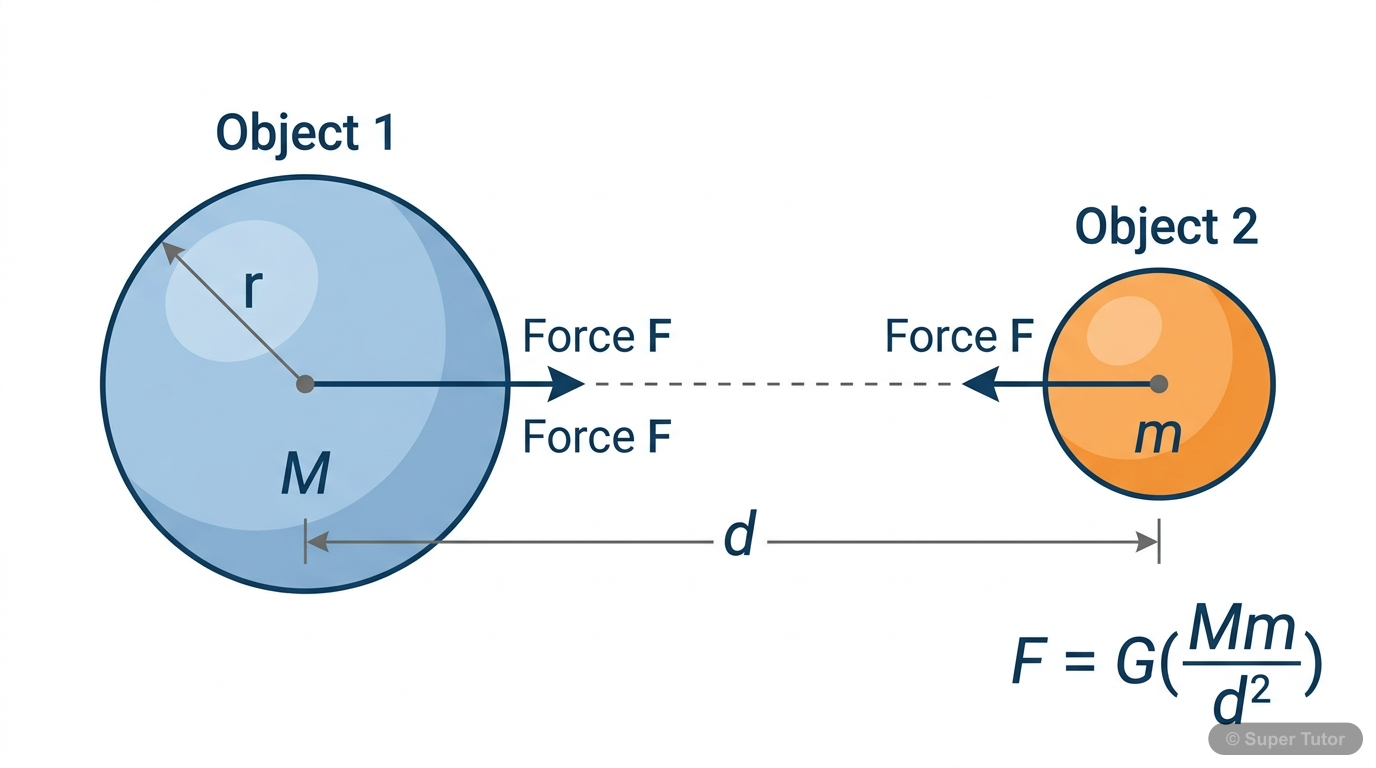
Learn better with visuals Super Tutor pairs illustrations like this with notes and quizzes for Atomic Foundations of Matter.
The first 32 solutions are open to read. The other 32 are free with a Super Tutor account.
Think It Over
2Oxygen is sometimes represented as O and sometimes as . What is the difference between these symbols?Show solution
O represents a single oxygen atom, while O represents an oxygen molecule made of two oxygen atoms joined together.
3Why does dissolved salt in water conduct electricity, but sugar does not?Show solution
Dissolved salt in water conducts electricity because salt forms ions in solution, and these ions are free to move and carry charge. Sugar does not conduct electricity because it dissolves as molecules and does not produce ions in water.
Activity 9.2: Let us investigate a chemical change
8What do you observe?Show solution
You observe that the mass of the solution is equal to the sum of the masses of water and salt taken. So there is practically no change in mass during the formation of the solution.
9Are the initial and the final readings same?Show solution
In this case, the initial and final readings are the same because the mass is conserved when the gas produced does not escape.
Experimental set-up 2
11Are the initial and the final readings same in this case?Show solution
In experimental set-up 1, the final reading is not the same as the initial reading because the gas produced in the reaction escapes, so the measured mass decreases.
Activity 9.3: Let us verify the law — Group activity
9Do you observe any change in the reading after mixing the solutions?Show solution
No change is observed in the reading after mixing the solutions because the reaction is carried out in a way that no matter escapes, so the total mass remains the same.
Pause and Ponder
1A student burns 10 g of ethanol in an open beaker. After the reaction, no residue is left in the beaker. Does this mean the Law of Conservation of Mass is violated? Explain.Show solution
No, this does not mean the Law of Conservation of Mass is violated. In an open beaker, the ethanol burns and its products such as carbon dioxide and water vapour escape into the air. Since the products are not all collected and weighed, no residue is left in the beaker. The total mass would be conserved if the system were closed and all products were accounted for.
2When 20 g of hydrogen reacts completely with 160 g of oxygen, how much water is formed according to the Law of Conservation of Mass?Show solution
By the Law of Conservation of Mass, total mass of reactants = total mass of products.
Mass of hydrogen =
Mass of oxygen =
Total mass of reactants =
So, the mass of water formed = 180 g.
3A compound consists of sulfur and oxygen by mass. In a sample of the same compound containing of sulfur, what mass of oxygen must be present to satisfy the Law of Constant Proportions?Show solution
The compound has 40% sulfur and 60% oxygen by mass.
So the mass ratio of sulfur : oxygen = .
If sulfur = , then oxygen needed is
So, 30 g of oxygen must be present.
4Carbon monoxide (CO) contains carbon and oxygen in the mass ratio of 3:4. How much oxygen will combine with of carbon to form carbon monoxide?Show solution
In carbon monoxide, carbon : oxygen = .
If carbon = , then oxygen required is
So, 12 g of oxygen will combine with of carbon.
5The Law of Definite Proportions holds true for compounds but not for mixtures. Give reason.Show solution
A compound always has its elements combined in a fixed ratio by mass, no matter how it is formed. A mixture does not have a fixed composition; its components can be present in any proportion. Therefore, the Law of Definite Proportions holds for compounds but not for mixtures.
6Students X and Y, both prepared an oxide of copper by combining copper and oxygen in the ratios of 4:1 and 8:2, respectively. Do their results justify the Law of Constant Proportions? Explain.Show solution
Yes, their results justify the Law of Constant Proportions. In both cases, the ratio of copper to oxygen is the same:
So copper and oxygen are combining in a fixed ratio by mass, which supports the law.
7Assertion (A): 2 g of hydrogen combines with 16 g of oxygen to form 18 g of water.
Reason (R): According to Dalton's Atomic Theory, atoms combine in a simple whole number ratio by mass to form compounds.
Choose the correct option:
(i) Both A and R are true, and R is the correct explanation of A.
(ii) Both A and R are true, but R is not the correct explanation of A.
(iii) A is true, but R is false.
(iv) A is false, but R is true.Show solution
Both statements are true. Water has mass , so Assertion (A) is correct. Dalton's Atomic Theory says atoms combine in simple whole number ratios to form compounds, which explains why hydrogen and oxygen combine to form water in a fixed proportion. Hence, R correctly explains A.
Correct option: (i)
8Nitrogen has five valence electrons. Draw the structure of the nitrogen molecule .Show solution
Nitrogen has 5 valence electrons, so each nitrogen atom needs 3 more electrons to complete its octet. Two nitrogen atoms therefore share three pairs of electrons, forming a triple bond.
Structure: N\u2261N
9The atomic number of fluorine is 9. Explain the formation of the fluorine molecule .Show solution
Fluorine has atomic number 9, so its electronic configuration is 2, 7. Each fluorine atom needs one electron to complete its octet. Therefore, two fluorine atoms share one electron each and form the molecule F with a single covalent bond.
Structure: F—F
10Show the formation of the following molecules:
(i) Carbon dioxide
(ii) Hydrogen sulfide
(iii) Ammonia Show solution
- Carbon dioxide (CO): Carbon has valency 4 and oxygen has valency 2, so one carbon atom shares electrons with two oxygen atoms. Structure: O=C=O
- Hydrogen sulfide (HS): Sulfur needs 2 electrons; each hydrogen shares 1 electron. Structure: H—S—H
- Ammonia (NH): Nitrogen needs 3 electrons; three hydrogen atoms each share 1 electron with nitrogen. Structure:
H
|
H—N—H
These are covalent molecules formed by sharing of electrons.
11Neon (atomic number 10) neither transfers nor shares its valence electrons. Explain.Show solution
Neon has electronic configuration 2, 8. Its valence shell is already complete with an octet, so it is stable. Therefore, neon neither gains, loses, nor shares electrons.
12What kind of ion will oxygen (O) form?Show solution
Oxygen has 6 valence electrons and needs 2 more to complete its octet. So it forms a divalent anion, the oxide ion, written as O.
13Fill in the blanks.
Among magnesium and chlorine, magnesium atom can give two electrons to become . However, chlorine can take only one electron to become ________. Now, ________ ion of magnesium and ________ ions of chlorine combine to give magnesium chloride.Show solution
Chlorine can take one electron to become Cl. Then, one Mg ion and two chloride ions combine to give magnesium chloride.
14Show the formation of cations of potassium (K) and calcium (Ca) atoms, and the formation of their corresponding chlorides using diagrams.Show solution
For potassium:
- Potassium atom has 1 valence electron.
- It loses 1 electron to form K.
- With chlorine, the compound formed is KCl.
For calcium:
- Calcium atom has 2 valence electrons.
- It loses 2 electrons to form Ca.
- With chlorine, the compound formed is CaCl.
These are formed by electron transfer and ionic bonding.
15Illustrate how sodium sulfide is formed.Show solution
Sodium has 1 valence electron and sulfur has 6 valence electrons.
- Two sodium atoms each lose one electron to form 2 Na.
- Sulfur gains those two electrons to form S.
- The oppositely charged ions combine to form NaS.
So sodium sulfide is formed by transfer of electrons and an ionic bond.
16Name the following:
(i)
(ii)
(iii)
(iv) Show solution
Using covalent naming:
- CO — carbon dioxide
- NO — nitrogen dioxide
- SF — sulfur hexafluoride
- PCl — phosphorus trichloride
17Write the formula for the following:
(i) Sodium hydrogencarbonate
(ii) Sulfur dioxide
(iii) Ferric chloride
(iv) Cuprous oxideShow solution
The formulae are:
- Sodium hydrogencarbonate — NaHCO
- Sulfur dioxide — SO
- Ferric chloride — FeCl
- Cuprous oxide — CuO
18Write the formulae for the compounds formed from the following pairs of ions:
(i) and
(ii) and Show solution
Use criss-cross of charges:
- Fe and OH → Fe(OH)
- K and CO → KCO
19What type of chemical bond is present in a solid compound that does not conduct electricity in the solid state but conducts electricity when dissolved in water?Show solution
A solid compound that does not conduct electricity in the solid state but conducts when dissolved in water is an ionic compound. The bond present in it is an ionic bond.
20Metal M, with two electrons in its valence shell (M shell), reacts with oxygen to form a compound that is slightly soluble in water. Predict its:
(i) formula
(ii) type of bond
(iii) electrical conductivity of its aqueous solution.Show solution
Metal M has two electrons in its valence shell, so it tends to lose 2 electrons and form a ion. Oxygen gains 2 electrons to form . The compound formed is therefore . In the book’s example, this is like magnesium oxide, so the formula is . Since it is formed by electron transfer, the bond is ionic. Ionic compounds do not conduct in solid state, but when dissolved in water they provide free ions, so the aqueous solution conducts electricity.
21Find the molecular mass of nitric acid ().Show solution
For nitric acid, :
- H = 1 u
- N = 14 u
- O = 16 u
Molecular mass of
22Find the molecular mass of methane ().Show solution
For methane, :
- C = 12 u
- H = 1 u
Molecular mass of
23Find the formula unit mass of potassium chloride (KCl).Show solution
For potassium chloride, KCl:
- K = 39 u
- Cl = 35.5 u
Formula unit mass of KCl =
24Find the formula unit mass of magnesium hydroxide, .Show solution
For magnesium hydroxide, :
- Mg = 24 u
- O = 16 u
- H = 1 u
Mass of one OH group =
There are 2 OH groups, so:
Formula unit mass =
1A particular element (A) has one electron in its third shell. There is another element (B) with six electrons in its second shell.
(i) How many electrons does A tend to give or take to become stable?
(ii) What kind of ion would it form?
(iii) How many electrons does B tend to give or take to become stable?
(iv) What kind of ion would it form?
(v) If A and B were to combine, what kind of bond would be formed?
(vi) What would be the formula for the compound thus formed?Show solution
(i) A has one electron in its third shell, so it tends to lose 1 electron to become stable.
(ii) It forms a positive ion (cation).
(iii) B has six electrons in its second shell, so it tends to gain 2 electrons to complete its octet.
(iv) It forms a negative ion (anion).
(v) Since A loses electrons and B gains electrons, they would form an ionic bond.
(vi) To balance charges, two A atoms each give 1 electron and one B atom gains 2 electrons, so the compound formula is .
2An element X has six electrons in its outer shell and forms a diatomic molecule.
(i) Why would that be so?
(ii) What kind of bond would it form?
(iii) Draw the structure of the molecule it would form.
(iv) A certain other element Y has two electrons in its second shell. Draw the structure of the molecule that X would form with Y.Show solution
(i) Element X has six electrons in its outer shell, so it needs 2 more electrons to complete its octet. Two atoms of X can share electrons and become stable, so it forms a diatomic molecule.
(ii) It would form a double covalent bond.
(iii) The structure is .
(iv) Element Y has two electrons in its second shell, so it needs 2 more electrons. One X atom and one Y atom share two pairs of electrons, so the molecule is shown as or , depending on placement; the bond between them is a double bond.
(i) and
(ii) and
(iii) and
(iv) and
Free with a Super Tutor account
(i) Elements are made up of molecules and compounds are made up of atoms.
(ii) The molecule of a compound is always made up of two or more atoms of the same kind.
(iii) One molecule of nitrogen gas contains three nitrogen atoms.
(iv) Water is made of two hydrogen atoms, covalently bonded with one oxygen atom.
Free with a Super Tutor account
(i) Aluminium nitrate
(ii) Calcium oxide
(iii) Ferric oxide
Free with a Super Tutor account
(i) and
(ii) and
(iii) and
(iv) and
Free with a Super Tutor account
Free with a Super Tutor account
(i) Ammonium nitrate , used as a nitrogen fertiliser, which is essential for plant growth.
(ii) Phosphoric acid , used to make phosphate fertiliser and detergents.
(iii) Sodium hydrogencarbonate , used to relieve acidity and helps in digestion.
Free with a Super Tutor account
(i) Magnesium and nitrogen
(ii) Lithium and nitrogen
(iii) Sodium and sulfur
(iv) Aluminium and oxygen
Free with a Super Tutor account
Free with a Super Tutor account
Free with a Super Tutor account
(i) what is its atomic number and mass number?
(ii) is it neutral, a cation or an anion? Explain.
(iii) write its electronic configuration.
(iv) name the species.
Free with a Super Tutor account
A: 2, 8, 5 B: 2, 8, 7
(i) Which element is more reactive?
(ii) Will A and B form ionic or covalent bonds when they combine? Explain using electron transfer or sharing.
(iii) Predict the formula of the compound they would form.
Free with a Super Tutor account
Reason (R): Copper and sulfate ions are fixed in the lattice in molten state, while in solid state they can move freely.
Choose the correct option:
(i) Both A and R are true, and R is the correct explanation of A.
(ii) Both A and R are true, but R is not the correct explanation of A.
(iii) A is true, but R is false.
(iv) A is false, but R is true.
Free with a Super Tutor account
Free with a Super Tutor account
Reason (R): According to Dalton's Atomic Theory, atoms combine in a simple whole number ratio by mass to form compounds.
Choose the correct option:
Free with a Super Tutor account
Free with a Super Tutor account
Free with a Super Tutor account
Free with a Super Tutor account
Free with a Super Tutor account
Free with a Super Tutor account
Free with a Super Tutor account
Free with a Super Tutor account
Revise, Reflect, Refine
Free with a Super Tutor account
Free with a Super Tutor account
Free with a Super Tutor account
Free with a Super Tutor account
Free with a Super Tutor account
Free with a Super Tutor account
Free with a Super Tutor account
Free with a Super Tutor account
Free with a Super Tutor account
Free with a Super Tutor account
Reason (R): Copper and sulfate ions are fixed in the lattice in molten state, while in solid state they can move freely.
Choose the correct option:
Free with a Super Tutor account
32 more solved questions in Atomic Foundations of Matter
They are free with a Super Tutor account, along with practice quizzes and flashcards for this chapter. Free to start, no card needed.
Frequently Asked Questions
What are the important topics in Atomic Foundations of Matter for CBSE Class 9 Science?
Are these NCERT Solutions for Atomic Foundations of Matter free?
How should I revise Atomic Foundations of Matter for Class 9 exams?
Sources & Official References
- NCERT Official — ncert.nic.in
- CBSE Academic — cbseacademic.nic.in
- CBSE Official — cbse.gov.in
- National Education Policy 2020 — education.gov.in
Content is aligned to the official syllabus. Refer to the board website for the latest curriculum.
More resources for Atomic Foundations of Matter
Practice Quiz
Test yourself with a quick quiz
Important Questions
Exam-style questions with answers
Revision Notes
Key points for last-minute revision
Formula Sheet
The chapter's formulas in one place
Chapter Summary
Understand the chapter at a glance
Concept Maps
See how topics connect
Study Plan
Step-by-step plan for this chapter
Flashcards
Quick-fire cards for active recall
Syllabus
What topics to cover
For serious students
Get the full Atomic Foundations of Matter chapter — start free.
Quizzes, flashcards, an AI doubt solver and a study plan for CBSE Class 9 Science. Free to start, no card needed.