Waste Generation nd Management- Methods of Safe Disposal of Waste — Revision Notes
ICSE · Class 10 · Geography
Waste Generation nd Management- Methods of Safe Disposal of Waste revision notes for ICSE Class 10 Geography: 4 topics in quick points.
Interactive on Super Tutor
Studying Waste Generation nd Management- Methods of Safe Disposal of Waste? Get the full interactive chapter.
Quizzes, flashcards, AI doubt-solver and a step-by-step study plan — built for revision notes and more.
Free trial, no card needed.
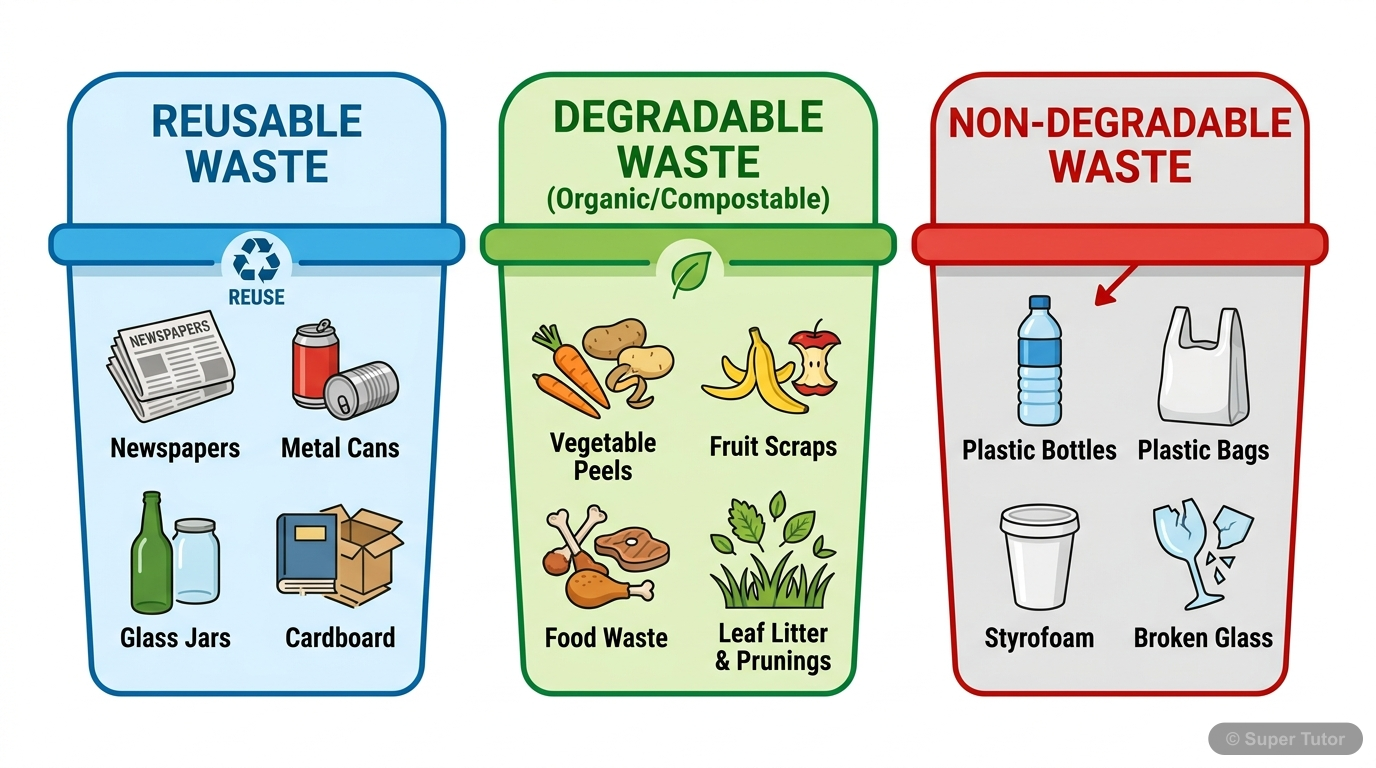
One of 5 illustrations for Waste Generation nd Management- Methods of Safe Disposal of Waste in Super Tutor — alongside flashcards, concept maps and practice questions.
See them allKey Topics to Revise
1. Waste Management: Basic Idea
- Waste management includes collection, segregation, composting and disposal.
- Waste should be handled in a planned way to reduce pollution and disease.
- Waste from homes, hotels, restaurants, offices and commercial areas must be separated at the source.
2. Collection, Storage and Transportation of Waste
- Proper collection of waste is an important responsibility of the municipality.
- Collection must be organised area-wise by covered trucks, vans or rickshaws.
- Day-to-day collection helps prevent the spread of diseases and environmental pollution.
3. Segregation of Waste
- Waste from residential areas, hotels, offices and commercial areas must be segregated at source into biodegradable and non-degradable waste.
- Biomedical waste and industrial waste must not be mixed with municipal solid waste consisting of biodegradable garbage.
- Waste should be separated into vegetable and fruit waste, leaves and garden waste, glass and paper waste, and toxic or non-biodegradable waste.
4. Composting and Vermicomposting
- Composting is a method of converting biodegradable organic waste into useful manure.
- Garden waste like leaves, twigs, grass clippings, fruit peels and vegetable peels is dumped in a pit and covered with soil.
- Composting decomposes organic waste into humus, which is a good fertiliser for plants.
Get complete notes with diagrams and examples
Full NotesKey Concepts
Frequently Asked Questions
What are the important topics in Waste Generation nd Management- Methods of Safe Disposal of Waste for ICSE Class 10 Geography?
How should I revise Waste Generation nd Management- Methods of Safe Disposal of Waste for the ICSE Class 10 board exam?
Sources & Official References
Content is aligned to the official syllabus. Refer to the board website for the latest curriculum.
More resources for Waste Generation nd Management- Methods of Safe Disposal of Waste
For serious students
Get the full Waste Generation nd Management- Methods of Safe Disposal of Waste chapter — start free.
Quizzes, flashcards, an AI doubt solver and a study plan for ICSE Class 10 Geography. Free to start, no card needed.