Waste Generation nd Management- Methods of Safe Disposal of Waste — Chapter Summary
ICSE · Class 10 · Geography
Summary of Waste Generation nd Management- Methods of Safe Disposal of Waste for ICSE Class 10 Geography. Part of the ICSE Class 10 Geography syllabus.
Interactive on Super Tutor
Studying Waste Generation nd Management- Methods of Safe Disposal of Waste? Get the full interactive chapter.
Quizzes, flashcards, AI doubt-solver and a step-by-step study plan — built for chapter summary and more.
Free trial, no card needed.
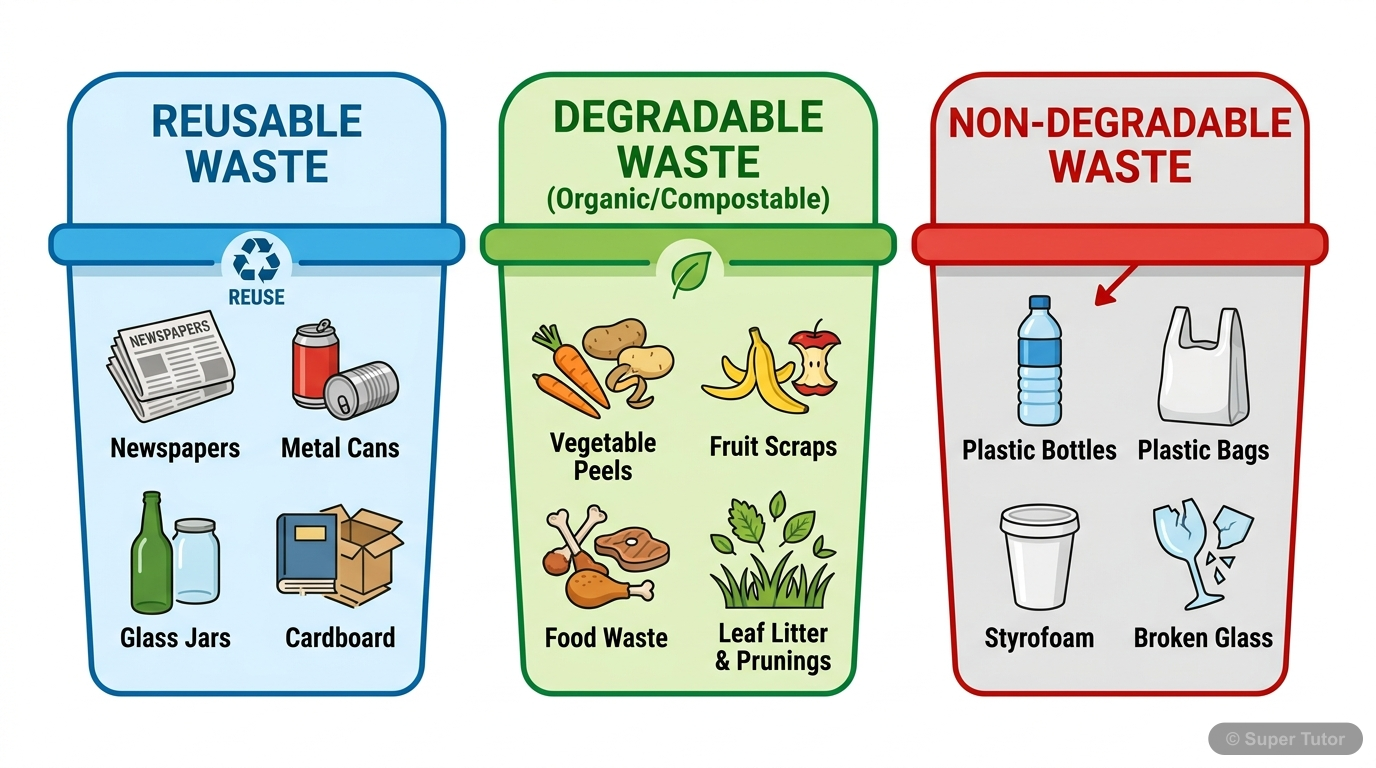
One of 5 illustrations for Waste Generation nd Management- Methods of Safe Disposal of Waste in Super Tutor — alongside flashcards, concept maps and practice questions.
See them allOverview
Waste generation differs from place to place because the source, composition, texture, and nature of waste are not the same everywhere. Waste may be solid, liquid, or gaseous, so its disposal also depends on the kind of waste. Safe waste management is necessary to reduce pollution, prevent disease,
Key Concepts
Segregation means separating waste into different
Segregation means separating waste into different categories. The most common division is between biodegradable and non-biodegradable waste. Waste fro
Waste should be collected regularly by
Waste should be collected regularly by the municipality using covered trucks, vans, or rickshaws. Collection must be area-wise and done every day to p
Waste must be stored in covered
Waste must be stored in covered bins and kept near the users or residents, depending on the quantity generated. The bins should allow easy handling an
Dumping means waste is thrown into
Dumping means waste is thrown into an open area lying far from the city. It is a simple method of disposal but can create several environmental proble
Landfills are large areas on
Landfills are large areas on the outskirts of cities where waste is deposited on or in the ground and covered with earth. A sanitary landfill requires
Learning Objectives
- Understand why waste management is needed in different places
- Learn the importance of segregation, collection, storage, transport, dumping, composting, and incineration
- Explain the difference between dumping and landfills
- Identify the problems caused by landfills such as leachate and methane gas
- Describe composting and vermicomposting as safe methods of waste disposal
Frequently Asked Questions
What are the important topics in Waste Generation nd Management- Methods of Safe Disposal of Waste for ICSE Class 10 Geography?
How should I revise Waste Generation nd Management- Methods of Safe Disposal of Waste for the ICSE Class 10 board exam?
Sources & Official References
Content is aligned to the official syllabus. Refer to the board website for the latest curriculum.
More resources for Waste Generation nd Management- Methods of Safe Disposal of Waste
For serious students
Get the full Waste Generation nd Management- Methods of Safe Disposal of Waste chapter — start free.
Quizzes, flashcards, an AI doubt solver and a study plan for ICSE Class 10 Geography. Free to start, no card needed.