The First World War 1914-18 — Chapter Summary
ICSE · Class 11 · History
Summary of The First World War 1914-18 for ICSE Class 11 History. Part of the ICSE Class 11 History syllabus. The First World War grew out of rivalry.
Interactive on Super Tutor
Studying The First World War 1914-18? Get the full interactive chapter.
Quizzes, flashcards, AI doubt-solver and a step-by-step study plan — built for chapter summary and more.
Free trial, no card needed.
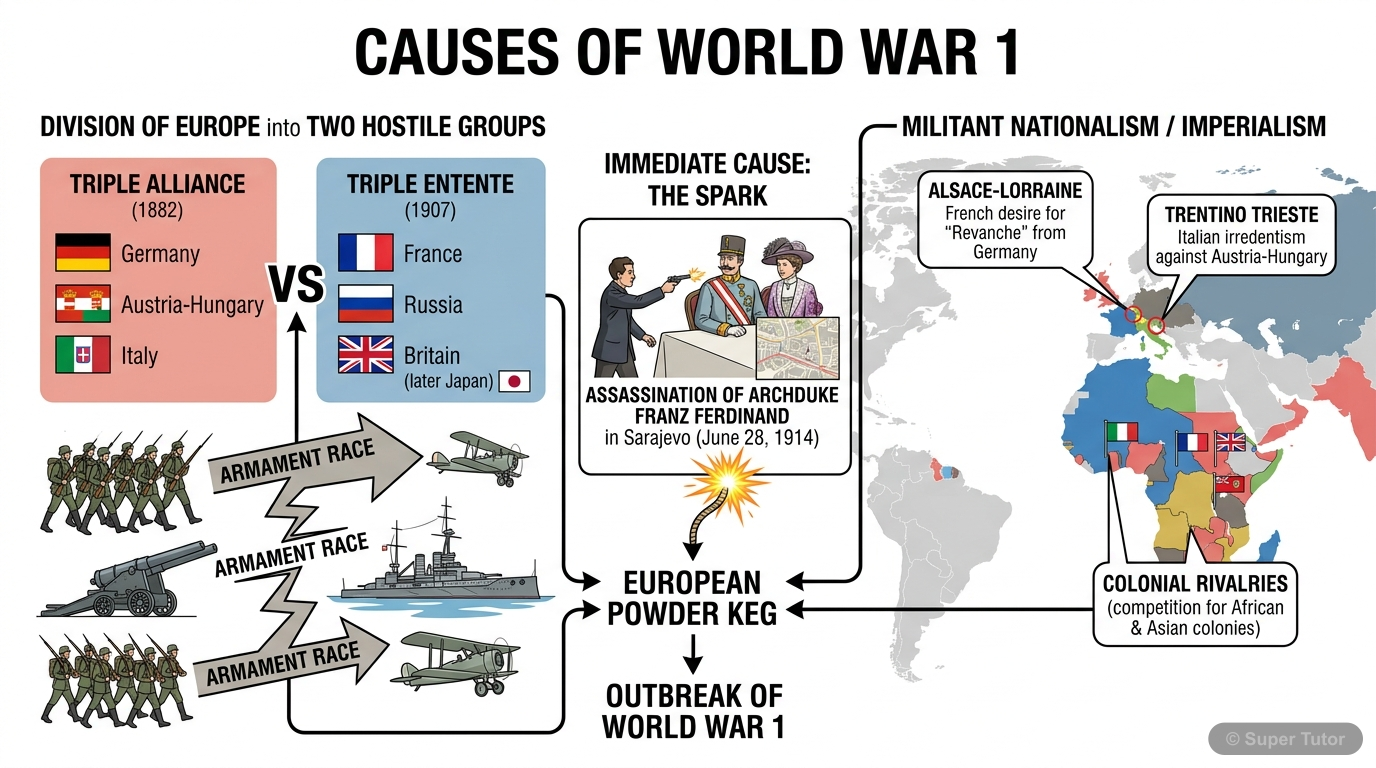
Learn better with visuals Super Tutor pairs illustrations like this with notes and quizzes for The First World War 1914-18.
Overview
The First World War grew out of rivalry among the great powers, aggressive nationalism, imperial competition, alliance systems, and an intense armament race. Europe in 1900 had twenty independent states, and seven of them were treated as great powers: Russia, Germany, Austria-Hungary, England, Franc
Key Concepts
Europe had twenty independent states
Europe had twenty independent states, and seven were recognised as great powers. These powers dominated world politics, trade, and military strength.
England followed a policy of splendid
England followed a policy of splendid isolation after the Crimean War, avoiding permanent alliances for a time.
Militant nationalism encouraged pride in one
Militant nationalism encouraged pride in one nation and hatred of others. Writers and publicists in several countries glorified war and national super
Industrial powers competed for colonies
Industrial powers competed for colonies, markets, raw materials, and trade routes. J.A. Hobson explained imperialism through capitalist investment of
The Triple Entente brought together France
The Triple Entente brought together France, Britain, and Russia through the Franco-Russian Convention of 1894, the Anglo-French Convention of 8 April
Learning Objectives
- To identify the great powers of Europe in 1900 and their interests
- To explain the main causes of the First World War
- To understand the formation of the Triple Entente and the Triple Alliance
- To describe the Balkan crisis and its role in the outbreak of war
- To connect imperialism, nationalism, and militarism with the war
Frequently Asked Questions
What are the important topics in The First World War 1914-18 for ICSE Class 11 History?
How should I revise The First World War 1914-18 for Class 11 exams?
Sources & Official References
Content is aligned to the official syllabus. Refer to the board website for the latest curriculum.
More resources for The First World War 1914-18
For serious students
Get the full The First World War 1914-18 chapter — start free.
Quizzes, flashcards, an AI doubt solver and a study plan for ICSE Class 11 History. Free to start, no card needed.