Chapter 9 of 13
Revision Notes
The Great Depression — Revision Notes
ICSE · Class 11 · History
The Great Depression revision notes for ICSE Class 11 History: 4 topics in quick points. Part of the ICSE Class 11 History syllabus.
43 questions40 flashcards5 concepts
Interactive on Super Tutor
Studying The Great Depression? Get the full interactive chapter.
Quizzes, flashcards, AI doubt-solver and a step-by-step study plan — built for revision notes and more.
Free trial, no card needed.
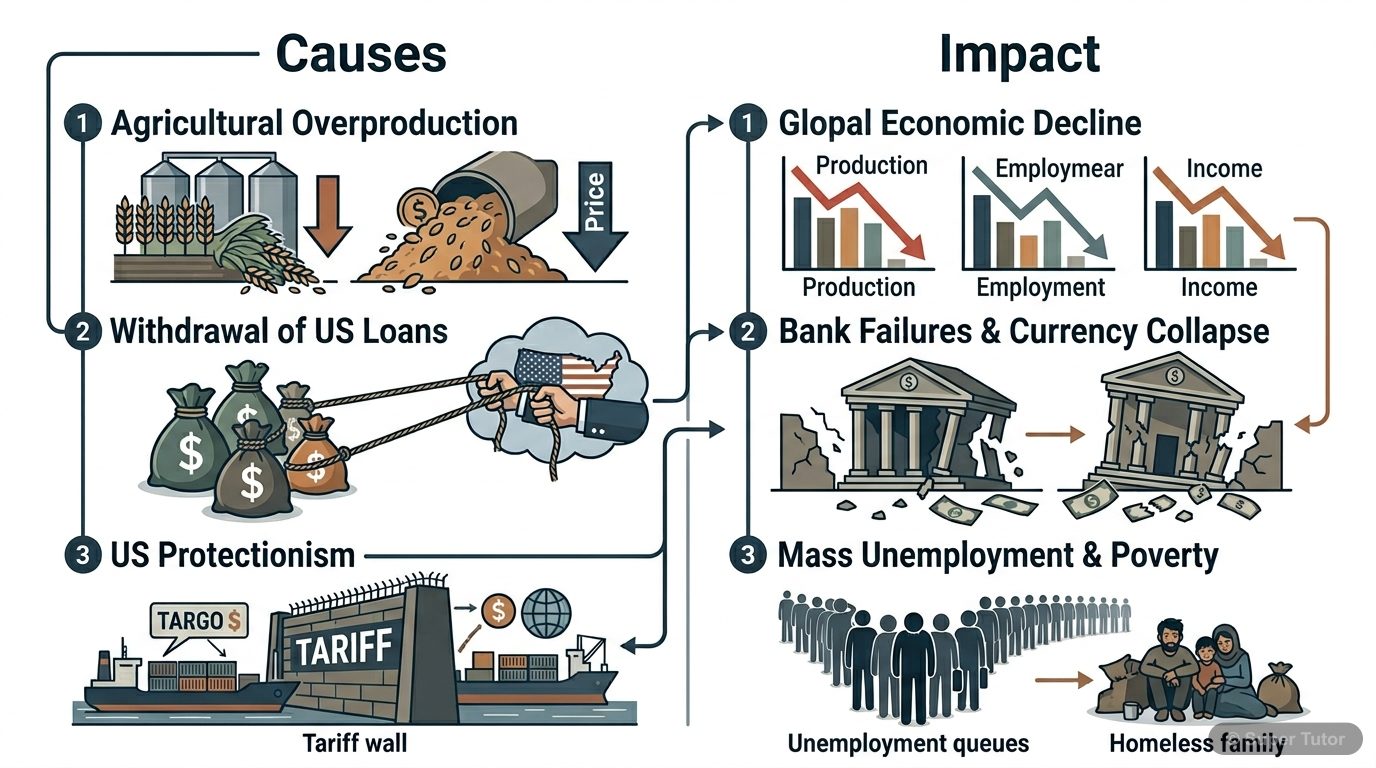
Super Tutor
Learn better with visuals Super Tutor pairs illustrations like this with notes and quizzes for The Great Depression.
Key Topics to Revise
1
1. America before the Crash
- After Wilson, three Republican Presidents came to power: Harding, Coolidge, and Hoover.
- The Republican Party was more conservative than the Democrats.
- Harding gave the cry, 'America will be back to normalcy.' This meant a return to pre-war stability and isolation.
2
2. Causes and effects of the Wall Street Crash
- The boom ended suddenly with the Wall Street Crash of October 1929.
- Marxian explanation: over production in industry caused saturation of the market.
- Liberal historians give four causes: overconfidence in permanent prosperity, speculation in shares, heavy investment in weapons industry, and unequal distribution of wealth.
3
3. Hoover’s response to the Depression
- Herbert Hoover became President in 1929 during prosperity and then faced the crash.
- He first tried to protect home industries by raising tariffs on imports.
- Taxes were reduced to increase people’s purchasing power.
4
4. Roosevelt and the New Deal
- Franklin D. Roosevelt became President in March 1933.
- He was born in 1882 at New York and was paralysed in his lower parts because of polio.
- Roosevelt closed all banks and forbade withdrawal of gold and silver to restore confidence.
Get complete notes with diagrams and examples
Full NotesKey Concepts
After WilsonThe 1920s brought rapid industrial growthMarxian explanation blames over productionBy 1932 stock exchange prices hadHoover raised tariffs on imports
Frequently Asked Questions
What are the important topics in The Great Depression for ICSE Class 11 History?
Key topics in The Great Depression include America before the Crash, Causes and effects of the Wall Street Crash, Hoover’s response to the Depression, Roosevelt and the New Deal. Study these first, then practise questions on each for Class 11 exams.
How should I revise The Great Depression for Class 11 exams?
Learn the core ideas first, then work through the 43 practice questions on The Great Depression. Revise definitions regularly and use flashcards for quick recall before the exam.
Sources & Official References
Content is aligned to the official syllabus. Refer to the board website for the latest curriculum.
More resources for The Great Depression
For serious students
Get the full The Great Depression chapter — start free.
Quizzes, flashcards, an AI doubt solver and a study plan for ICSE Class 11 History. Free to start, no card needed.