d- and f-Block Elements — Chapter Summary
ICSE · Class 12 · Chemistry
Summary of d- and f-Block Elements for ICSE Class 12 Chemistry. Part of the ICSE Class 12 Chemistry syllabus. d-Block and f-Block elements form.
Interactive on Super Tutor
Studying d- and f-Block Elements? Get the full interactive chapter.
Quizzes, flashcards, AI doubt-solver and a step-by-step study plan — built for chapter summary and more.
Free trial, no card needed.
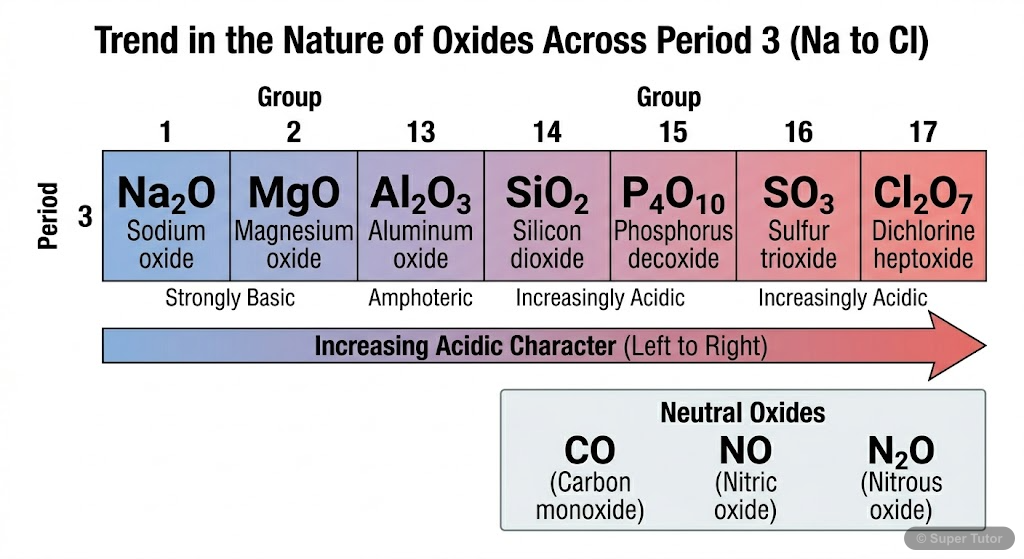
One of 17 illustrations for d- and f-Block Elements in Super Tutor — alongside flashcards, concept maps and practice questions.
Overview
d-Block and f-Block elements form the transition section of the periodic table. d-Block elements are called transition elements because the differentiating electron enters the (n-1)d subshell, while f-block elements are called inner transition elements because the differentiating electron enters the
Key Concepts
Transition elements are those elements
Transition elements are those elements in which the differentiating electron enters the (n-1)d subshell. They belong to groups 3 to 12 and show transi
Inner transition elements are those
Inner transition elements are those in which the differentiating electron enters the (n-2)f subshell. They form the lanthanoid and actinoid series.
The first transition series is Sc
The first transition series is Sc to Zn, the second is Y to Cd, the third is La and Hf to Hg, and the fourth is Ac and elements with atomic number 104
Chromium has [Ar] 3d5 4s1
Chromium has [Ar] 3d5 4s1 and copper has [Ar] 3d10 4s1 because half-filled and completely filled subshells have extra stability.
Zn
Zn, Cd and Hg have completely filled d10 configurations in both the element and their common +2 ions, so they do not have partially filled d-orbitals.
Learning Objectives
- Identify the position of d-block and f-block elements in the periodic table
- Classify transition series and inner transition series correctly
- Explain exceptional electronic configurations of chromium and copper
- Understand why Zn, Cd and Hg are not true transition elements
- Describe trends in atomic radius, ionic radius, density, melting point and ionisation enthalpy
Frequently Asked Questions
What are the important topics in d- and f-Block Elements for ICSE Class 12 Chemistry?
How should I revise d- and f-Block Elements for the ICSE Class 12 board exam?
Sources & Official References
Content is aligned to the official syllabus. Refer to the board website for the latest curriculum.
More resources for d- and f-Block Elements
For serious students
Get the full d- and f-Block Elements chapter — start free.
Quizzes, flashcards, an AI doubt solver and a study plan for ICSE Class 12 Chemistry. Free to start, no card needed.