Haloalkanes and Haloarenes — Chapter Summary
ICSE · Class 12 · Chemistry
Summary of Haloalkanes and Haloarenes for ICSE Class 12 Chemistry. Part of the ICSE Class 12 Chemistry syllabus.
Interactive on Super Tutor
Studying Haloalkanes and Haloarenes? Get the full interactive chapter.
Quizzes, flashcards, AI doubt-solver and a step-by-step study plan — built for chapter summary and more.
Free trial, no card needed.
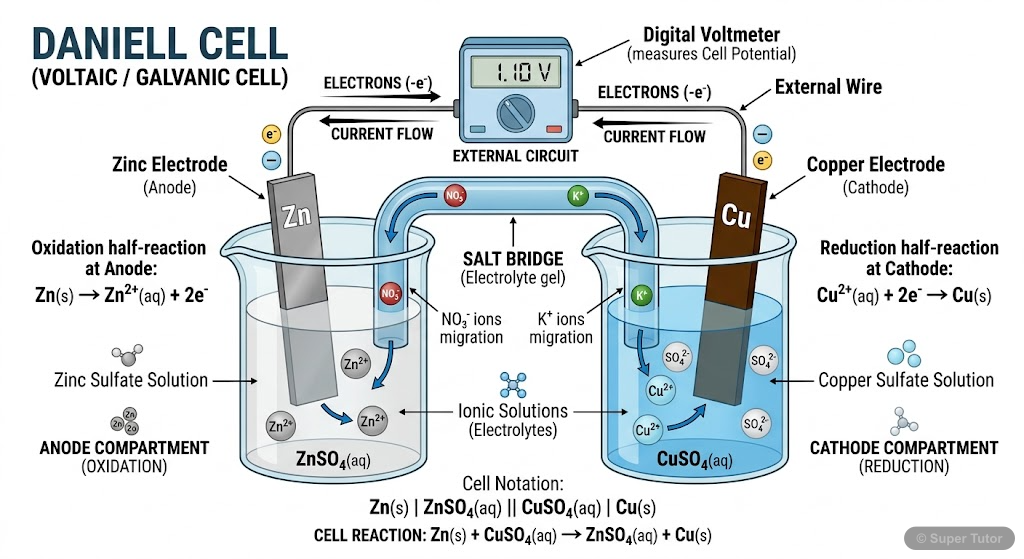
One of 20 illustrations for Haloalkanes and Haloarenes in Super Tutor — alongside flashcards, concept maps and practice questions.
Overview
Haloalkanes and haloarenes are important halogen derivatives of hydrocarbons. Haloalkanes are the halogen derivatives of alkanes, while haloarenes are the halogen derivatives of aromatic hydrocarbons with the halogen directly attached to the aromatic ring. These compounds are widely used in organic
Key Concepts
Halogen derivatives of alkanes
Halogen derivatives of alkanes, alkenes, alkynes, and arenes are grouped into aliphatic halogen compounds and aromatic halogen compounds. Haloalkanes
Haloalkanes are monohalogen or polyhalogen derivatives
Haloalkanes are monohalogen or polyhalogen derivatives of alkanes with general formula C_nH_(2n+1)X. Monohaloalkanes are classified as primary, second
Monohalo compounds may contain C(sp3)
Monohalo compounds may contain C(sp3)-X, C(sp2)-X, or C(sp)-X bonds. Allylic and benzylic halides contain C(sp3)-X bonds, vinylic and aryl halides con
Haloalkanes can be prepared from alkanes
Haloalkanes can be prepared from alkanes by free-radical halogenation and from alkenes by addition of halogen acids. Chlorination of methane gives a m
During addition of HX to
During addition of HX to an unsymmetrical alkene, the negative part goes to the carbon with fewer hydrogens and hydrogen goes to the carbon with more
Learning Objectives
- Understand the classification of halogen derivatives of hydrocarbons
- Identify primary, secondary, and tertiary haloalkanes
- Distinguish between haloalkanes, haloalkenes, haloalkynes, haloarenes, and side-chain halogen derivatives
- Learn the general methods of preparation of haloalkanes and haloarenes
- Explain nucleophilic substitution, elimination, reduction, and metal reaction patterns of haloalkanes
Frequently Asked Questions
What are the important topics in Haloalkanes and Haloarenes for ICSE Class 12 Chemistry?
How should I revise Haloalkanes and Haloarenes for the ICSE Class 12 board exam?
Sources & Official References
Content is aligned to the official syllabus. Refer to the board website for the latest curriculum.
More resources for Haloalkanes and Haloarenes
Practice Quiz
Test yourself with a quick quiz
Important Questions
Exam-style questions with answers
Revision Notes
Key points for last-minute revision
Formula Sheet
The chapter's formulas in one place
Concept Maps
See how topics connect
Study Plan
Step-by-step plan for this chapter
Flashcards
Quick-fire cards for active recall
Syllabus
What topics to cover
For serious students
Get the full Haloalkanes and Haloarenes chapter — start free.
Quizzes, flashcards, an AI doubt solver and a study plan for ICSE Class 12 Chemistry. Free to start, no card needed.