The Vedic Period — Chapter Summary
ICSE · Class 9 · History & Civics
Summary of The Vedic Period for ICSE Class 9 History & Civics. Part of the ICSE Class 9 History & Civics syllabus.
Interactive on Super Tutor
Studying The Vedic Period? Get the full interactive chapter.
Quizzes, flashcards, AI doubt-solver and a step-by-step study plan — built for chapter summary and more.
Free trial, no card needed.
Learn better with visuals Super Tutor pairs illustrations like this with notes and quizzes for The Vedic Period.
Overview
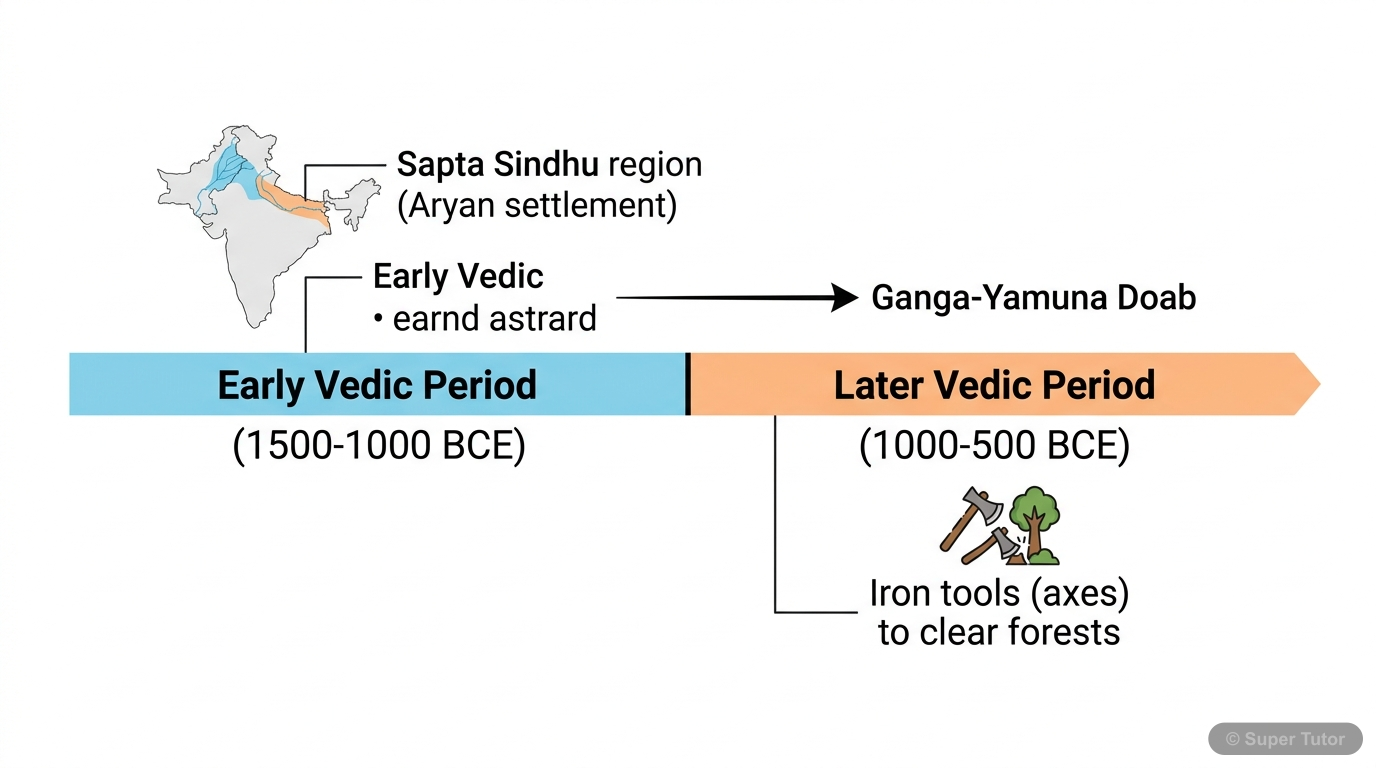
The Vedic Period marks the early stage of Indian history when Aryans settled first in the north-western region and later moved towards the Gangetic valley. The age is divided into the Early Vedic Period and the Later Vedic Age. It is known through Vedic literature, epics, iron artifacts, and pottery
Key Concepts
The Early Vedic Period was
The Early Vedic Period was the time when Aryans first settled in India. Life was mainly pastoral, with cattle as the main wealth. Society was organize
The Later Vedic Age followed when
The Later Vedic Age followed when Aryans moved eastward and settled in the Gangetic valley. Iron tools helped clear forests, and agriculture became mo
Vedic literature includes the Vedas
Vedic literature includes the Vedas, Brahmanas, Aranyakas, Upanishads, and allied texts. Shruti means knowledge revealed and passed orally, while Smri
The Rig Veda is the oldest
The Rig Veda is the oldest and has 10 mandalas. Sama Veda means Sweet Song and uses hymns from the Rig Veda. Yajur Veda deals with hymns recited durin
The Ramayana is linked with Maharishi
The Ramayana is linked with Maharishi Valmiki and tells the story of Rama, Sita, and Ravana. The Mahabharata is linked with Vyasa, was first called Ja
Learning Objectives
- Understand the division of the Vedic Period into Early and Later phases
- Identify the main Vedic texts and their significance
- Explain the social structure, family life, and position of women in both phases
- Compare the economy of the Early Vedic and Later Vedic people
- Recognize the role of iron, pottery, and agriculture in social change
Frequently Asked Questions
What are the important topics in The Vedic Period for ICSE Class 9 History & Civics?
How should I revise The Vedic Period for Class 9 exams?
Sources & Official References
Content is aligned to the official syllabus. Refer to the board website for the latest curriculum.
More resources for The Vedic Period
For serious students
Get the full The Vedic Period chapter — start free.
Quizzes, flashcards, an AI doubt solver and a study plan for ICSE Class 9 History & Civics. Free to start, no card needed.