The Making of a Scientist — NCERT Solutions
Madhya Pradesh Board · Class 10 · English
NCERT Solutions for The Making of a Scientist, Madhya Pradesh Board Class 10 English: 6 textbook questions solved step by step.
Interactive on Super Tutor
Studying The Making of a Scientist? Get the full interactive chapter.
Quizzes, flashcards, AI doubt-solver and a step-by-step study plan — built for NCERT solutions and more.
Free trial, no card needed.
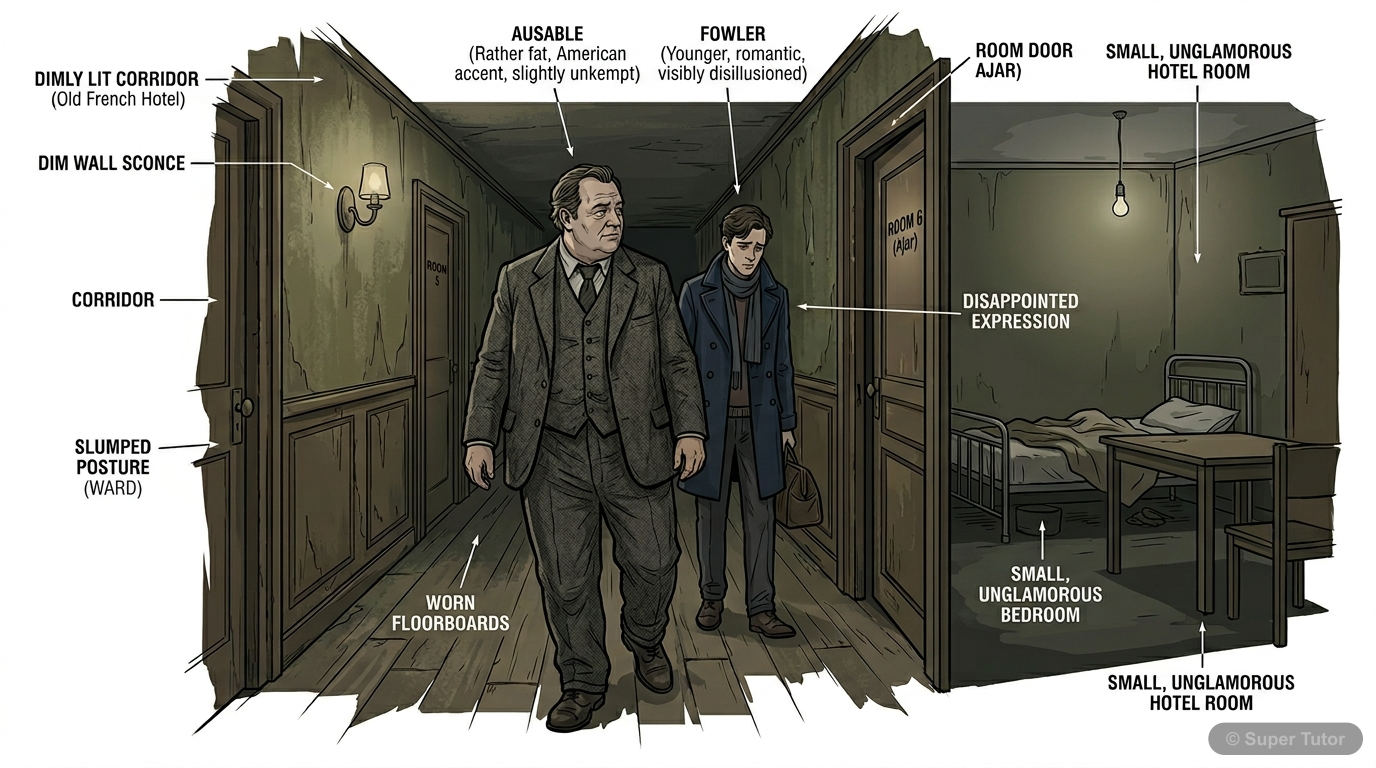
Learn better with visuals Super Tutor pairs illustrations like this with notes and quizzes for The Making of a Scientist.
The first 3 solutions are open to read. The other 3 are free with a Super Tutor account.
Think About It (Short Answer Questions)
1How can one become a scientist, an economist, a historian...? Does it simply involve reading many books on the subject? Does it involve observing, thinking and doing experiments?Show solution
Given/Context: The question asks us to reflect on what it truly takes to become a scientist, economist, historian, or any other expert, drawing inspiration from Richard Ebright's story.
Answer:
Becoming a scientist, economist, or historian is not merely about reading many books on the subject. While reading provides the necessary theoretical foundation and background knowledge, it is only the starting point.
True expertise — especially in science — requires:
- Keen observation: Noticing things around you carefully, just as Richard Ebright observed butterflies and other natural phenomena from a very young age.
- Curiosity and questioning: Asking 'why' and 'how' about everything one observes.
- Thinking and reasoning: Analysing observations logically to form hypotheses.
- Doing experiments: Testing hypotheses through systematic experiments, recording results, and drawing conclusions.
- Persistence: Not giving up after failures and continuing to investigate.
Richard Ebright is a perfect example — he did not just read about butterflies; he collected them, studied them, conducted experiments on them, and eventually made a path-breaking discovery about cell life. Thus, becoming a true expert involves a combination of reading, observing, thinking critically, and experimenting actively.
2You must have read about cells and DNA in your science books. Discuss Richard Ebright's work in the light of what you have studied. If you get an opportunity to work like Richard Ebright on projects and experiments, which field would you like to work on and why?Show solution
Given/Context: The question asks us to connect Richard Ebright's scientific discoveries with our knowledge of cells and DNA, and then express a personal choice of field for research.
Richard Ebright's Work in the Light of Cell and DNA Studies:
From our science books, we know that:
- The cell is the basic unit of life, and every cell contains a nucleus with DNA.
- DNA (Deoxyribonucleic Acid) carries genetic information and controls cell functions.
- Hormones regulate various biological processes in living organisms.
Richard Ebright's work connects directly to these concepts:
- He studied the gold spots on monarch butterfly pupae and discovered that these spots produced a hormone essential for the butterfly's full development.
- He later worked on understanding how cells read their DNA — a fundamental question in molecular biology.
- His most significant contribution was the theory explaining the mechanism by which cells read the blueprint of DNA, which has enormous implications for understanding how life functions at the molecular level and for finding cures for diseases like cancer.
Thus, Ebright's work bridges cell biology, biochemistry, and genetics — all topics central to modern science.
Personal Choice (Sample Answer):
If I got an opportunity to work like Richard Ebright, I would like to work in the field of medical research, specifically on cancer biology. Cancer involves uncontrolled cell division, which is directly related to how DNA is read and replicated. Understanding the mechanism of DNA reading — as Ebright studied — could help develop targeted therapies for cancer. This field excites me because it combines the thrill of scientific discovery with the noble goal of saving human lives. Just as Ebright was motivated by curiosity and a desire to understand nature, I would be motivated by the desire to find cures for diseases that affect millions of people worldwide.
Talk About It
1(i)What is DNA fingerprinting? What are its uses?Show solution
DNA Fingerprinting:
DNA fingerprinting (also called DNA profiling) is a technique used to identify individuals based on their unique DNA patterns. Since no two individuals (except identical twins) have exactly the same DNA sequence, specific regions of DNA that vary greatly between individuals are analysed to create a unique 'fingerprint' for each person.
Process (briefly):
- A sample of DNA is taken from blood, saliva, hair roots, or other body tissues.
- Specific variable regions of the DNA are identified and analysed.
- The resulting pattern of bands (seen on a gel) forms the DNA fingerprint.
Uses of DNA Fingerprinting:
- Forensic science: Identifying criminals or suspects in criminal investigations using biological evidence left at crime scenes.
- Paternity/Maternity testing: Establishing biological relationships between individuals.
- Identifying missing persons: Matching DNA of unidentified bodies with that of relatives.
- Medical diagnosis: Detecting genetic diseases and inherited disorders.
- Research: Studying genetic diversity and evolution of species.
- Immigration disputes: Proving family relationships for immigration purposes.
Free with a Super Tutor account
Free with a Super Tutor account
Free with a Super Tutor account
3 more solved questions in The Making of a Scientist
They are free with a Super Tutor account, along with practice quizzes and flashcards for this chapter. Free to start, no card needed.
Frequently Asked Questions
What are the important topics in The Making of a Scientist for Madhya Pradesh Board Class 10 English?
Are these NCERT Solutions for The Making of a Scientist free?
How should I revise The Making of a Scientist for the Madhya Pradesh Board Class 10 board exam?
Sources & Official References
Content is aligned to the official syllabus. Refer to the board website for the latest curriculum.
More resources for The Making of a Scientist
Practice Quiz
Test yourself with a quick quiz
Important Questions
Exam-style questions with answers
Revision Notes
Key points for last-minute revision
Chapter Summary
Understand the chapter at a glance
Concept Maps
See how topics connect
Study Plan
Step-by-step plan for this chapter
Flashcards
Quick-fire cards for active recall
Syllabus
What topics to cover
For serious students
Get the full The Making of a Scientist chapter — start free.
Quizzes, flashcards, an AI doubt solver and a study plan for Madhya Pradesh Board Class 10 English. Free to start, no card needed.