The Thief's Story — NCERT Solutions
Madhya Pradesh Board · Class 10 · English
NCERT Solutions for The Thief's Story, Madhya Pradesh Board Class 10 English: 8 textbook questions solved step by step.
Interactive on Super Tutor
Studying The Thief's Story? Get the full interactive chapter.
Quizzes, flashcards, AI doubt-solver and a step-by-step study plan — built for NCERT solutions and more.
Free trial, no card needed.
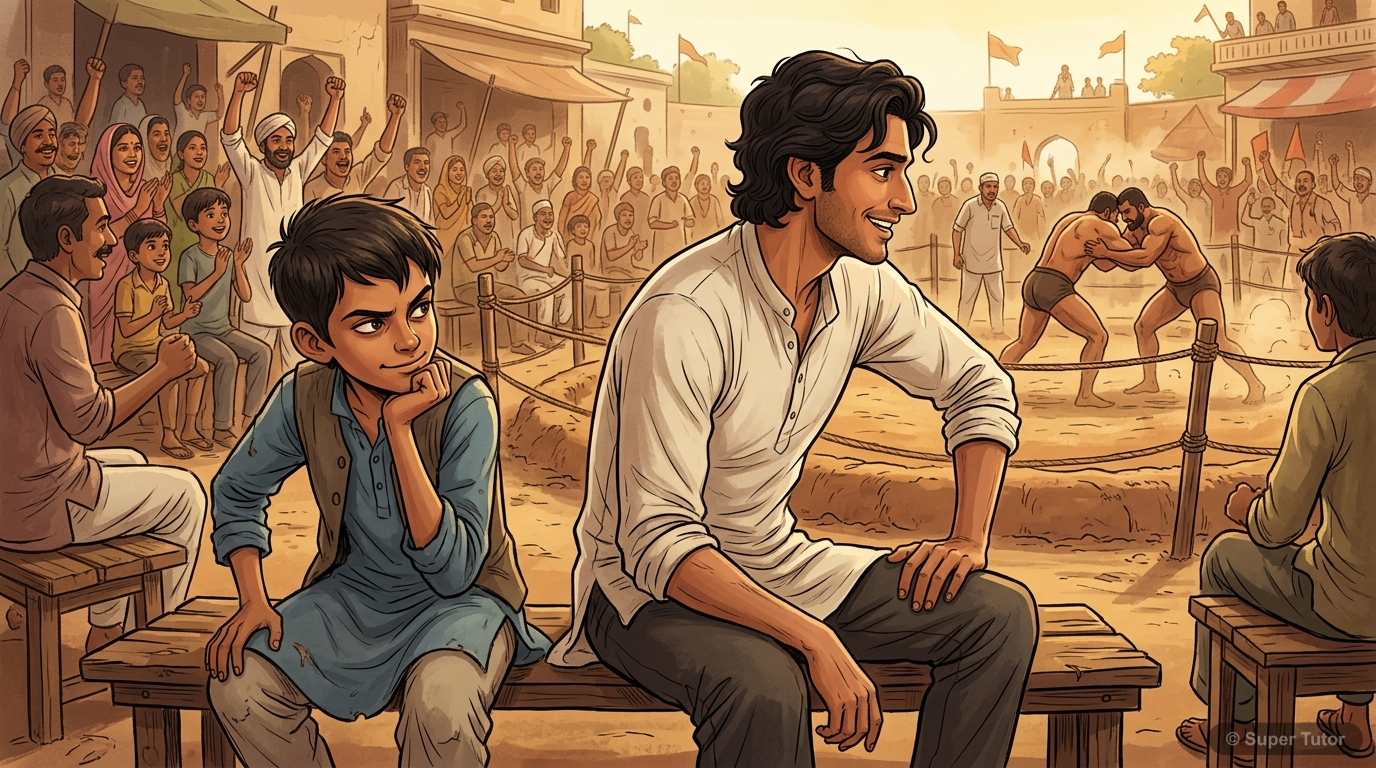
One of 7 illustrations for The Thief's Story in Super Tutor — alongside flashcards, concept maps and practice questions.
The first 4 solutions are open to read. The other 4 are free with a Super Tutor account.
Read and Find Out
1What does he get from Anil in return for his work?Show solution
Anil tells him, "If you can cook, then may be I can feed you" and later lets him sleep on the balcony. So he gets food and a place to sleep in return for his work.
2What does he say about the different reactions of people when they are robbed?Show solution
Hari Singh says he had studied men’s faces after thefts: the greedy man showed fear, the rich man showed anger, and the poor man showed acceptance. But he felt Anil would show sadness, because Anil would regret the loss of trust more than the loss of money.
Think about it
1What are Hari Singh's reactions to the prospect of receiving an education? Do they change over time? (Hint: Compare, for example, the thought: "I knew that once I could write like an educated man there would be no limit to what I could achieve" with these later thoughts: "Whole sentences, I knew, could one day bring me more than a few hundred rupees. It was a simple matter to steal — and sometimes just as simple to be caught. But to be a really big man, a clever and respected man, was something else.") What makes him return to Anil?Show solution
Given / Context:
Hari Singh is a young thief, about fifteen years old, who gets employed by Anil. Anil offers to teach him to cook and also to read and write.
Hari Singh's Initial Reaction to Education:
At first, Hari Singh sees education purely as a tool for greater, more profitable crime. When Anil begins teaching him to write his name and then whole sentences, Hari thinks: "I knew that once I could write like an educated man there would be no limit to what I could achieve." This shows that initially his motivation is entirely selfish and criminal — he views literacy as a means to become a more successful thief.
Change Over Time:
As the story progresses, a subtle but significant change takes place in Hari Singh's thinking. After he steals Anil's money and is about to board the Lucknow Express, he pauses and reflects. He realises:
- Stealing is simple, but getting caught is equally simple.
- To be "a really big man, a clever and respected man" requires something more — it requires genuine education and honest effort.
- He understands that "whole sentences could one day bring him more than a few hundred rupees" — meaning education opens doors to legitimate, lasting success, not just short-term criminal gain.
This marks a clear shift: education is no longer just a criminal tool in his eyes; it becomes a path to respectability and a better life.
What Makes Him Return to Anil:
Several factors bring Hari Singh back:
- Loss of opportunity for education: He realises that if he leaves, he loses the chance to become truly educated and respected — something no amount of stolen money can buy.
- Anil's trust and goodness: Anil is one of the few people who trusted him completely and treated him with kindness. Betraying such a person leaves Hari feeling empty and guilty.
- Moral awakening: The rain, the solitude at the station, and his own reflections act as a conscience check. He feels the stirrings of honesty for perhaps the first time.
- Practical wisdom: He recognises that a life of petty theft leads nowhere, whereas staying with Anil and getting educated could lead to genuine achievement.
Thus, Hari Singh returns the money, slips it back under Anil's mattress, and chooses the path of education over crime — a quiet but powerful transformation.
2Why does not Anil hand the thief over to the police? Do you think most people would have done so? In what ways is Anil different from such employers?Show solution
Given / Context:
Anil discovers (or strongly suspects) that Hari Singh has stolen his money, because the note he gives Hari the next morning is still damp from the rain — a clear sign that the money had been out in the rain the previous night.
Why Anil Does Not Hand Hari Over to the Police:
- He understands human nature: Anil is a perceptive and compassionate person. He realises that Hari is just a young boy who may have made a mistake but has also shown the conscience to return the money.
- He values the relationship: Anil has been teaching Hari to read and write. He sees potential in the boy and does not want to destroy that possibility by sending him to jail.
- He chooses to give a second chance: By not confronting Hari directly and instead smiling and handing him a rupee with the promise of "regular payment", Anil silently communicates that he knows what happened but is willing to forgive and move forward.
- He is not motivated by revenge or punishment: Anil's character is generous and non-judgmental. He believes in reforming people rather than punishing them.
Would Most People Have Done the Same?
No, most employers would not have reacted the way Anil did. The natural and common reaction upon discovering a theft would be to:
- Confront the thief angrily.
- Hand him over to the police.
- At the very least, dismiss him immediately.
Most people would feel betrayed and seek justice through legal means.
In What Ways is Anil Different from Such Employers?
| Ordinary Employer | Anil |
|---|---|
| Would report the theft to police | Stays silent and forgives |
| Would dismiss the servant immediately | Continues the relationship |
| Motivated by anger and a sense of justice | Motivated by compassion and belief in reform |
| Sees the act (theft) | Sees the person (a young boy with potential) |
| Would not trust again | Offers regular wages, signalling renewed trust |
Anil is different because he is empathetic, forgiving, and forward-looking. He understands that punishing Hari would only push him further into a life of crime, whereas giving him a second chance — and continuing his education — could genuinely transform him. His response is not weakness but wisdom and deep humanity.
Talk about it
Free with a Super Tutor account
Free with a Super Tutor account
Free with a Super Tutor account
Free with a Super Tutor account
4 more solved questions in The Thief's Story
They are free with a Super Tutor account, along with practice quizzes and flashcards for this chapter. Free to start, no card needed.
Frequently Asked Questions
What are the important topics in The Thief's Story for Madhya Pradesh Board Class 10 English?
Are these NCERT Solutions for The Thief's Story free?
How should I revise The Thief's Story for the Madhya Pradesh Board Class 10 board exam?
Sources & Official References
Content is aligned to the official syllabus. Refer to the board website for the latest curriculum.
More resources for The Thief's Story
Practice Quiz
Test yourself with a quick quiz
Important Questions
Exam-style questions with answers
Revision Notes
Key points for last-minute revision
Chapter Summary
Understand the chapter at a glance
Concept Maps
See how topics connect
Study Plan
Step-by-step plan for this chapter
Flashcards
Quick-fire cards for active recall
Syllabus
What topics to cover
For serious students
Get the full The Thief's Story chapter — start free.
Quizzes, flashcards, an AI doubt solver and a study plan for Madhya Pradesh Board Class 10 English. Free to start, no card needed.