Kinship, Caste and Class (Early Societies) (c. 600 BCE-600 CE) — Flashcards
Madhya Pradesh Board · Class 12 · History
100 flashcards for Kinship, Caste and Class (Early Societies) (c. 600 BCE-600 CE) (Madhya Pradesh Board Class 12 History) to test yourself on key terms.
Interactive on Super Tutor
Studying Kinship, Caste and Class (Early Societies) (c. 600 BCE-600 CE)? Get the full interactive chapter.
Quizzes, flashcards, AI doubt-solver and a step-by-step study plan — built for flashcards and more.
Free trial, no card needed.
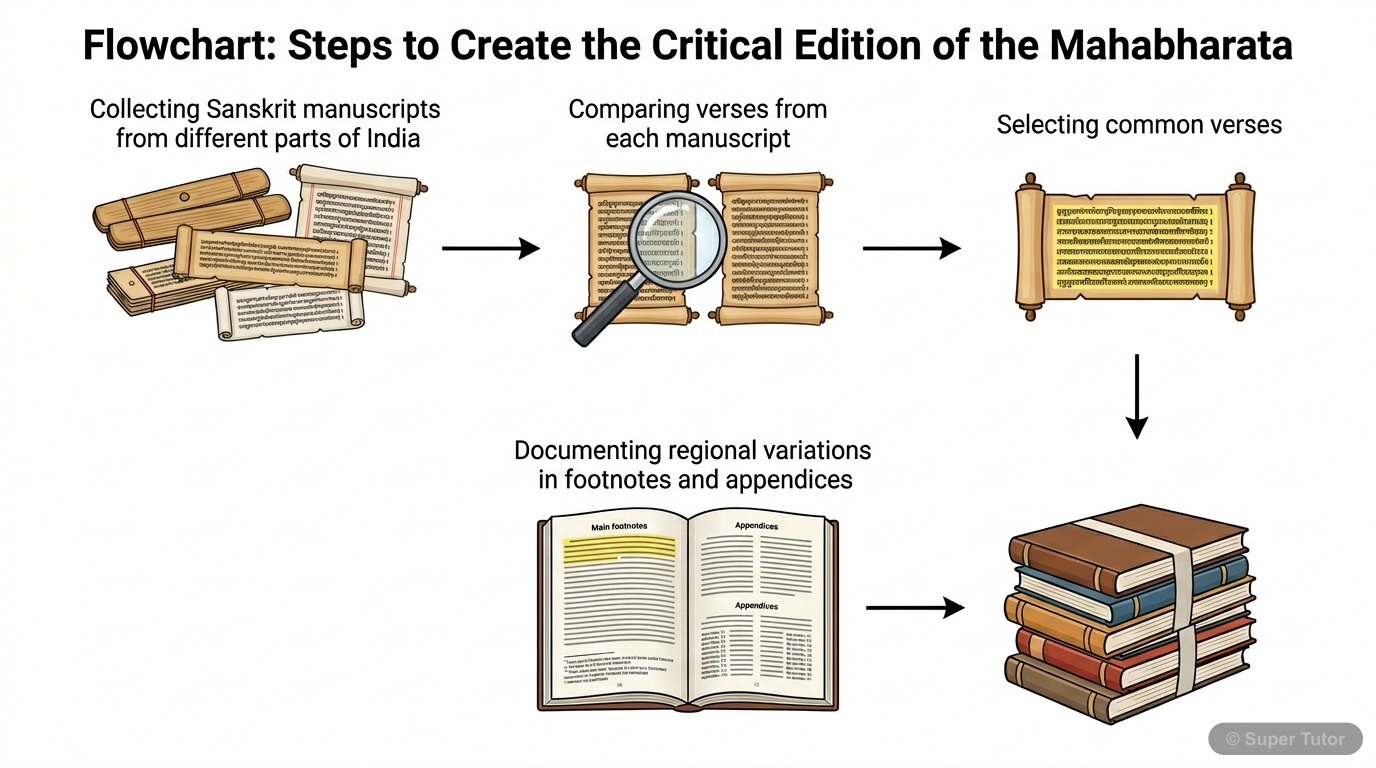
One of 16 illustrations for Kinship, Caste and Class (Early Societies) (c. 600 BCE-600 CE) in Super Tutor — alongside flashcards, concept maps and practice questions.
What is the central social theme of the Mahabharata in relation to kinship and power?
Answer
The central story is a feud over land and power between two sets of cousins, the Kauravas and the Pandavas. It shows how kinship ties, inheritance, and succession became linked with political power in…
संबंध और शक्ति के संबंध में महाभारत का केंद्रीय सामाजिक विषय क्या है?
Answer
केंद्रीय कहानी दो चचेरे भाइयों, कौरवों और पांडवों के बीच भूमि और सत्ता के लिए झगड़ा है। यह दिखाता है कि कैसे प्रारंभिक समाजों में राजनीतिक शक्ति के साथ रिश्तेदारी, विरासत और उत्तराधिकार जुड़े हुए थे।…
प्रारंभिक सामाजिक इतिहास को समझने के लिए महाभारत क्यों महत्वपूर्ण है?
Answer
यह एक समृद्ध पाठ है जिसमें कहानियाँ और सामाजिक व्यवहार के निर्देश दोनों हैं। इसमें विभिन्न सामाजिक समूह, पारिवारिक संबंध, विवाह प्रथाएँ, राजत्व, संपत्ति और कर्तव्य के बारे में विचार शामिल हैं, इसलिए य…
Why is the Mahabharata important for understanding early social history?
Answer
It is a rich text with both stories and instructions on social behaviour. It includes different social groups, family relations, marriage practices, kingship, property, and ideas about duty, so it hel…
What does the term itihasa mean?
Answer
Itihasa literally means "thus it was" and is translated as history. In early Sanskrit tradition, the Mahabharata is described as itihasa.
इतिहास का क्या अर्थ है?
Answer
इतिहास का शाब्दिक अर्थ है "इस प्रकार यह था" और इसका अनुवाद इतिहास के रूप में किया जाता है। प्रारंभिक संस्कृत परंपरा में, महाभारत को इतिहास के रूप में वर्णित किया गया है।…
महाभारत के क्रिटिकल एडिशन प्रोजेक्ट का नेतृत्व किसने किया? यह कब शुरू हुआ?
Answer
V.S. सुकथनकर ने परियोजना का नेतृत्व किया, और यह 1919 में शुरू हुआ। कार्य को पूरा करने में 47 साल लगे और 13,000 से अधिक पृष्ठों का उत्पादन हुआ, जिसमें कई पृष्ठ पांडुलिपियों के बीच भिन्नताओं को समर्पित …
Who led the Critical Edition project of the Mahabharata, and when did it begin?
Answer
V.S. Sukthankar led the project, and it began in 1919. The work took 47 years to complete and produced more than 13,000 pages, with many pages devoted to variations between manuscripts.
+92 more flashcards
Practise AllFrequently Asked Questions
What are the important topics in Kinship, Caste and Class (Early Societies) (c. 600 BCE-600 CE) for Madhya Pradesh Board Class 12 History?
How many flashcards are available for Kinship, Caste and Class (Early Societies) (c. 600 BCE-600 CE)?
How should I revise Kinship, Caste and Class (Early Societies) (c. 600 BCE-600 CE) for the Madhya Pradesh Board Class 12 board exam?
Sources & Official References
Content is aligned to the official syllabus. Refer to the board website for the latest curriculum.
More resources for Kinship, Caste and Class (Early Societies) (c. 600 BCE-600 CE)
Practice Quiz
Test yourself with a quick quiz
Important Questions
Exam-style questions with answers
Revision Notes
Key points for last-minute revision
Chapter Summary
Understand the chapter at a glance
Concept Maps
See how topics connect
Study Plan
Step-by-step plan for this chapter
Syllabus
What topics to cover
NCERT Solutions
Every textbook question solved step by step
For serious students
Get the full Kinship, Caste and Class (Early Societies) (c. 600 BCE-600 CE) chapter — start free.
Quizzes, flashcards, an AI doubt solver and a study plan for Madhya Pradesh Board Class 12 History. Free to start, no card needed.