Kinship, Caste and Class (Early Societies) (c. 600 BCE-600 CE) — Study Plan
Madhya Pradesh Board · Class 12 · History
A step-by-step study plan for Kinship, Caste and Class (Early Societies) (c. 600 BCE-600 CE), Madhya Pradesh Board Class 12 History: what to learn first.
Interactive on Super Tutor
Studying Kinship, Caste and Class (Early Societies) (c. 600 BCE-600 CE)? Get the full interactive chapter.
Quizzes, flashcards, AI doubt-solver and a step-by-step study plan — built for study plan and more.
Free trial, no card needed.
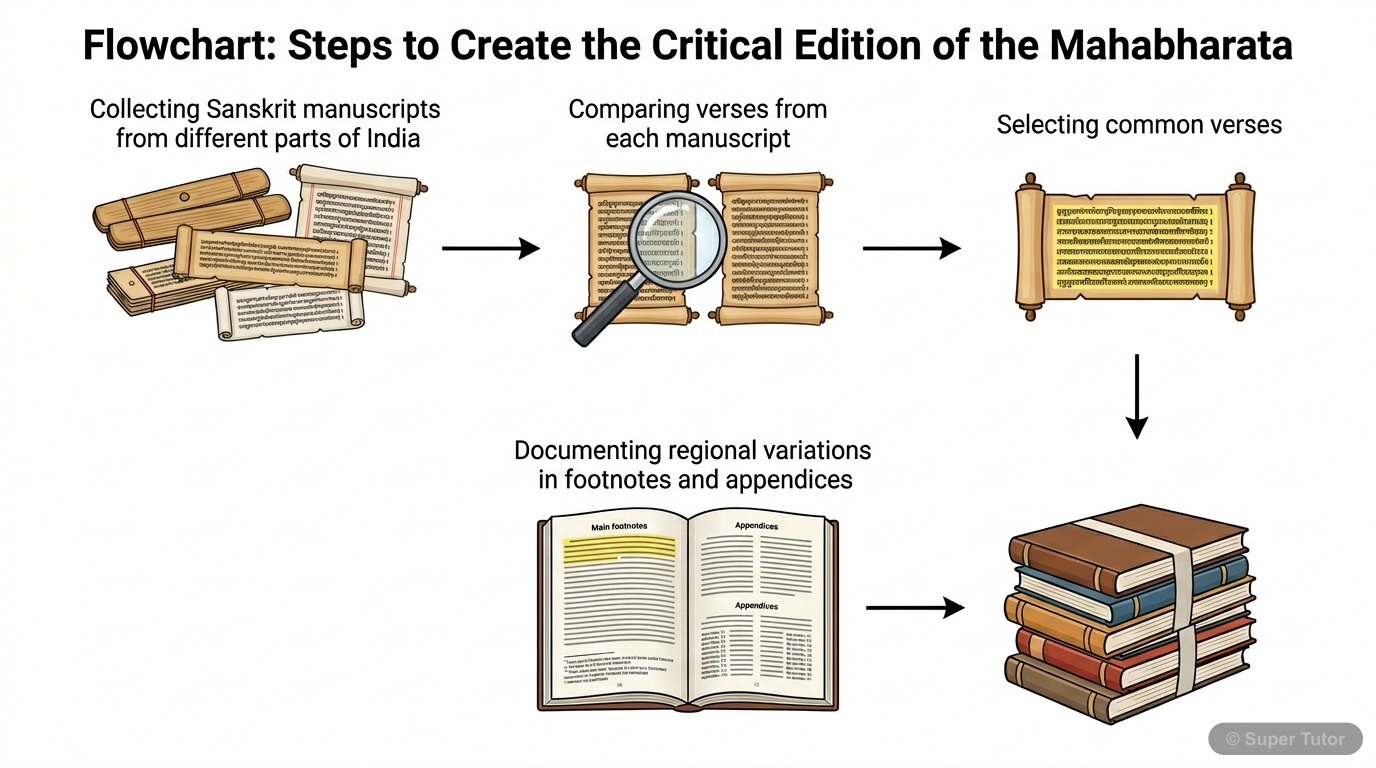
One of 16 illustrations for Kinship, Caste and Class (Early Societies) (c. 600 BCE-600 CE) in Super Tutor — alongside flashcards, concept maps and practice questions.
Study Plan
Learn the Theory
Read the textbook chapter carefully. Note down definitions, formulas and key ideas. Focus on: 1. The Mahabharata as a historical source, 2. Kinship, patriliny, and marriage, 3. Gotra, Satavahanas, and kinship rules.
Practise
Solve the textbook exercises and extra practice questions. There are 32 questions available for this chapter.
Revise & Test
Revise key points without looking at your notes. Take a practice quiz and mark weak areas for another pass.
Spaced Revision
Come back to Kinship, Caste and Class (Early Societies) (c. 600 BCE-600 CE) after a week. Use flashcards for quick recall and try past exam questions on this chapter.
What to Focus On
- Texts reveal ideals, debates, and social norms, not just events.
- Historians compare different traditions to avoid treating one viewpoint as universal.
- Normative texts prescribe behaviour; descriptive texts narrate situations and practices.
- The Mahabharata grew gradually over a long period.
- It combines story and instruction.
- Itihasa means 'thus it was'.
- The project began in 1919.
- V.S. Sukthankar led the project.
- The work took 47 years.
Common Mistakes to Avoid
The Mahabharata is only a heroic story and has no social or historical value.
Patriliny and matriliny mean the same thing, or both describe descent through the family in general.
Draupadi’s marriage proves that polyandry was the normal and most common form of marriage in early Indian society.
Memory Tips
Patriliny and the Kaurava-Pandava feud
Kula, jnati, and vamsha
Gotra rules
Eight forms of marriage in Dharmasutras and Dharmashastras
Want a personalised study plan?
Super Tutor builds a day-by-day plan for Madhya Pradesh Board Class 12 History that fits your exam date and pace.
Create My Study PlanFrequently Asked Questions
What are the important topics in Kinship, Caste and Class (Early Societies) (c. 600 BCE-600 CE) for Madhya Pradesh Board Class 12 History?
How should I revise Kinship, Caste and Class (Early Societies) (c. 600 BCE-600 CE) for the Madhya Pradesh Board Class 12 board exam?
Sources & Official References
Content is aligned to the official syllabus. Refer to the board website for the latest curriculum.
More resources for Kinship, Caste and Class (Early Societies) (c. 600 BCE-600 CE)
Practice Quiz
Test yourself with a quick quiz
Important Questions
Exam-style questions with answers
Revision Notes
Key points for last-minute revision
Chapter Summary
Understand the chapter at a glance
Concept Maps
See how topics connect
Flashcards
Quick-fire cards for active recall
Syllabus
What topics to cover
NCERT Solutions
Every textbook question solved step by step
For serious students
Get the full Kinship, Caste and Class (Early Societies) (c. 600 BCE-600 CE) chapter — start free.
Quizzes, flashcards, an AI doubt solver and a study plan for Madhya Pradesh Board Class 12 History. Free to start, no card needed.