The Fundamental Unit of Life — NCERT Solutions
Madhya Pradesh Board · Class 9 · Science
NCERT Solutions for The Fundamental Unit of Life, Madhya Pradesh Board Class 9 Science: 10 textbook questions solved step by step. Covers Exercises.
Interactive on Super Tutor
Studying The Fundamental Unit of Life? Get the full interactive chapter.
Quizzes, flashcards, AI doubt-solver and a step-by-step study plan — built for NCERT solutions and more.
Free trial, no card needed.
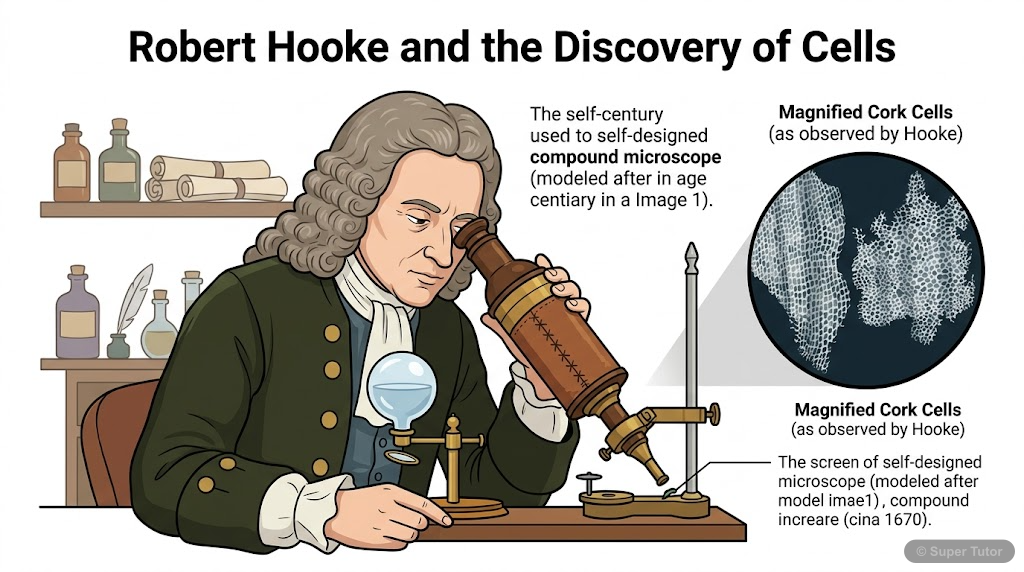
Learn better with visuals Super Tutor pairs illustrations like this with notes and quizzes for The Fundamental Unit of Life.
The first 5 solutions are open to read. The other 5 are free with a Super Tutor account.
Exercises
1Make a comparison and write down ways in which plant cells are different from animal cells.Show solution
Given: We need to compare plant cells and animal cells.
Differences between Plant Cells and Animal Cells:
| Feature | Plant Cell | Animal Cell |
|---|---|---|
| Cell wall | Present (made of cellulose) | Absent |
| Chloroplasts | Present (for photosynthesis) | Absent |
| Vacuole | Large central vacuole present | Small or absent |
| Centrosome/Centrioles | Generally absent | Present |
| Shape | Usually fixed, rectangular | Irregular or round |
| Plastids | Present (chloroplasts, chromoplasts, leucoplasts) | Absent |
| Lysosomes | Rarely present | Commonly present |
| Energy storage | Starch granules | Glycogen granules |
Conclusion: Plant cells have a cell wall, chloroplasts, and a large central vacuole which are absent in animal cells, while animal cells have centrioles and lysosomes which are generally absent in plant cells.
2How is a prokaryotic cell different from a eukaryotic cell?Show solution
Given: We need to distinguish between prokaryotic and eukaryotic cells.
Differences between Prokaryotic and Eukaryotic Cells:
| Feature | Prokaryotic Cell | Eukaryotic Cell |
|---|---|---|
| Nuclear membrane | Absent (no true nucleus) | Present (well-defined nucleus) |
| Size | Generally smaller (1–10 µm) | Generally larger (10–100 µm) |
| Membrane-bound organelles | Absent | Present (mitochondria, ER, Golgi, etc.) |
| Chromosome number | Single chromosome (circular DNA) | Multiple chromosomes |
| Histone proteins | Absent | Present with DNA |
| Ribosomes | 70S (smaller) | 80S (larger) |
| Cell division | Binary fission | Mitosis/Meiosis |
| Examples | Bacteria, Blue-green algae | Plant cells, Animal cells, Fungi |
Conclusion: Prokaryotic cells lack a membrane-bound nucleus and membrane-bound organelles, whereas eukaryotic cells possess both.
3What would happen if the plasma membrane ruptures or breaks down?Show solution
Given: The plasma membrane is the outermost boundary of the cell (in animal cells) that controls the movement of substances in and out of the cell.
Concept: The plasma membrane is selectively permeable and maintains the internal environment of the cell.
What would happen:
- The cell would lose its ability to regulate the entry and exit of substances — essential molecules like glucose, ions, and water would leak out.
- The cytoplasm would spill out into the external environment, disrupting all cellular activities.
- Harmful substances from outside would freely enter the cell, causing damage.
- The cell would lose its shape and structural integrity.
- Ultimately, the cell would die because it cannot maintain homeostasis.
Conclusion: Rupture of the plasma membrane would lead to the death of the cell as it can no longer control its internal environment.
4What would happen to the life of a cell if there was no Golgi apparatus?Show solution
Given: The Golgi apparatus (Golgi complex) is a membrane-bound organelle involved in processing, packaging, and dispatching materials synthesised in the cell.
Functions of Golgi apparatus:
- It receives proteins and lipids from the Endoplasmic Reticulum (ER), modifies them, packages them, and sends them to their destinations inside or outside the cell.
- It is involved in the formation of lysosomes.
- It helps in the synthesis of cell wall material in plant cells.
What would happen without Golgi apparatus:
- Proteins and lipids synthesised by the ER would not be processed or packaged properly.
- Secretion of enzymes, hormones, and other substances would stop — the cell could not communicate or function properly.
- Lysosomes would not be formed, so intracellular digestion would be disrupted.
- Waste materials would accumulate inside the cell, leading to cell death.
- In plant cells, cell wall formation would be impaired.
Conclusion: Without the Golgi apparatus, the cell's secretory and packaging functions would collapse, eventually leading to cell dysfunction and death.
5Which organelle is known as the powerhouse of the cell? Why?Show solution
Answer: Mitochondria is known as the powerhouse of the cell.
Reason:
- Mitochondria are the sites of cellular respiration, the process by which energy is released from food (glucose) in the presence of oxygen.
- The energy released is stored in the form of ATP (Adenosine Triphosphate) molecules.
- ATP is the energy currency of the cell — it provides energy for all cellular activities such as muscle contraction, protein synthesis, active transport, etc.
- The process occurs in two stages:
- Glycolysis in the cytoplasm
- Krebs cycle and oxidative phosphorylation in the mitochondria
Conclusion: Since mitochondria generate most of the cell's supply of ATP (energy), they are called the powerhouse of the cell.
Free with a Super Tutor account
Free with a Super Tutor account
Free with a Super Tutor account
Free with a Super Tutor account
Free with a Super Tutor account
5 more solved questions in The Fundamental Unit of Life
They are free with a Super Tutor account, along with practice quizzes and flashcards for this chapter. Free to start, no card needed.
Frequently Asked Questions
What are the important topics in The Fundamental Unit of Life for Madhya Pradesh Board Class 9 Science?
Are these NCERT Solutions for The Fundamental Unit of Life free?
How should I revise The Fundamental Unit of Life for Class 9 exams?
Sources & Official References
Content is aligned to the official syllabus. Refer to the board website for the latest curriculum.
More resources for The Fundamental Unit of Life
Practice Quiz
Test yourself with a quick quiz
Important Questions
Exam-style questions with answers
Revision Notes
Key points for last-minute revision
Chapter Summary
Understand the chapter at a glance
Concept Maps
See how topics connect
Study Plan
Step-by-step plan for this chapter
Flashcards
Quick-fire cards for active recall
Syllabus
What topics to cover
For serious students
Get the full The Fundamental Unit of Life chapter — start free.
Quizzes, flashcards, an AI doubt solver and a study plan for Madhya Pradesh Board Class 9 Science. Free to start, no card needed.