Genome Technology and Engineering — Chapter Summary
CBSE · Class 12 · Biotechnology
Summary of Genome Technology and Engineering for CBSE Class 12 Biotechnology. Part of the CBSE Class 12 Biotechnology syllabus.
Interactive on Super Tutor
Studying Genome Technology and Engineering? Get the full interactive chapter.
Quizzes, flashcards, AI doubt-solver and a step-by-step study plan — built for chapter summary and more.
Free trial, no card needed.
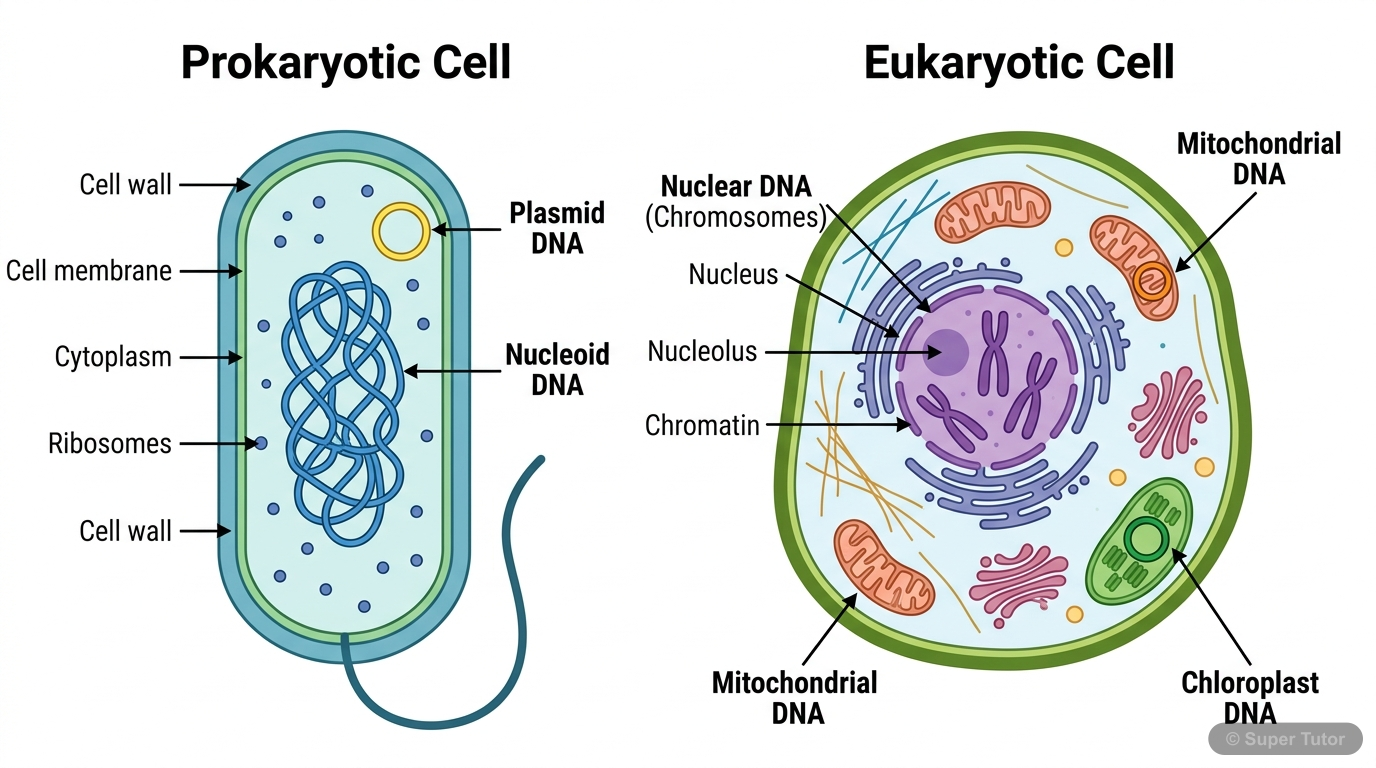
One of 12 illustrations for Genome Technology and Engineering in Super Tutor — alongside flashcards, concept maps and practice questions.
See them allOverview
Genome technology studies how genetic material is mapped, sequenced, analysed, edited, and used to understand life processes and solve practical problems. The genome is the complete genetic information present in a cell. In prokaryotes, it includes DNA in the nucleoid and plasmid, while in eukaryote
Key Concepts
Genome is the complete genetic information
Genome is the complete genetic information present in a cell. In prokaryotes, it includes DNA in the nucleoid and plasmid. In eukaryotes, it includes
Genetic mapping estimates distances between loci
Genetic mapping estimates distances between loci using crossover analysis. Recombination frequency between loci is used to measure relative genetic di
Physical mapping identifies specific locations on
Physical mapping identifies specific locations on the genome using DNA-based features such as restriction sites, SSLP, and STS.
Restriction Fragment Length Polymorphism is
Restriction Fragment Length Polymorphism is a physical mapping technique in which restriction enzymes cut DNA at specific sequences and the fragments
Simple Sequence Length Polymorphism is based
Simple Sequence Length Polymorphism is based on repeat sequences such as microsatellites and minisatellites that vary in length.
Learning Objectives
- Understand the meaning of genome in prokaryotes and eukaryotes
- Differentiate between genetic mapping and physical mapping
- Explain restriction mapping, SSLP, and STS as physical mapping features
- Describe the development of DNA sequencing from first generation to next and third generation
- Understand whole genome sequencing, targeted sequencing, clinical exome sequencing, and metagenomics
Frequently Asked Questions
What are the important topics in Genome Technology and Engineering for CBSE Class 12 Biotechnology?
How should I revise Genome Technology and Engineering for the CBSE Class 12 board exam?
Sources & Official References
- NCERT Official — ncert.nic.in
- CBSE Academic — cbseacademic.nic.in
- CBSE Official — cbse.gov.in
- National Education Policy 2020 — education.gov.in
Content is aligned to the official syllabus. Refer to the board website for the latest curriculum.
More resources for Genome Technology and Engineering
Practice Quiz
Test yourself with a quick quiz
Important Questions
Exam-style questions with answers
Revision Notes
Key points for last-minute revision
Concept Maps
See how topics connect
Study Plan
Step-by-step plan for this chapter
Flashcards
Quick-fire cards for active recall
Syllabus
What topics to cover
NCERT Solutions
Every textbook question solved step by step
For serious students
Get the full Genome Technology and Engineering chapter — start free.
Quizzes, flashcards, an AI doubt solver and a study plan for CBSE Class 12 Biotechnology. Free to start, no card needed.