Chapter 5 of 13
NCERT Solutions

Genome Technology and Engineering

CBSE · Class 12 · Biotechnology

NCERT Solutions for Genome Technology and Engineering — CBSE Class 12 Biotechnology.

5 concepts

Interactive on Super Tutor

Studying Genome Technology and Engineering? Get the full interactive chapter.

Quizzes, flashcards, AI doubt-solver and a step-by-step study plan — built for ncert solutions and more.

1,000+ Class 12 students started this chapter today

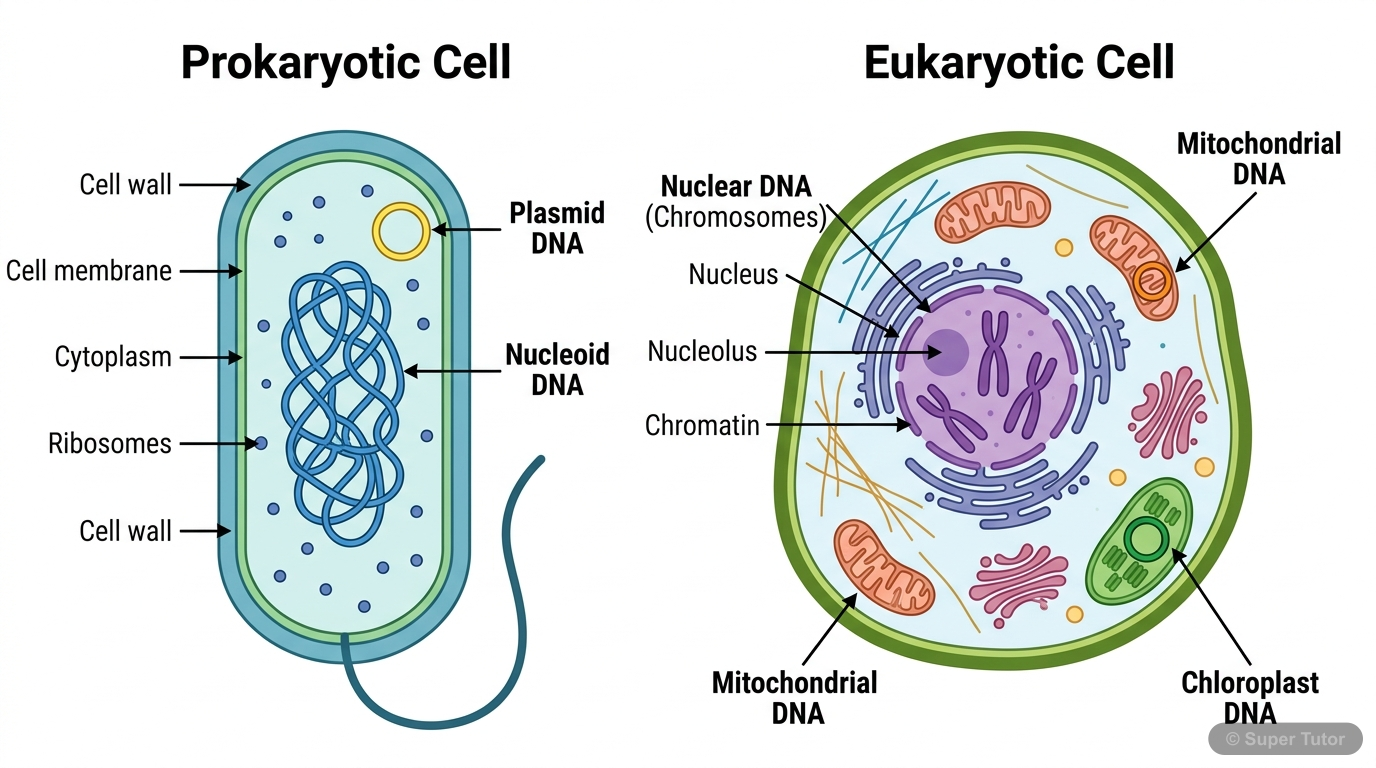
A comparative diagram showing the complete genetic information (genome) in a prokaryotic cell (nucleoid and plasmid DNA) and a eukaryotic cell (nuclear chromosomes, mitochondrial DNA, and chloroplast
Super Tutor

This is just one of 12+ visuals inside Super Tutor's Genome Technology and Engineering chapter

Explore the full set
21 Questions Solved · 1 Section

EXERCISES — Genome Technology and Engineering

1What is a genome? How is the genome of prokaryotes different from eukaryotes?Show solution
Given/Concept: A genome is the complete genetic material of an organism.

Definition of Genome:
The genome of an organism is the complete DNA content present in a cell. It includes all the genetic information required for the growth, development, functioning, and reproduction of that organism.

Differences between Prokaryotic and Eukaryotic Genome:

| Feature | Prokaryotic Genome | Eukaryotic Genome |
|---|---|---|
| Location | Present in the nucleoid (no membrane-bound nucleus) | Present in the membrane-bound nucleus; also in mitochondria and plastids |
| Structure | Single, circular DNA molecule | Multiple, linear DNA molecules (chromosomes) |
| Size | Relatively small (e.g., ~4.6 Mb in *E. coli*) | Much larger (e.g., ~3,200 Mb in humans) |
| Histone proteins | Absent (DNA is naked or associated with histone-like proteins) | Present; DNA is tightly wound around histones forming nucleosomes |
| Introns | Generally absent | Present (non-coding sequences interspersed with coding sequences) |
| Plasmids | Often present as extra-chromosomal DNA | Rare |
| Organellar DNA | Absent | Present in mitochondria and chloroplasts |
| Repetitive sequences | Less abundant | Highly abundant |

Conclusion: The prokaryotic genome is simpler, smaller, and circular, located in the nucleoid, whereas the eukaryotic genome is complex, larger, linear, and distributed across the nucleus and organelles.
2What are the types of genome mapping? Explain each with a comparative approach.Show solution
Given/Concept: Genome mapping refers to the process of determining the location of genes and other DNA sequences on chromosomes. There are two major types: Genetic Mapping and Physical Mapping.

---

1. Genetic Mapping (Linkage Mapping):
- Estimates genetic distances between genetic loci responsible for well-known phenotypes.
- Based on the frequency of recombination (crossing over) between two loci during meiosis.
- Unit of measurement: Centimorgan (cM) or Map Unit (MU). One centimorgan = 1% recombination frequency between two loci.
- Uses phenotypic markers (observable traits) to infer the relative positions of genes.
- Limitation: Does not give the actual physical distance in base pairs; recombination frequency is not always proportional to physical distance.

---

2. Physical Mapping:
- Based on actual physical features of the DNA molecule.
- Gives the actual distance in base pairs (bp) between landmarks on the chromosome.
- Two major approaches:

(a) Restriction Mapping:
- Uses restriction enzymes that cut DNA at specific recognition sequences.
- The resulting DNA fragments are separated by agarose gel electrophoresis based on size.
- The pattern of fragments (restriction fragment length polymorphism, RFLP) is used to construct a map showing the positions of restriction enzyme cut sites.
- Unit: base pairs (bp) or kilobases (kb).

(b) Sequence Tagged Sites (STS) Mapping:
- STS are unique DNA sequences of 200–500 bp with well-known chromosomal locations.
- They serve as landmarks in the physical map.
- STS can be detected and amplified by PCR, making them easy to use.
- Useful for ordering large genomic clones (e.g., BAC, YAC libraries).

---

Comparative Summary:

| Feature | Genetic Mapping | Physical Mapping |
|---|---|---|
| Basis | Recombination frequency | Physical DNA features (restriction sites, STS) |
| Unit | Centimorgan (cM) | Base pairs (bp) / kb |
| Accuracy | Less precise | More precise |
| Markers used | Phenotypic/molecular markers | Restriction sites, STS |
| Technique | Breeding experiments, pedigree analysis | Gel electrophoresis, PCR |

Conclusion: Both types of mapping complement each other. Genetic mapping provides a rough order of genes, while physical mapping gives precise locations in terms of DNA sequence.
3Suppose a DNA is extracted, purified and digested with enzyme BamH1. What type of mapping can be achieved? Mention the application of this type of mapping.Show solution
Given: DNA is extracted, purified, and digested with restriction enzyme BamH1.

Type of Mapping Achieved: Restriction Mapping (Physical Mapping)

Explanation:
- BamH1 is a restriction endonuclease that recognises and cuts the specific DNA sequence 5-GGATCC-35'\text{-GGATCC-}3'.
- When purified DNA is digested with BamH1, it cuts the DNA at every occurrence of this recognition sequence, producing fragments of different sizes.
- These fragments are separated by agarose gel electrophoresis, where they migrate based on their size (smaller fragments migrate faster).
- By analysing the sizes and number of fragments, a restriction map is constructed, showing the positions of BamH1 cut sites along the DNA molecule.
- This is a type of physical mapping since it identifies actual physical landmarks (restriction sites) on the DNA.

Applications of Restriction Mapping:
1. Genome mapping: Provides a physical map of chromosomes by identifying restriction enzyme cut sites.
2. RFLP analysis: Restriction Fragment Length Polymorphism is used in genetic fingerprinting, forensic analysis, and paternity testing.
3. Cloning: Helps identify appropriate restriction sites for inserting foreign DNA into vectors.
4. Diagnosis of genetic diseases: RFLP patterns can be used to identify mutations or polymorphisms associated with genetic disorders.
5. Evolutionary studies: Comparison of restriction maps across species helps in phylogenetic analysis.
6. Construction of genomic libraries: Restriction mapping guides the assembly of overlapping clones in genomic libraries.

Conclusion: Digestion with BamH1 enables restriction mapping, a form of physical mapping, with wide applications in genomics, diagnostics, and molecular biology.
4What is STS and its role in genome mapping?Show solution
Given/Concept: STS stands for Sequence Tagged Sites.

Definition:
STS (Sequence Tagged Sites) are unique, short DNA sequences of approximately 200–500 base pairs (bp) in length, whose chromosomal location is precisely known. They serve as molecular landmarks on the physical map of a genome.

Characteristics of STS:
- Each STS is unique — it occurs only once in the entire genome.
- Its sequence is known, so it can be easily detected.
- It can be amplified by PCR (Polymerase Chain Reaction) using specific primers.
- STS can be derived from any type of DNA sequence, including expressed sequences (called ESTs — Expressed Sequence Tags).

Role of STS in Genome Mapping:
1. Landmarks in Physical Mapping: STS serve as reference points (landmarks) on the physical map of a genome, helping researchers orient and order large DNA fragments.
2. Ordering of Clones: When constructing a physical map using large-insert clones (e.g., BAC or YAC clones), STS markers are used to determine the order and overlap of clones. If two clones share the same STS, they overlap.
3. Integration of Maps: STS can integrate genetic maps and physical maps because the same STS can be located on both types of maps.
4. Genome Sequencing: STS markers guide the assembly of whole genome sequences by providing known anchor points.
5. PCR-based Detection: Since STS can be amplified by PCR, they are easy to use in high-throughput mapping experiments without the need for Southern blotting.

Conclusion: STS are invaluable tools in physical genome mapping, providing unique, PCR-detectable landmarks that facilitate the ordering of genomic clones and the assembly of complete genome sequences.
5Give a brief insight about the development of DNA sequencing technology and genomic workflow.Show solution
Given/Concept: DNA sequencing technology has evolved through multiple generations, each overcoming limitations of the previous one.

---

Development of DNA Sequencing Technology:

1. First Generation Sequencing (Sanger Sequencing / Chain Termination Method):
- Developed by Frederick Sanger in 1977.
- Based on the principle of chain termination using dideoxynucleotides (ddNTPs).
- Procedure:
- DNA is denatured to single strands.
- A primer is annealed to the template.
- DNA polymerase extends the primer using normal dNTPs and a small proportion of fluorescently labelled ddNTPs (ddATP, ddTTP, ddGTP, ddCTP).
- When a ddNTP is incorporated, chain elongation terminates, producing fragments of different lengths.
- These fragments are separated by capillary electrophoresis.
- A fluorescence detector reads the terminal base of each fragment, generating the sequence.
- Workflow: Chromosome separation → Restriction digestion → Ligation into high-capacity cloning vectors → Sequencing by chain termination → Data analysis.
- Limitation: Low throughput, expensive, time-consuming for large genomes.

2. Next Generation Sequencing (NGS):
- Overcame the limitations of first-generation sequencing.
- Based on massively parallel sequencing — millions of DNA fragments are sequenced simultaneously.
- Uses advanced computing algorithms to assemble short sequence reads into large contigs.
- Includes: Whole Genome Sequencing (WGS), Targeted Resequencing, Clinical Exome Sequencing, ChIP-seq, RNA-seq.

3. Third Generation Sequencing (Nanopore Sequencing):
- Uses DNA helicase and porin-like molecules.
- Single-stranded DNA is threaded through a nanopore; changes in ionic current identify each base in real time.
- Simple, rapid, cost-efficient, and portable.

---

Genomic Workflow:
Sample CollectionDNA ExtractionLibrary PreparationSequencingBioinformatics AnalysisInterpretation\text{Sample Collection} \rightarrow \text{DNA Extraction} \rightarrow \text{Library Preparation} \rightarrow \text{Sequencing} \rightarrow \text{Bioinformatics Analysis} \rightarrow \text{Interpretation}

Conclusion: DNA sequencing technology has progressed from low-throughput Sanger sequencing to high-throughput NGS and real-time nanopore sequencing, revolutionising genomics research and clinical diagnostics.
6Discuss how next generation DNA sequencing technology has overcome the drawbacks of the first-generation DNA sequencing technology. Elaborate the methodology.Show solution
Given/Concept: First-generation (Sanger) sequencing had several limitations that were overcome by Next Generation Sequencing (NGS).

---

Drawbacks of First-Generation Sequencing:
1. Low throughput — only one DNA fragment sequenced at a time.
2. Expensive and time-consuming for large genomes.
3. Required cloning of DNA fragments into vectors before sequencing.
4. Multistep procedure: chromosome separation → restriction digestion → ligation into cloning vectors → sequencing.
5. Not suitable for sequencing entire genomes rapidly.

---

How NGS Overcomes These Drawbacks:

| Drawback of 1st Gen | How NGS Overcomes It |
|---|---|
| Low throughput | Millions of fragments sequenced simultaneously (massively parallel) |
| Expensive | Cost per base is drastically reduced |
| Time-consuming | Entire genome sequenced in days |
| Requires cloning | No cloning required; direct sequencing of fragmented DNA |
| Limited scale | Can sequence entire genomes, exomes, transcriptomes |

---

Methodology of NGS:

Step 1: Library Preparation
- Genomic DNA is fragmented into small pieces (100–500 bp).
- Adaptor sequences are ligated to both ends of each fragment.
- These adaptors allow the fragments to bind to a solid surface (flow cell) and serve as primer binding sites.

Step 2: Cluster Amplification (Clonal Amplification)
- Fragments are attached to a solid surface (flow cell).
- Each fragment is amplified by bridge PCR or emulsion PCR to form clusters of identical copies.
- This amplification ensures sufficient signal for detection.

Step 3: Sequencing by Synthesis
- Fluorescently labelled nucleotides are added one at a time.
- After each incorporation, a laser detects the fluorescence signal, identifying the incorporated base.
- The blocking group is removed, and the next cycle begins.
- This generates millions of short reads simultaneously.

Step 4: Bioinformatics Analysis
- Advanced computing algorithms assemble the millions of short reads.
- Reads are aligned to a reference genome or assembled de novo into large contigs.
- Variants, mutations, and structural changes are identified.

Applications of NGS:
- Whole Genome Sequencing (WGS)
- Targeted Resequencing
- Clinical Exome Sequencing
- ChIP-seq (chromatin immunoprecipitation sequencing)
- RNA-seq (transcriptome sequencing)

Conclusion: NGS technology has revolutionised genomics by enabling rapid, cost-effective, high-throughput sequencing, overcoming all major limitations of first-generation Sanger sequencing.
7What is a unit of physical mapping? Discuss in detail.Show solution
Given/Concept: Physical mapping uses specific units to measure distances between landmarks on a DNA molecule.

Unit of Physical Mapping:
The unit of physical mapping is the base pair (bp) or its multiples:
- bp — base pair (for very short distances)
- kb — kilobase = 10310^3 bp
- Mb — megabase = 10610^6 bp

Unlike genetic mapping (which uses centimorgans based on recombination frequency), physical mapping measures the actual number of nucleotide base pairs between two landmarks on the DNA.

---

Detailed Discussion:

1. Restriction Mapping:
- Restriction enzymes cut DNA at specific recognition sequences.
- The resulting fragments are separated by agarose gel electrophoresis.
- Fragment sizes (in bp or kb) are determined by comparison with a DNA ladder (size marker).
- The positions of restriction sites are plotted on a linear map, with distances expressed in bp or kb.
- Example: If BamH1 cuts a 10 kb DNA into fragments of 3 kb, 4 kb, and 3 kb, the restriction map shows the positions of cut sites at 3 kb, 7 kb, and 10 kb.

2. STS (Sequence Tagged Sites) Mapping:
- STS are unique sequences of 200–500 bp detected by PCR.
- The distance between two STS markers is measured in bp.
- STS mapping provides a scaffold for ordering large genomic clones.

3. Contig Maps:
- Overlapping clones (contigs) are assembled based on shared STS or restriction patterns.
- The total length of a contig is expressed in bp or Mb.

Comparison with Genetic Map Unit:
1 centimorgan (cM)1 Mb in humans (on average)1 \text{ centimorgan (cM)} \approx 1 \text{ Mb in humans (on average)}
However, this relationship is not constant across the genome due to variation in recombination rates.

Conclusion: The base pair (bp) is the fundamental unit of physical mapping. Physical maps provide precise, sequence-level information about the genome, which is essential for genome sequencing projects and comparative genomics.
8Discuss the methodology and applications of third generation sequencing technology.Show solution
Given/Concept: Third generation sequencing refers to Nanopore Sequencing technology, which sequences single DNA molecules in real time.

---

Methodology of Nanopore Sequencing:

Key Components:
1. DNA Helicase — An enzyme that unwinds the double-stranded DNA into single strands.
2. Porin-like molecules (Nanopores) — Protein channels embedded in a membrane through which single-stranded DNA is threaded.

Steps:

Step 1: Sample Preparation
- DNA is extracted and prepared. Adaptor molecules are ligated to the ends of DNA fragments.
- A motor protein (DNA helicase) is attached to the adaptor.

Step 2: Threading through Nanopore
- The DNA helicase unwinds the double-stranded DNA and controls the speed at which single-stranded DNA passes through the nanopore.
- The nanopore is embedded in an electrically resistant membrane.
- An ionic current is applied across the membrane.

Step 3: Base Identification
- As each nucleotide passes through the nanopore, it causes a characteristic disruption (change) in the ionic current.
- Each of the four bases (A, T, G, C) produces a distinct current signal.
- These current changes are recorded in real time and decoded to determine the DNA sequence.

Step 4: Data Analysis
- The raw current signals are processed by software algorithms to call the bases and generate the sequence.

---

Advantages of Nanopore Sequencing:
- Simple — minimal sample preparation.
- Rapid — results in real time.
- Cost-efficient — lower cost compared to earlier technologies.
- Portable — devices like MinION can be used in the field.
- Long reads — can sequence very long DNA fragments (tens of kilobases), aiding in assembly of complex genomes.

---

Applications:
1. Genotyping — Identification of genetic variants and SNPs.
2. High mobility testing — Rapid sequencing in field conditions (e.g., outbreak surveillance).
3. Metagenomics — Sequencing of microbial communities directly from environmental samples.
4. Pathogen identification — Rapid identification of infectious agents in clinical settings.
5. Epigenomics — Direct detection of base modifications (e.g., methylation) without additional chemical treatment.
6. Structural variant detection — Long reads help identify large insertions, deletions, and rearrangements.

Conclusion: Nanopore sequencing is a revolutionary third-generation technology that enables real-time, portable, long-read sequencing with broad applications in research, diagnostics, and field-based genomics.
9What are the different variations of Next Generation Sequencing? Explain in brief.Show solution
Given/Concept: Next Generation Sequencing (NGS) encompasses several variations, each designed for specific genomic applications.

---

Variations of Next Generation Sequencing:

1. Whole Genome Sequencing (WGS):
- Sequences the entire genome of an organism in a single experiment.
- Provides comprehensive information about all genetic variants, including SNPs, insertions, deletions, and structural variants.
- Used in de novo genome assembly and comparative genomics.

2. Targeted Resequencing:
- Focuses on sequencing specific regions of interest in the genome (e.g., known disease-associated genes).
- More cost-effective than WGS when only specific regions are of interest.
- Used in clinical diagnostics and population genetics studies.

3. Clinical Exome Sequencing:
- Sequences only the protein-coding regions of the genome (exons), which constitute about 1–2% of the total genome.
- Since most disease-causing mutations occur in exons, this approach is highly efficient for diagnosing genetic disorders.
- More affordable than WGS while capturing most clinically relevant variants.

4. ChIP-seq (Chromatin Immunoprecipitation Sequencing):
- Combines chromatin immunoprecipitation (ChIP) with NGS.
- Used to identify DNA regions bound by specific proteins (e.g., transcription factors, histones).
- Provides genome-wide maps of protein–DNA interactions and histone modifications.
- Important for understanding gene regulation and epigenomics.

5. RNA-seq (RNA Sequencing):
- Sequences the transcriptome (all RNA molecules) of a cell at a given time.
- Provides information about gene expression levels, alternative splicing, novel transcripts, and non-coding RNAs.
- Used in differential gene expression analysis between normal and diseased cells.

---

Conclusion: The various NGS platforms and approaches allow researchers to study the genome, epigenome, and transcriptome comprehensively, enabling advances in basic research, personalised medicine, and clinical diagnostics.
10What are the applications of advanced sequencing technologies? Elaborate.Show solution
Given/Concept: Advanced sequencing technologies (NGS and third-generation sequencing) have wide-ranging applications across biology, medicine, and environmental science.

---

Applications of Advanced Sequencing Technologies:

1. Whole Genome Sequencing (WGS):
- Complete sequencing of genomes of organisms for de novo assembly.
- Identification of all genetic variants (SNPs, indels, structural variants) in an individual.
- Used in comparative genomics and evolutionary studies.

2. Targeted Resequencing:
- Sequencing of specific genomic regions (e.g., cancer-associated genes) in large patient cohorts.
- Cost-effective approach for population-level genetic studies.

3. Clinical Exome Sequencing:
- Diagnosis of rare and undiagnosed genetic disorders by sequencing all protein-coding genes.
- Identification of de novo mutations in patients with complex phenotypes.

4. ChIP-seq:
- Mapping of transcription factor binding sites across the genome.
- Study of histone modifications and chromatin remodelling.
- Understanding gene regulatory networks in development and disease.

5. RNA-seq:
- Quantification of gene expression levels across the entire transcriptome.
- Discovery of novel genes, splice variants, and non-coding RNAs.
- Identification of differentially expressed genes in cancer, infection, and other diseases.

6. Metagenomics:
- Sequencing of DNA from entire microbial communities (soil, gut, ocean) without culturing.
- Discovery of novel microorganisms and their functional roles.
- Study of the human microbiome and its role in health and disease.

7. Epigenomics:
- Genome-wide mapping of DNA methylation and histone modifications.
- Understanding epigenetic regulation of gene expression.

8. Pharmacogenomics:
- Identification of genetic variants that affect drug metabolism and response.
- Enables personalised medicine and targeted therapies.

9. Infectious Disease Surveillance:
- Rapid sequencing of pathogen genomes during outbreaks (e.g., COVID-19).
- Tracking of pathogen evolution and spread.

10. Forensic Genomics:
- High-resolution genetic profiling for forensic identification.

Conclusion: Advanced sequencing technologies have transformed genomics, enabling comprehensive analysis of genomes, transcriptomes, and epigenomes with applications spanning basic research, clinical medicine, agriculture, and environmental science.
11Discuss the applications of metagenomics.Show solution
Given/Concept: Metagenomics involves the sequencing of DNA or cDNA present in a microbial community, without the need to culture individual organisms.

Definition:
Metagenomics is the direct sequencing and analysis of the collective genetic material (metagenome) from all microorganisms present in a given environment (e.g., soil, ocean, gut).

---

Applications of Metagenomics:

1. Discovery of Novel Microorganisms:
- Most microorganisms in nature cannot be cultured in the laboratory.
- Metagenomics allows identification and characterisation of previously unknown microbes.
- Has led to the discovery of vast microbial diversity in environments like deep-sea vents, soil, and the human gut.

2. Human Microbiome Studies:
- The human gut, skin, and oral cavity harbour trillions of microorganisms.
- Metagenomics reveals the composition and function of the human microbiome.
- Links between microbiome composition and diseases like obesity, diabetes, inflammatory bowel disease, and mental health disorders have been established.

3. Environmental Monitoring:
- Metagenomics is used to monitor microbial communities in soil, water, and air.
- Helps assess the impact of pollution, climate change, and agricultural practices on microbial diversity.

4. Bioprospecting:
- Discovery of novel enzymes (e.g., thermostable enzymes, novel proteases) and bioactive compounds (e.g., antibiotics, antifungals) from uncultured microorganisms.
- These enzymes have industrial applications in biofuel production, food processing, and pharmaceuticals.

5. Infectious Disease Diagnosis:
- Rapid identification of all pathogens (bacteria, viruses, fungi, parasites) in a clinical sample without prior knowledge of the causative agent.
- Useful in diagnosing infections of unknown aetiology.

6. Bioremediation:
- Identification of microorganisms capable of degrading pollutants (e.g., oil spills, heavy metals, pesticides).
- Metagenomics helps design microbial consortia for bioremediation applications.

7. Agriculture:
- Study of soil microbiomes to improve crop productivity and soil health.
- Identification of plant growth-promoting microorganisms.

8. Evolutionary Studies:
- Metagenomics provides insights into the evolution of microbial communities and horizontal gene transfer.

Conclusion: Metagenomics is a powerful tool that has expanded our understanding of microbial diversity and function, with far-reaching applications in medicine, environmental science, biotechnology, and agriculture.
12What are the goals of genome engineering? Explain each in detail.Show solution
Given/Concept: Genome engineering is a technology to modify a genome in a targeted and precise manner.

Definition:
Genome engineering refers to the deliberate modification of the genetic material of an organism using molecular tools. It encompasses a range of strategies to alter the genome for research, therapeutic, or biotechnological purposes.

---

Goals of Genome Engineering:

1. Inactivation (Gene Knockout):
- The goal is to disrupt or silence a specific gene so that it no longer produces a functional protein.
- This is achieved using transposons (mobile DNA elements that insert into genes and disrupt their function) or CRISPR-Cas9 (which introduces double-strand breaks leading to non-homologous end joining and frameshift mutations).
- Application: Study of gene function by observing the phenotype when a gene is absent; creation of disease models.

2. Deletion:
- Removal of a specific DNA sequence or an entire gene from the genome.
- Achieved by introducing two double-strand breaks flanking the target region, followed by deletion of the intervening sequence.
- Application: Removal of deleterious genes, creation of minimal genomes.

3. Integration:
- Insertion of a foreign DNA sequence (transgene) into a specific location in the genome.
- Achieved by homologous recombination or site-specific recombinases.
- Application: Production of transgenic organisms, gene therapy (inserting a functional copy of a defective gene).

4. Transduction:
- Transfer of genetic material from one organism to another using viral vectors or other delivery systems.
- Application: Gene therapy, introduction of beneficial traits in crops.

5. Genome Editing:
- Precise modification of specific nucleotides in the genome without inserting foreign DNA.
- Achieved using CRISPR-Cas9, TALENs, or Zinc Finger Nucleases.
- Application: Correction of disease-causing mutations, improvement of crop traits, creation of research models.

6. High-Level Recombinant Protein Production:
- Engineering the genome of host cells (e.g., CHO cells, yeast) to optimise the expression of recombinant proteins.
- Involves integration of expression cassettes at high-expression loci.
- Application: Production of therapeutic proteins (insulin, antibodies, vaccines).

---

Conclusion: The goals of genome engineering range from basic research (understanding gene function) to applied biotechnology (therapeutic protein production) and medicine (gene therapy), making it one of the most transformative technologies in modern biology.
13One of the applications of genome engineering is to achieve high level recombinant protein production. How can we achieve this? Explain in detail.Show solution
Given/Concept: Genome engineering can be used to engineer host cells for high-level production of recombinant proteins.

---

Strategy to Achieve High-Level Recombinant Protein Production:

Step 1: Selection of Host Cell
- Suitable host cells are selected based on the nature of the protein required.
- Common hosts: *E. coli* (bacteria), *Saccharomyces cerevisiae* (yeast), Chinese Hamster Ovary (CHO) cells (mammalian), insect cells.
- Mammalian cells are preferred for proteins requiring post-translational modifications (glycosylation, folding).

Step 2: Construction of Expression Cassette
- The gene of interest (coding sequence of the desired protein) is cloned into an expression vector.
- The expression cassette includes:
- A strong promoter (e.g., CMV promoter for mammalian cells, T7 promoter for bacteria)
- The coding sequence of the protein
- A terminator/polyadenylation signal
- Selectable marker (e.g., antibiotic resistance gene)
- Optionally, a 6-His-tag sequence for easy purification

Step 3: Genome Engineering for Stable Integration
- Using genome engineering tools (e.g., CRISPR-Cas9), the expression cassette is integrated into a specific, transcriptionally active locus (hot spot) in the host genome.
- This ensures stable, high-level, and consistent expression of the recombinant protein.
- Random integration (as in traditional transfection) can lead to variable expression due to position effects.

Step 4: Elimination of Competing Pathways
- Genes encoding proteases that degrade the recombinant protein can be knocked out.
- Genes involved in competing metabolic pathways can be deleted to redirect cellular resources towards protein production.

Step 5: Optimisation of Culture Conditions
- Engineered cells are grown under optimised conditions (media composition, temperature, pH, oxygen levels) to maximise protein yield.

Step 6: Purification
- If a 6-His-tag is incorporated, the protein is purified by Immobilised Metal Affinity Chromatography (IMAC) using Ni-NTA resin.
- The His-tag binds to nickel ions; the protein is eluted with imidazole.

---

Example:
- Recombinant insulin is produced in *E. coli* by integrating the human insulin gene under a strong promoter.
- Recombinant monoclonal antibodies are produced in CHO cells engineered for high-level expression.

Conclusion: Genome engineering enables precise integration of expression cassettes at optimal genomic loci, elimination of competing pathways, and addition of purification tags, collectively achieving high-level, stable recombinant protein production.
14What is a genome editing? Why is there a need to edit a genome? Explain the methodology of editing using CRISPR-Cas9.Show solution
Given/Concept: Genome editing is the precise modification of specific DNA sequences within a genome.

---

Definition of Genome Editing:
Genome editing is a type of genome engineering in which specific nucleotide sequences in the genome are precisely altered — including substitution, insertion, or deletion of bases — using molecular tools such as CRISPR-Cas9, TALENs, or Zinc Finger Nucleases.

---

Need for Genome Editing:
1. Correction of genetic diseases: Many diseases (e.g., sickle cell anaemia, cystic fibrosis, Duchenne muscular dystrophy) are caused by specific mutations. Editing can correct these mutations.
2. Cancer therapy: Editing immune cells (e.g., CAR-T cells) to better recognise and destroy cancer cells.
3. Agricultural improvement: Developing disease-resistant, drought-tolerant, or nutritionally enhanced crops.
4. Basic research: Understanding the function of specific genes by knocking them out or modifying them.
5. Drug development: Creating cell and animal models of human diseases for drug testing.
6. Infectious disease: Editing the genome of pathogens or host cells to prevent infection (e.g., HIV resistance by editing CCR5 gene).

---

Methodology of Genome Editing Using CRISPR-Cas9:

Components:
1. Cas9 endonuclease — A bacterial enzyme that acts as molecular scissors to cut double-stranded DNA.
2. Guide RNA (gRNA) — A short synthetic RNA (~20 nucleotides) that is complementary to the target DNA sequence. It directs Cas9 to the correct location in the genome.
3. PAM sequence — A short sequence (NGG for *Streptococcus pyogenes* Cas9) adjacent to the target site, required for Cas9 binding.

Steps:

Step 1: Design of Guide RNA (gRNA)
- A gRNA is designed to be complementary to the target DNA sequence (20 bp) adjacent to a PAM sequence.
- The gRNA is synthesised and cloned into an expression vector.

Step 2: Delivery into Cells
- The Cas9 protein and gRNA (as a complex called ribonucleoprotein, RNP, or encoded in a plasmid/viral vector) are delivered into the target cells.
- Delivery methods: electroporation, viral vectors (lentivirus, AAV), lipid nanoparticles.

Step 3: Target Recognition and Binding
- The gRNA base-pairs with the complementary strand of the target DNA.
- Cas9 scans the genome and binds to the target site upon recognising the PAM sequence.

Step 4: Double-Strand Break (DSB)
- Cas9 introduces a double-strand break (DSB) at a specific position (3 bp upstream of the PAM sequence) in the target DNA.

Step 5: DNA Repair
The cell repairs the DSB by one of two pathways:

(a) Non-Homologous End Joining (NHEJ):
- Error-prone repair that introduces small insertions or deletions (indels) at the cut site.
- Results in frameshift mutations → gene knockout (inactivation).

(b) Homology-Directed Repair (HDR):
- If a donor DNA template with the desired sequence is provided, the cell uses it as a template for precise repair.
- Results in precise gene correction or insertion of a new sequence.
- Used for gene editing (correction of mutations).

gRNA+Cas9Target DNA bindingDSB{NHEJGene knockoutHDRPrecise editing\text{gRNA} + \text{Cas9} \rightarrow \text{Target DNA binding} \rightarrow \text{DSB} \rightarrow \begin{cases} \text{NHEJ} \rightarrow \text{Gene knockout} \\ \text{HDR} \rightarrow \text{Precise editing} \end{cases}

---

Conclusion: CRISPR-Cas9 is a simple, precise, and versatile genome editing tool. By designing a gRNA complementary to any target sequence, researchers can knock out genes (via NHEJ) or precisely correct mutations (via HDR), making it invaluable in medicine, agriculture, and basic research.
15What are the structural, functional and comparative genomics?Show solution
Given/Concept: Genomics is broadly divided into structural, functional, and comparative genomics, each focusing on different aspects of the genome.

---

1. Structural Genomics:

Definition: Structural genomics includes the study of the structural organisation of DNA regions in chromosomes and the nucleosome status of the genome.

Key aspects:
- Study of the physical organisation of chromosomes: centromeres, telomeres, origins of replication.
- Analysis of chromatin structure: how DNA is packaged around histones to form nucleosomes.
- Mapping of open chromatin regions (accessible to transcription factors) vs. condensed chromatin (heterochromatin).
- Techniques used: ChIP-seq, ATAC-seq, Hi-C (chromosome conformation capture).
- Goal: Understand how the three-dimensional organisation of the genome influences gene expression.

---

2. Functional Genomics:

Definition: Functional genomics aims to study the physiological and pathological functions associated with the state of a cell.

Key aspects:
- Studies the function of genes and non-coding sequences at the genome-wide level.
- Examines how genes are expressed (transcriptomics), how proteins are produced (proteomics), and how metabolites are generated (metabolomics) under different conditions.
- Techniques used: RNA-seq (gene expression), ChIP-seq (protein-DNA interactions), CRISPR screens (gene function).
- Goal: Understand which genes are active in a given cell type, developmental stage, or disease state, and what their functions are.

---

3. Comparative Genomics:

Definition: Comparative genomics identifies a set of common genes that form the core genome and other genes that are unique to a species.

Key aspects:
- Compares the genomes of different species to identify conserved sequences (core genome) and species-specific sequences.
- Conserved sequences across species often indicate functional importance (evolutionary constraint).
- Helps identify genes responsible for species-specific traits.
- Core genome: Set of genes shared by all members of a taxonomic group.
- Pan-genome: Total gene repertoire of a species, including core and accessory genes.
- Goal: Starting point for genome-based taxonomy and phylogenetic lineage studies; understanding evolution and adaptation.

---

Summary Table:

| Type | Focus | Key Techniques | Goal |
|---|---|---|---|
| Structural Genomics | Chromosome and chromatin organisation | ChIP-seq, Hi-C, ATAC-seq | 3D genome organisation |
| Functional Genomics | Gene function and expression | RNA-seq, CRISPR screens | Gene function in health/disease |
| Comparative Genomics | Genome comparison across species | Sequence alignment, phylogenetics | Evolution, taxonomy |

Conclusion: Structural, functional, and comparative genomics are complementary disciplines that together provide a comprehensive understanding of genome organisation, function, and evolution.
16What are the applications of protein engineering? Discuss in brief.Show solution
Given/Concept: Protein engineering involves the design and modification of proteins to create novel or improved functions.

Definition:
Protein engineering is the application of recombinant DNA technology and computational methods to design, modify, or create proteins with desired properties for research, diagnostic, or therapeutic purposes.

---

Applications of Protein Engineering:

1. Development of Novel Reagents:
- Engineering enzymes with improved stability, specificity, or activity for use in research and industrial processes.
- Example: Thermostable DNA polymerases (Taq polymerase) used in PCR.

2. Diagnostics:
- Engineering antibodies and binding proteins for use in diagnostic assays (ELISA, lateral flow assays).
- Development of biosensors using engineered proteins.

3. Therapeutics:
- Production of recombinant therapeutic proteins (e.g., insulin, erythropoietin, growth hormone).
- Engineering of monoclonal antibodies for cancer therapy, autoimmune diseases, and infectious diseases.

4. Recombinant Proteins with 6-His-Tag:
- A sequence of six histidine residues (6-His-tag) is added to the recombinant protein.
- The His-tag binds to nickel ions in Immobilised Metal Affinity Chromatography (IMAC), enabling easy and efficient purification.
- Application: Simplifies purification of recombinant proteins from complex cell lysates.

5. Fluorescent Proteins for Cellular Localisation:
- Genes encoding fluorescent proteins (e.g., GFP — Green Fluorescent Protein) are fused to the gene of interest.
- The fusion protein fluoresces, allowing tracking of the protein's location within living cells using fluorescence microscopy.
- Application: Study of protein trafficking, organelle dynamics, and protein–protein interactions.

6. Humanised Monoclonal Antibodies:
- Mouse monoclonal antibodies are humanised by replacing the constant regions (and framework regions) with human antibody sequences, retaining only the antigen-binding regions from the mouse.
- Application: Reduces immunogenicity when used therapeutically in humans.

7. Single Chain Antibodies (scFv):
- The variable regions of heavy and light chains are joined by a flexible linker peptide to create a single-chain antibody fragment.
- Smaller size allows better tissue penetration.
- Application: Targeted drug delivery, diagnostics.

8. Recombinant Immunotoxins:
- An engineered antibody is fused to a toxin (e.g., Pseudomonas exotoxin, ricin).
- The antibody targets specific cancer cells; the toxin kills them.
- Application: Targeted cancer therapy.

Conclusion: Protein engineering has broad applications spanning research tools, diagnostics, and therapeutics, enabling the development of highly specific and effective biological agents.
17If you are given a recombinant protein with 6-His-tags, how are you going to use it? Explain the methodology and application in detail.Show solution
Given: A recombinant protein with a 6-His-tag (six consecutive histidine residues) is available.

Concept: The 6-His-tag is used for purification of recombinant proteins by Immobilised Metal Affinity Chromatography (IMAC).

---

What is a 6-His-Tag?
- A 6-His-tag is a sequence of six histidine amino acids (His-His-His-His-His-His\text{His-His-His-His-His-His}) added to either the N-terminus or C-terminus of a recombinant protein.
- Histidine residues have a high affinity for divalent metal ions, particularly nickel (Ni2+\text{Ni}^{2+}) and cobalt (Co2+\text{Co}^{2+}).

---

Methodology: Purification by IMAC (Immobilised Metal Affinity Chromatography)

Step 1: Cell Lysis
- The host cells (e.g., *E. coli*, CHO cells) expressing the His-tagged recombinant protein are lysed using mechanical disruption, sonication, or detergent-based lysis.
- The cell lysate contains the recombinant protein along with thousands of other cellular proteins.

Step 2: Preparation of IMAC Column
- A chromatography column is packed with a resin (e.g., Ni-NTA agarose) that has nickel ions (Ni2+\text{Ni}^{2+}) chelated to nitrilotriacetic acid (NTA) groups.
- The column is equilibrated with a binding buffer (containing imidazole at low concentration, ~10–20 mM, to reduce non-specific binding).

Step 3: Loading the Lysate
- The cell lysate is applied to the Ni-NTA column.
- The 6-His-tag of the recombinant protein coordinates with the Ni2+\text{Ni}^{2+} ions on the resin, causing the His-tagged protein to bind tightly.
- Other proteins without His-tags flow through and are washed away.

Step 4: Washing
- The column is washed with a wash buffer containing a low concentration of imidazole (~20–50 mM) to remove weakly bound non-specific proteins.

Step 5: Elution
- The His-tagged protein is eluted by applying a high concentration of imidazole (~250–500 mM).
- Imidazole competes with the His-tag for binding to Ni2+\text{Ni}^{2+}, displacing the recombinant protein from the resin.
- The eluted fractions contain the purified recombinant protein.

Step 6: Dialysis / Buffer Exchange
- Imidazole is removed by dialysis or desalting columns.
- The protein is stored in an appropriate buffer.

Cell LysateNi-NTA ColumnHis-tagged protein bindsImidazole elutionPure recombinant protein\text{Cell Lysate} \xrightarrow{\text{Ni-NTA Column}} \text{His-tagged protein binds} \xrightarrow{\text{Imidazole elution}} \text{Pure recombinant protein}

---

Applications of 6-His-Tagged Recombinant Proteins:

1. Protein purification: Single-step purification from complex mixtures with high yield and purity.
2. Structural studies: Pure protein is required for X-ray crystallography, NMR, and cryo-EM.
3. Functional studies: Biochemical assays, enzyme kinetics, binding studies.
4. Therapeutic protein production: Purification of recombinant therapeutic proteins (e.g., cytokines, growth factors).
5. Protein–protein interaction studies: His-tagged proteins can be used as bait in pull-down assays to identify interacting partners.
6. Diagnostics: His-tagged antigens used in ELISA and other immunoassays.

Conclusion: The 6-His-tag system provides a simple, efficient, and cost-effective method for purifying recombinant proteins using IMAC, with broad applications in research, diagnostics, and biopharmaceutical production.
18How do you apply protein engineering to track cellular localisation of proteins?Show solution
Given/Concept: Protein engineering can be used to create fluorescent fusion proteins that allow tracking of protein localisation within living cells.

---

Principle:
A gene encoding a fluorescent protein (e.g., GFP — Green Fluorescent Protein) is fused to the gene encoding the protein of interest using recombinant DNA technology. When expressed in cells, the fusion protein fluoresces, and its location can be visualised using fluorescence microscopy.

---

Methodology:

Step 1: Selection of Fluorescent Protein
- Choose an appropriate fluorescent protein based on the experimental requirement:
- GFP (Green Fluorescent Protein) — green fluorescence
- RFP (Red Fluorescent Protein) — red fluorescence
- YFP (Yellow Fluorescent Protein) — yellow fluorescence
- CFP (Cyan Fluorescent Protein) — cyan fluorescence
- Multiple proteins can be tracked simultaneously using different coloured fluorescent proteins.

Step 2: Construction of Fusion Gene
- The coding sequence of the protein of interest is cloned in-frame with the coding sequence of the fluorescent protein (e.g., GFP) in an expression vector.
- The fusion can be at the N-terminus or C-terminus of the protein of interest, depending on which end does not interfere with protein function.
- A flexible linker sequence (e.g., GGGGS repeat) is often inserted between the two coding sequences to allow independent folding.

Promoter[Protein of Interest][Linker][GFP]Terminator\text{Promoter} - \text{[Protein of Interest]} - \text{[Linker]} - \text{[GFP]} - \text{Terminator}

Step 3: Transfection into Host Cells
- The expression vector containing the fusion gene is introduced into the target cells (e.g., HeLa cells, neurons) by transfection (lipofection, electroporation) or viral transduction.

Step 4: Expression of Fusion Protein
- The cells express the fusion protein, which folds correctly and fluoresces.

Step 5: Fluorescence Microscopy
- Cells are observed under a fluorescence microscope or confocal microscope.
- The location of the fluorescent signal reveals the subcellular localisation of the protein of interest (e.g., nucleus, cytoplasm, mitochondria, plasma membrane, endoplasmic reticulum).

Step 6: Live Cell Imaging
- Since GFP is non-toxic and fluorescent in living cells, the movement and dynamics of the protein can be tracked in real time in live cells.

---

Applications:
1. Subcellular localisation: Determining where a protein resides in the cell (nucleus, cytoplasm, organelles).
2. Protein trafficking: Tracking the movement of proteins through the secretory pathway (ER → Golgi → plasma membrane).
3. Protein–protein interactions: Using FRET (Fluorescence Resonance Energy Transfer) between two differently coloured fluorescent proteins fused to interacting proteins.
4. Cell biology research: Studying organelle dynamics, cell division, and signal transduction.
5. Drug discovery: Monitoring the effect of drugs on protein localisation and dynamics.

Conclusion: Protein engineering using fluorescent protein fusions is a powerful and non-invasive approach to study the localisation, movement, and interactions of proteins in living cells, providing invaluable insights into cell biology.
19How to generate a recombinant immunotoxin? Why do you think there is a need for generation of an immunotoxin? Mention its mechanism of action.Show solution
Given/Concept: A recombinant immunotoxin is an engineered antibody–toxin fusion protein designed to deliver a toxin specifically to target cells.

---

Definition:
A recombinant immunotoxin is a chimeric protein consisting of:
1. An antibody or antibody fragment (e.g., single-chain antibody, scFv) that specifically recognises a target antigen on the surface of cancer cells or other diseased cells.
2. A toxin (e.g., Pseudomonas exotoxin A, ricin A chain, diphtheria toxin) that kills the target cell.

---

Need for Recombinant Immunotoxins:
1. Targeted cancer therapy: Conventional chemotherapy kills both cancerous and normal cells, causing severe side effects. Immunotoxins deliver the toxin specifically to cancer cells expressing a particular antigen, sparing normal cells.
2. Treatment of drug-resistant cancers: Immunotoxins can kill cancer cells that are resistant to conventional drugs.
3. Haematological malignancies: Effective against leukaemias and lymphomas expressing specific surface antigens (e.g., CD22, CD25).
4. Autoimmune diseases: Can target specific immune cells involved in autoimmune pathology.
5. Infectious diseases: Can target cells infected with specific pathogens.

---

Generation of Recombinant Immunotoxin:

Step 1: Identification of Target Antigen
- Identify a cell-surface antigen that is specifically or highly expressed on the target cells (e.g., cancer cells) but not on normal cells.
- Example: CD22 on B-cell leukaemia cells.

Step 2: Selection/Engineering of Antibody Fragment
- A monoclonal antibody or single-chain antibody fragment (scFv) specific for the target antigen is selected or engineered.
- scFv consists of the variable regions of heavy (VHV_H) and light (VLV_L) chains connected by a flexible linker.

Step 3: Selection of Toxin
- A potent toxin is selected. Commonly used toxins:
- Pseudomonas exotoxin A (PE) — inhibits protein synthesis by ADP-ribosylation of EF-2.
- Ricin A chain — inhibits protein synthesis by depurinating rRNA.
- Diphtheria toxin (DT) — inhibits protein synthesis.
- The cell-binding domain of the toxin is removed (to prevent non-specific binding to normal cells), retaining only the toxic domain.

Step 4: Construction of Fusion Gene
- The DNA coding sequence of the antibody fragment (scFv) is fused to the DNA coding sequence of the toxin (without its cell-binding domain) using recombinant DNA technology.
scFv gene+Toxin gene (without binding domain)Fusion gene (Immunotoxin)\text{scFv gene} + \text{Toxin gene (without binding domain)} \rightarrow \text{Fusion gene (Immunotoxin)}

Step 5: Expression and Purification
- The fusion gene is cloned into an expression vector and expressed in a suitable host (e.g., *E. coli*).
- The recombinant immunotoxin protein is purified (often using a His-tag).

---

Mechanism of Action:

ImmunotoxinAntibody binds target antigenInternalisation by endocytosisToxin released in cytoplasmInhibition of protein synthesisCell death (apoptosis)\text{Immunotoxin} \xrightarrow{\text{Antibody binds target antigen}} \text{Internalisation by endocytosis} \xrightarrow{\text{Toxin released in cytoplasm}} \text{Inhibition of protein synthesis} \rightarrow \text{Cell death (apoptosis)}

1. The antibody fragment of the immunotoxin binds specifically to the target antigen on the cancer cell surface.
2. The immunotoxin–antigen complex is internalised by receptor-mediated endocytosis.
3. Inside the cell, the toxin is released from the endosome into the cytoplasm.
4. The toxin inhibits protein synthesis (e.g., PE ADP-ribosylates EF-2, blocking translation elongation).
5. Inhibition of protein synthesis leads to cell death (apoptosis).

---

Examples:
- Moxetumomab pasudotox — anti-CD22 scFv fused to Pseudomonas exotoxin; approved for hairy cell leukaemia.
- Denileukin diftitox — IL-2 fused to diphtheria toxin; targets IL-2 receptor-expressing T-cell lymphomas.

Conclusion: Recombinant immunotoxins are rationally engineered, targeted therapeutic agents that combine the specificity of antibodies with the potency of toxins, offering a powerful approach for treating cancers and other diseases with minimal damage to normal tissues.
20Assertion: RFLP is variation in length of DNA fragments when cleaved by same restriction endonuclease.
Reason: Genome of every individual has different position of restriction sites.
(a) Both assertion and reason are true and the reason is the correct explanation of the assertion.
(b) Both assertion and reason are true but the reason is not the correct explanation of the assertion.
(c) Assertion is true but reason is false.
(d) Both assertion and reason are false.
Show solution
Correct Option: (a) Both assertion and reason are true and the reason is the correct explanation of the assertion.

Justification:
- Assertion is TRUE: RFLP (Restriction Fragment Length Polymorphism) refers to the variation in the length of DNA fragments produced when genomic DNA from different individuals is digested with the same restriction endonuclease. Different individuals produce fragments of different sizes because of polymorphisms in their DNA sequences.
- Reason is TRUE and correctly explains the Assertion: The genome of every individual differs slightly in the positions of restriction enzyme recognition sequences (due to single nucleotide polymorphisms, insertions, or deletions). When the same restriction enzyme cuts DNA from different individuals, the positions of cuts differ, resulting in fragments of different lengths — this is the molecular basis of RFLP.
- Therefore, the reason directly and correctly explains why RFLP occurs, making option (a) the correct answer.
21Assertion: Recombinant immunotoxins are rationally engineered protein agents.
Reason: It is prepared by fusing DNA-coding region of antibody with the DNA code of toxin.
(a) Both assertion and reason are true and the reason is the correct explanation of the assertion.
(b) Both assertion and reason are true but the reason is not the correct explanation of the assertion.
(c) Assertion is true but reason is false.
(d) Both assertion and reason are false.
Show solution
Correct Option: (a) Both assertion and reason are true and the reason is the correct explanation of the assertion.

Justification:
- Assertion is TRUE: Recombinant immunotoxins are indeed rationally engineered protein agents. They are designed by deliberately combining the targeting specificity of an antibody with the cell-killing potency of a toxin, using recombinant DNA technology — this constitutes rational engineering.
- Reason is TRUE and correctly explains the Assertion: The molecular basis of generating a recombinant immunotoxin is the fusion of the DNA coding sequence of an antibody (or antibody fragment, e.g., scFv) with the DNA coding sequence of a toxin (with its cell-binding domain removed). This fusion gene is expressed to produce the immunotoxin protein. This is precisely what makes it a "rationally engineered" agent — the design is deliberate and based on known molecular principles.
- Therefore, the reason correctly and completely explains the assertion, making option (a) the correct answer.

Stuck on a step?

Ask Super Tutor AI to explain any solution on this page in a simpler way — free, 24x7.

Ask a Doubt Free

Frequently Asked Questions

What are the important topics in Genome Technology and Engineering for CBSE Class 12 Biotechnology?
Key topics in Genome Technology and Engineering include Genome Technology and Engineering — Chapter Overview, Complete Chapter Concept Map: Genome Technology and Engineering, Chapter Overview: Genome Technology and Engineering. These are the concepts CBSE Class 12 examiners draw on most — study them first, then practise related questions.
How to score full marks in Genome Technology and Engineering — CBSE Class 12 Biotechnology?
Start by understanding all key concepts. Practise previous year questions from this chapter. Revise formulas and definitions regularly. Use flashcards for quick revision before the exam.
Where can I get free NCERT Solutions for Genome Technology and Engineering Class 12 Biotechnology?
This page has free step-by-step NCERT Solutions for every exercise question in Genome Technology and Engineering (CBSE Class 12 Biotechnology) — written the way examiners award marks: given, formula, working, answer.

Sources & Official References

Content is aligned to the official syllabus. Refer to the board website for the latest curriculum.

For serious students

Get the full Genome Technology and Engineering chapter — for free.

Quizzes, flashcards, AI doubt-solver and a step-by-step study plan for CBSE Class 12 Biotechnology.