Clinical Nutrition and Dietetics
CBSE · Class 12 · Home Science
NCERT Solutions for Clinical Nutrition and Dietetics — CBSE Class 12 Home Science.
Interactive on Super Tutor
Studying Clinical Nutrition and Dietetics? Get the full interactive chapter.
Quizzes, flashcards, AI doubt-solver and a step-by-step study plan — built for ncert solutions and more.
1,000+ Class 12 students started this chapter today

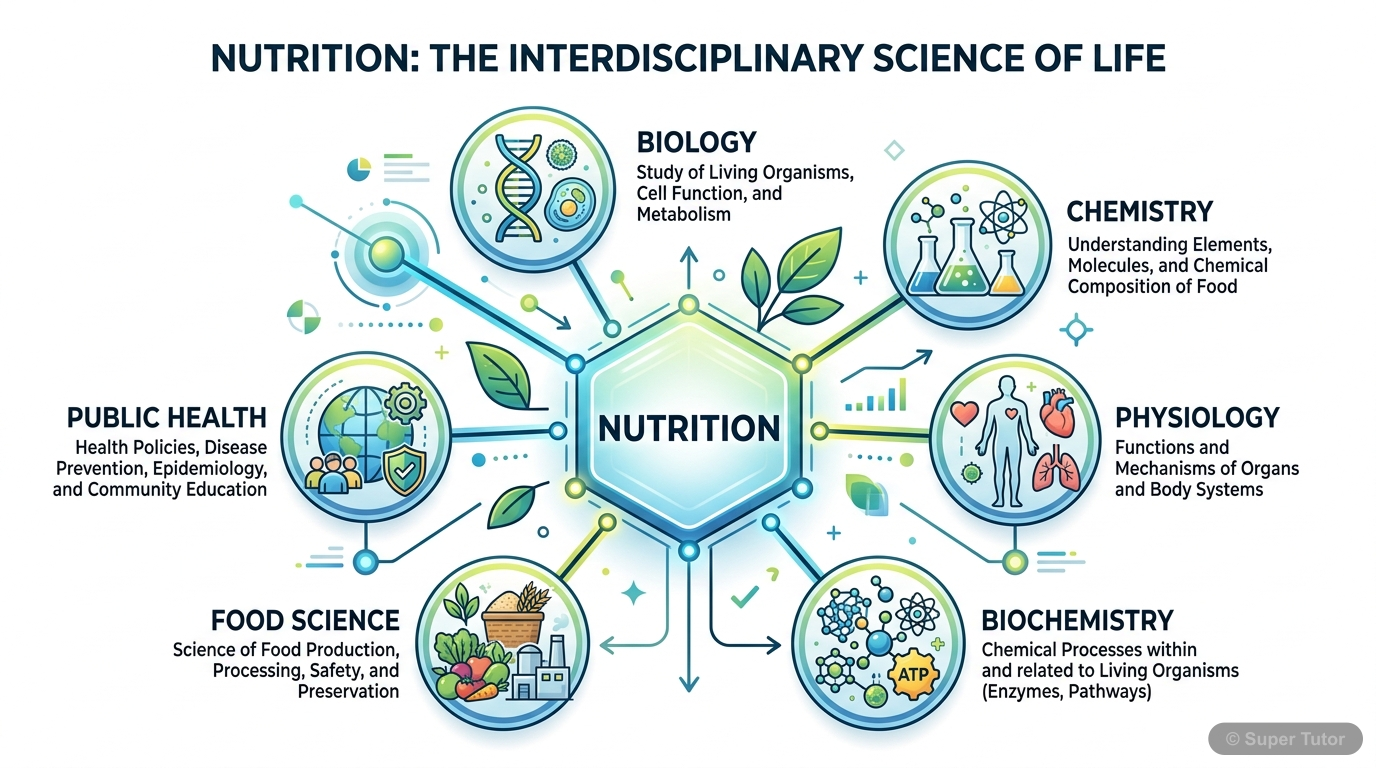
Learn better with visuals Super Tutor has hundreds of illustrations like this across every chapter — all free to try.
Get startedEXERCISE (In-text Exercise on Diet and Disease)
1What can you conclude about (a) role of the diet in disease causation? (b) role of the diet in disease prevention?Show solution
- A study of 20,000 men found that consuming fish once a week was linked to a 52% reduction in the risk of sudden death from heart attack. Fish is high in omega-3 fatty acids.
- A study of more than 42,000 women found that those who ate lots of fruits, vegetables, whole grains, low-fat dairy products, and lean meats lived longer. High intake of fruits, vegetables, and legumes was associated with a lower risk of developing heart disease.
(a) Role of Diet in Disease Causation:
Diet plays a significant role in causing or increasing the risk of disease. Specifically:
- A diet high in saturated fats, sugar, salt, and processed/convenience foods and low in fibre, fruits, vegetables, and whole grains is associated with increased incidence of chronic diseases such as:
- Obesity (due to excess calorie intake from fats and sugars)
- Type 2 Diabetes (due to high sugar and fat intake combined with low fibre and physical inactivity)
- Cardiovascular Disease (due to high fat, low omega-3 intake)
- Hypertension (due to high sodium/salt intake, low potassium from fruits and vegetables)
- Cancer of the colon (due to low fibre intake)
- Therefore, an imbalanced, nutrient-poor diet directly contributes to the development of chronic, lifestyle-related diseases.
(b) Role of Diet in Disease Prevention:
Diet can be a powerful tool in preventing disease:
- Consuming fish rich in omega-3 fatty acids at least once a week can reduce the risk of sudden cardiac death by up to 52%, as omega-3 fatty acids protect the heart from abnormal rhythms.
- A diet rich in fruits, vegetables, whole grains, low-fat dairy, and lean meats is associated with longer life and a significantly lower risk of heart disease.
- High intake of fruits, vegetables, and legumes provides fibre, antioxidants, vitamins, and minerals (such as potassium) that protect against cardiovascular disease, hypertension, and other chronic conditions.
- Therefore, a well-balanced, nutrient-rich diet acts as a preventive measure against many chronic diseases and promotes overall health and longevity.
Conclusion: Diet is both a risk factor for disease causation and a protective factor for disease prevention. Making informed, healthy dietary choices is one of the most effective strategies for maintaining good health and reducing the burden of chronic disease.
REVIEW QUESTIONS
1What is the significance of the study of clinical nutrition and dietetics?Show solution
Significance of the Study of Clinical Nutrition and Dietetics:
1. Disease Prevention: Clinical nutrition helps identify dietary patterns and nutrient deficiencies that lead to chronic diseases such as obesity, diabetes, cardiovascular disease, hypertension, and cancer. By understanding these links, appropriate dietary interventions can prevent disease onset.
2. Disease Management and Treatment: Diet is a critical component of the treatment of many diseases. For example:
- Diabetic patients require controlled carbohydrate intake.
- Patients with kidney disease need restricted protein and potassium.
- Post-surgical patients need high-protein diets for recovery.
Clinical nutrition provides the scientific basis for planning such therapeutic diets.
3. Improving Nutritional Status: Illness often leads to poor appetite, malabsorption, or increased nutrient requirements. Clinical nutritionists assess and correct nutritional deficiencies to restore health.
4. Dietary Counselling: Clinical nutritionists and dietitians provide personalised diet counselling to patients, helping them make sustainable dietary changes that support their health goals.
5. Public Health Impact: By working in schools, colleges, hospitals, and community settings, clinical nutritionists help reduce the prevalence of lifestyle-related diseases at the population level.
6. Career Opportunities: The field offers diverse career paths including hospital dietetics, research, food industry, teaching, and entrepreneurship.
Conclusion: The study of clinical nutrition and dietetics is significant because it bridges the gap between nutritional science and medical care, enabling both the prevention and management of disease through diet.
2What are the types of dietary modifications that a medical nutrition therapist may make?Show solution
Types of Dietary Modifications:
A medical nutrition therapist (dietitian) may make the following types of dietary modifications:
1. Modification in Consistency/Texture:
- The texture of food is changed to make it easier to eat.
- Examples:
- Liquid diet – for patients who cannot chew or swallow solid food (e.g., post-surgery, jaw injury). Includes clear liquids (water, broth, juices) or full liquids (milk, soups).
- Soft diet – for elderly patients with no teeth or difficulty chewing (e.g., soft-cooked vegetables, mashed foods, porridge).
- Semi-solid diet – for patients recovering from illness.
2. Modification in Energy (Calorie) Content:
- High-calorie diet – for underweight patients, those recovering from illness, or patients with increased metabolic needs (e.g., burns, fever).
- Low-calorie/Calorie-restricted diet – for obese patients or those with type 2 diabetes.
3. Modification in Protein Content:
- High-protein diet – for patients recovering from surgery, burns, or infections.
- Low-protein diet – for patients with kidney (renal) disease or liver disease.
4. Modification in Fat Content:
- Low-fat diet – for patients with cardiovascular disease, gallbladder disease, or obesity.
- Modified fat diet – replacing saturated fats with unsaturated fats for heart patients.
5. Modification in Carbohydrate Content:
- Controlled carbohydrate diet – for diabetic patients to manage blood glucose levels.
- High-fibre diet – for patients with constipation or to reduce risk of colon cancer.
6. Modification in Specific Nutrients:
- Low-sodium diet – for patients with hypertension or heart failure.
- Low-potassium diet – for patients with kidney disease.
- High-calcium diet – for patients with osteoporosis.
- Iron-rich diet – for patients with anaemia.
7. Modification in Meal Frequency and Portion Size:
- Small, frequent meals for patients with digestive disorders, diabetes, or those with poor appetite.
8. Elimination Diets:
- Removing specific foods that cause allergies or intolerances (e.g., gluten-free diet for coeliac disease, lactose-free diet for lactose intolerance).
Conclusion: The type of dietary modification depends on the patient's specific disease condition, nutritional status, and individual needs. The goal is always to ensure the diet remains as nutritionally balanced as possible while meeting therapeutic requirements.
3Why do we need dietary changes to prevent chronic diseases? How are they linked with lifestyle?Show solution
Why Dietary Changes are Needed to Prevent Chronic Diseases:
1. Diet is a Major Risk Factor: Scientific evidence shows a strong link between dietary patterns and the development of chronic diseases such as:
- Obesity – caused by excess intake of calories from fats and sugars.
- Type 2 Diabetes – linked to high sugar and refined carbohydrate intake, low fibre, and obesity.
- Cardiovascular Disease – linked to high saturated fat, trans fat, and cholesterol intake; low intake of omega-3 fatty acids and antioxidants.
- Hypertension – linked to high sodium (salt) intake, low potassium intake, and low calcium intake.
- Cancer of the colon – linked to low fibre intake and high fat intake.
2. Dietary Changes Can Reverse Risk Factors: Modifying the diet can reduce blood pressure, blood glucose, blood cholesterol, and body weight — all of which are risk factors for chronic disease.
3. Preventive Rather Than Curative: It is far more effective and economical to prevent chronic diseases through dietary changes than to treat them after they develop.
Link Between Chronic Diseases and Lifestyle:
Chronic diseases are often called 'lifestyle diseases' because they are directly linked to modern lifestyle habits:
| Lifestyle Factor | Link to Chronic Disease |
|---|---|
| High intake of processed, convenience, and fast foods (high in fat, sugar, salt) | Obesity, hypertension, cardiovascular disease, diabetes |
| Low intake of fruits, vegetables, whole grains, and legumes | Deficiency of fibre, vitamins, minerals; increased risk of heart disease, cancer |
| Decreased physical activity (sedentary lifestyle) | Obesity, diabetes, cardiovascular disease |
| Increased stress | Hypertension, cardiovascular disease |
| Low water intake | Kidney problems, constipation |
Conclusion: Dietary changes — such as reducing fat, sugar, and salt intake; increasing consumption of fruits, vegetables, whole grains, and legumes; and maintaining a healthy body weight — are essential to prevent chronic diseases. Since these diseases are closely linked to lifestyle, adopting a healthy lifestyle that combines a balanced diet with regular physical activity and stress management is the most effective preventive strategy.
4What are the roles performed by a dietitian? How does the dietitian form a team in patient care with other health care professionals?Show solution
Roles Performed by a Dietitian:
1. Nutritional Assessment:
- Assesses the nutritional status of patients using clinical examination, dietary history, anthropometric measurements (height, weight, BMI), and biochemical tests (blood and urine reports).
2. Diet Planning:
- Plans individualised therapeutic diets based on the patient's disease condition, nutritional requirements, food preferences, cultural background, and food taboos.
3. Recommending and Administering Diets:
- Recommends appropriate diets (e.g., diabetic diet, renal diet, post-surgical diet) and ensures they are correctly prepared and served to patients.
4. Diet Counselling:
- Provides nutrition education and counselling to patients and their families to help them understand the importance of diet in managing their condition and to make sustainable dietary changes.
5. Monitoring and Follow-up:
- Monitors the patient's response to the dietary intervention and modifies the diet plan as needed based on changes in the patient's condition.
6. Adapting to Cultural and Individual Needs:
- Adapts diet plans to suit the patient's cultural milieu, food habits, religious practices, food taboos, and economic status.
7. Overcoming Food Myths and Fads:
- Educates patients and families to overcome food myths, fads, and misconceptions that may interfere with proper nutrition.
8. Community and Preventive Nutrition:
- Works in schools, colleges, and community settings to provide dietary guidance for disease prevention.
The Dietitian as Part of the Health Care Team:
In a hospital or clinical setting, patient care is a team effort involving multiple health care professionals. The dietitian works collaboratively with:
| Health Care Professional | Role in Patient Care | Dietitian's Collaboration |
|---|---|---|
| Physician/Doctor | Diagnoses the disease, prescribes treatment and medications | The doctor refers the patient to the dietitian and provides medical information; the dietitian plans the diet based on the diagnosis |
| Nurse | Administers medications, monitors patient condition, assists with feeding | The nurse ensures the prescribed diet is given to the patient and reports any feeding difficulties to the dietitian |
| Pharmacist | Dispenses medications | The dietitian checks for drug-nutrient interactions that may affect the patient's nutritional status |
| Physiotherapist | Helps with physical rehabilitation | The dietitian ensures adequate nutrition to support physical recovery |
| Psychologist/Counsellor | Addresses mental health issues | The dietitian addresses eating disorders or emotional eating in coordination with the psychologist |
| Laboratory Technician | Conducts biochemical tests | The dietitian uses biochemical data (e.g., blood glucose, haemoglobin, serum albumin) to assess nutritional status and monitor progress |
Conclusion: The dietitian plays a central and indispensable role in patient care — from assessment and planning to counselling and monitoring. By working as an integral member of the health care team, the dietitian ensures that nutrition therapy is effectively integrated into the overall treatment plan, leading to better patient outcomes.
5How can we prepare for a career in clinical nutrition and dietetics?Show solution
Preparing for a Career in Clinical Nutrition and Dietetics:
1. Academic Qualifications:
- Complete Class 12 with Science (Biology, Chemistry, and Physics/Mathematics) as the foundation.
- Pursue a Bachelor's degree in Home Science (with specialisation in Food and Nutrition), Nutrition and Dietetics, or a related field.
- Further specialisation through a Master's degree (M.Sc.) in Clinical Nutrition and Dietetics or Food and Nutrition.
- Internship/clinical training in hospitals is essential for practical experience.
- Optional: Ph.D. for those interested in research and academics.
2. Knowledge Required:
- Understanding of physiological changes that occur in various disease conditions.
- Knowledge of changes in Recommended Dietary Allowances (RDAs) and nutrient requirements during illness.
- Knowledge of types of dietary modifications required for different diseases (e.g., diabetic diet, renal diet, cardiac diet).
- Familiarity with traditional and ethnic cuisines to plan culturally acceptable diets.
3. Skills Required:
- Nutritional assessment skills: Ability to assess nutritional status using clinical examination, dietary history, anthropometric measurements, and biochemical data.
- Diet planning skills: Ability to plan customised diets for individual patients with specific disease conditions.
- Communication skills: Ability to counsel patients and their families effectively about dietary changes.
- Cultural sensitivity: Ability to adapt diet plans to the patient's cultural background, food taboos, and religious practices.
- Critical thinking: Ability to overcome food fads and myths and provide evidence-based dietary advice.
4. Career Opportunities Available:
- Hospital Dietitian – working in hospitals to plan and manage therapeutic diets for patients.
- Freelance Dietitian – providing private diet counselling services.
- Dietitian in Catering Services – for hospitals, schools, industrial canteens, etc.
- Entrepreneur – developing and supplying speciality foods for specific health purposes.
- Teaching and Academics – teaching nutrition and dietetics in colleges and universities.
- Research – including clinical nutrition research.
- Nutrition Marketing – working with food companies to promote nutritious products.
- Technical Writing – writing about nutrition for publications, websites, or food companies.
Conclusion: Preparing for a career in clinical nutrition and dietetics requires a strong academic foundation in science, specialised education in nutrition and dietetics, practical clinical training, and the development of communication and counselling skills. The field offers diverse and rewarding career opportunities in health care, education, research, and industry.
6How does illness/disease affect nutritional status of a person?Show solution
Ways in Which Illness/Disease Affects Nutritional Status:
1. Decreased Food Intake (Reduced Appetite):
- Many illnesses cause loss of appetite (anorexia), nausea, vomiting, or difficulty in swallowing, leading to reduced food and nutrient intake.
- Example: Cancer patients often experience severe loss of appetite; patients with fever may refuse to eat.
2. Increased Nutrient Requirements:
- During illness, the body's metabolic rate often increases (e.g., during fever, infections, burns, surgery), leading to higher requirements for energy, protein, vitamins, and minerals.
- Example: A patient with burns requires significantly more protein and calories for tissue repair.
3. Impaired Digestion and Absorption:
- Diseases of the gastrointestinal tract (e.g., inflammatory bowel disease, coeliac disease, diarrhoea) impair the digestion and absorption of nutrients, leading to malnutrition even if food intake is adequate.
- Example: In coeliac disease, gluten damages the intestinal lining, reducing absorption of iron, calcium, and other nutrients.
4. Increased Nutrient Losses:
- Illness can cause increased loss of nutrients from the body.
- Example: Diarrhoea and vomiting cause loss of water, electrolytes (sodium, potassium), and other nutrients. Kidney disease may cause loss of protein in urine.
5. Altered Metabolism:
- Disease can alter the way the body metabolises nutrients.
- Example: In diabetes, the body cannot properly metabolise glucose due to insulin deficiency or resistance. In liver disease, protein metabolism is impaired.
6. Drug-Nutrient Interactions:
- Medications used to treat disease can interfere with nutrient absorption, metabolism, or excretion.
- Example: Long-term use of certain antibiotics can reduce the absorption of B vitamins; diuretics used for hypertension can cause loss of potassium.
7. Psychological Effects:
- Illness can cause depression, anxiety, and stress, which can further reduce appetite and food intake, worsening nutritional status.
8. Physical Limitations:
- Illness may limit a person's ability to shop for food, cook, or feed themselves, reducing food intake.
- Example: Elderly patients with arthritis or stroke may have difficulty preparing or eating food.
Consequences of Poor Nutritional Status During Illness:
- Delayed recovery and wound healing.
- Weakened immune system, increasing susceptibility to infections.
- Muscle wasting and weakness.
- Increased risk of complications.
- Longer hospital stay.
Conclusion: Illness affects nutritional status through reduced intake, increased requirements, impaired absorption, increased losses, and altered metabolism. This creates a vicious cycle where poor nutrition worsens the disease, and the disease further worsens nutritional status. Therefore, nutritional assessment and appropriate dietary intervention by a clinical nutritionist are essential components of patient care.
PRACTICAL 1 — Modification of a Normal Diet to Soft Diet for an Elderly Person
Practical 1 — Task OverviewTheme: Modification of a normal diet to soft diet for an elderly person. Tasks: (1) Interviewing and recording one day's diet/food intake for an adult. (2) Assessing the diet to determine whether it is nutritionally balanced. (3) Modifying the diet to suit the needs of an elderly person who needs a soft diet. (4) Assessing the modified diet to determine whether it is nutritionally balanced. (5) Interacting with an elderly person to determine whether the modified diet is acceptable.Show solution
This practical enables students to understand the basic concepts of diet modification for a specific purpose and the importance of providing a well-balanced, nutritious diet, keeping in mind the age, sex, and health status of the individual.
---
TASK 1: Recording One Day's Dietary Intake
Procedure:
- Interview an adult man or woman below 60 years of age (from family or neighbourhood).
- Record all food and beverages consumed throughout the day using the 24-hour dietary recall method.
- Use the format provided, recording: Time of Day, Meal, Menu Item, Ingredients, Amount consumed (in household measures), and Remarks.
Sample Completed 24-Hour Dietary Recall:
| Time of Day | Meal | Menu Item | Ingredients | Amount Consumed | Remarks |
|---|---|---|---|---|---|
| 6:30 am | Bed tea | Tea | Milk, sugar, tea leaves | 1 mug | 2 tsp sugar added |
| 8:00 am | Breakfast | Paratha with curd | Whole wheat flour, ghee, curd | 2 parathas, 1 katori curd | 1 tsp ghee on each paratha |
| 8:00 am | Breakfast | Milk | Milk | 1 glass | 1 tsp sugar added |
| 1:00 pm | Lunch | Dal, rice, sabzi, roti | Moong dal, rice, potato sabzi, wheat flour | 1 katori dal, 1 katori rice, 1 katori sabzi, 2 rotis | 1 tsp ghee on rice |
| 1:00 pm | Lunch | Salad | Cucumber, tomato, onion | 1 katori | — |
| 4:00 pm | Evening snack | Tea and biscuits | Milk, sugar, biscuits | 1 cup tea, 4 biscuits | 1 tsp sugar |
| 8:30 pm | Dinner | Dal, roti, sabzi | Arhar dal, wheat flour, mixed vegetables | 1 katori dal, 3 rotis, 1 katori sabzi | 1 tsp ghee on rotis |
| 8:30 pm | Dinner | Fruit | Banana | 1 medium | — |
---
TASK 2: Assessing Whether the Diet is Nutritionally Balanced
Method: Compare the number of servings consumed from each food group with the recommended number of servings using the guide provided.
Sample Assessment Table:
| Food Group | Servings Consumed | Servings Recommended | Difference |
|---|---|---|---|
| Cereals and Millets | 8 | Approx. 10 | −2 (slightly low) |
| Pulses and Legumes | 2 | 2–3 | Adequate |
| Green Leafy Vegetables | 0 | ½ to 1 katori cooked | Deficient |
| Other Vegetables | 2 katori | 2 katori cooked | Adequate |
| Roots and Tubers | 1 katori | ½ to 1 katori | Adequate |
| Fruits | 1 | 2–3 servings | Low |
| Milk/Milk products | 1.5 glasses/katori | 1 glass/1 katori | Adequate |
| Visible fats and oils | 5 tsp | 6 tsp (max) | Adequate |
| Sugar and jaggery | 4 tsp | 4 tsp (max) | At maximum limit |
Conclusion of Assessment: The diet is largely balanced but is deficient in green leafy vegetables and fruits. Cereals are slightly below recommended levels. These gaps need to be addressed in the modified diet.
---
TASK 3: Modifying the Diet to a Soft Diet for an Elderly Person
Concept of Soft Diet:
A soft diet consists of foods that are easy to chew, bite, and swallow. It is recommended for elderly persons who have dental problems (no teeth, dentures, missing molars) or difficulty in swallowing.
Principles of Soft Diet Modification:
- Foods should be soft in texture — cooked until tender, mashed, minced, or pureed as needed.
- Avoid hard, crunchy, sticky, or fibrous foods.
- The diet must remain nutritionally balanced — all food groups should be represented.
- Food should be palatable and acceptable to the elderly person.
- Adequate fluid intake should be ensured.
Case-wise Modifications:
(a) Elderly person with no teeth (age > 70 years):
- All foods should be very soft, mashed, or minced.
- Rotis replaced with soft khichdi, idli, soft rice, or bread soaked in dal/milk.
- Vegetables should be well-cooked and mashed.
- Fruits: banana, papaya, mango pulp, stewed fruits.
- Avoid: hard biscuits, raw salads, whole fruits with skin, fried foods.
(b) Elderly person with no teeth and difficulty in swallowing:
- Diet should be semi-liquid to liquid consistency.
- Thick soups, dal water, porridge, smoothies, lassi, soft khichdi.
- All foods should be blended or pureed if necessary.
- Avoid: any food that requires chewing or that may cause choking.
(c) Elderly person with dentures (age 60–65 years):
- Moderately soft diet — foods need not be pureed but should be tender.
- Soft-cooked vegetables, soft chapati (made thinner), soft rice, dal.
- Soft fruits: banana, papaya, well-ripened mango.
- Avoid: very hard or sticky foods that may dislodge dentures.
(d) Elderly person without molar teeth:
- Foods that do not require grinding/mashing with molars.
- Soft rice, dal, well-cooked vegetables, eggs (scrambled/boiled), soft fish.
- Avoid: hard meats, raw carrots, hard biscuits, nuts.
Sample Modified Soft Diet (for case a — no teeth, age > 70 years):
| Time of Day | Meal | Modified Menu | Reason for Modification |
|---|---|---|---|
| 6:30 am | Bed tea | Warm milk with sugar (no tea) | Milk provides calcium; easier to consume |
| 8:00 am | Breakfast | Soft idli with sambar / Soft porridge (daliya) / Bread soaked in milk | Soft texture, easy to swallow; nutritionally balanced |
| 1:00 pm | Lunch | Soft khichdi (rice + moong dal cooked together) with mashed potato sabzi | Easy to chew; provides carbohydrates, protein, and vegetables |
| 1:00 pm | Lunch | Mashed banana or papaya | Soft fruit; provides vitamins and fibre |
| 4:00 pm | Snack | Warm milk with soft biscuits soaked in milk / Curd | Provides calcium and protein |
| 8:30 pm | Dinner | Soft rice with dal (slightly thick) and mashed/pureed vegetables | Complete meal; easy to eat |
| Bedtime | — | Warm milk | Provides calcium; aids sleep |
---
TASK 4: Assessing Whether the Modified Diet is Nutritionally Balanced
Using the same food group guide, assess the modified diet:
| Food Group | Servings in Modified Diet | Recommended | Adequate? |
|---|---|---|---|
| Cereals and Millets | ~10 (rice, idli, daliya, bread) | ~10 | Yes |
| Pulses and Legumes | 2–3 (dal, sambar, khichdi) | 2–3 | Yes |
| Green Leafy Vegetables | ½ katori (pureed spinach in sabzi) | ½–1 katori | Adequate |
| Other Vegetables | 2 katori (mashed/cooked) | 2 katori | Yes |
| Roots and Tubers | ½–1 katori (mashed potato) | ½–1 katori | Yes |
| Fruits | 2 (banana, papaya) | 2–3 | Adequate |
| Milk/Milk products | 2–3 glasses/katori | 1 glass/katori | Adequate (slightly more for calcium needs of elderly) |
| Visible fats and oils | 4–5 tsp | 6 tsp (max) | Adequate |
| Sugar and jaggery | 3–4 tsp | 4 tsp (max) | Adequate |
Conclusion: The modified soft diet is nutritionally balanced and meets the requirements of all food groups. It is also appropriate for an elderly person with no teeth.
---
TASK 5: Interacting with an Elderly Person to Determine Acceptability
Procedure:
- Share the modified diet plan with an elderly person in the family or neighbourhood.
- Ask them the following questions and record their responses:
1. Do you find the food items in this diet familiar and acceptable?
2. Are there any foods in this diet that you dislike or cannot eat?
3. Are there any foods you would like to add or substitute?
4. Do you have any food allergies or intolerances?
5. Do you follow any religious or cultural food restrictions?
6. Do you find the meal timings and frequency suitable?
Recording Responses:
- Note all comments and suggestions made by the elderly person.
- Modify the diet plan further if needed to improve acceptability while maintaining nutritional balance.
Key Points to Remember:
- The elderly person's food preferences, cultural background, and individual health conditions must be respected.
- The goal is to provide a diet that is not only nutritionally adequate but also enjoyable and sustainable for the individual.
---
Overall Conclusion of the Practical:
This practical demonstrates that dietary modification for specific needs (such as a soft diet for the elderly) requires careful consideration of the individual's health condition, nutritional requirements, food preferences, and cultural background. A well-planned soft diet can be both nutritionally balanced and acceptable to the elderly person, thereby supporting their health and quality of life.
Stuck on a step?
Ask Super Tutor AI to explain any solution on this page in a simpler way — free, 24x7.
Ask a Doubt FreeFrequently Asked Questions
What are the important topics in Clinical Nutrition and Dietetics for CBSE Class 12 Home Science?
How to score full marks in Clinical Nutrition and Dietetics — CBSE Class 12 Home Science?
Where can I get free NCERT Solutions for Clinical Nutrition and Dietetics Class 12 Home Science?
Sources & Official References
- NCERT Official — ncert.nic.in
- CBSE Academic — cbseacademic.nic.in
- CBSE Official — cbse.gov.in
- National Education Policy 2020 — education.gov.in
Content is aligned to the official syllabus. Refer to the board website for the latest curriculum.
More resources for Clinical Nutrition and Dietetics
Important Questions
Practice with board exam-style questions
Syllabus
What topics to cover
Revision Notes
Key points for last-minute revision
Study Plan
Step-by-step plan to ace this chapter
Flashcards
Quick-fire cards for active recall
Formula Sheet
All formulas in one place
Chapter Summary
Understand the chapter at a glance
Practice Quiz
Test yourself with a quick quiz
Concept Maps
See how topics connect visually
For serious students
Get the full Clinical Nutrition and Dietetics chapter — for free.
Quizzes, flashcards, AI doubt-solver and a step-by-step study plan for CBSE Class 12 Home Science.