Manufacturing Industries in India - II: Mineral-based — Chapter Summary
ICSE · Class 10 · Geography
Summary of Manufacturing Industries in India - II: Mineral-based for ICSE Class 10 Geography. Part of the ICSE Class 10 Geography syllabus.
Interactive on Super Tutor
Studying Manufacturing Industries in India - II: Mineral-based? Get the full interactive chapter.
Quizzes, flashcards, AI doubt-solver and a step-by-step study plan — built for chapter summary and more.
Free trial, no card needed.
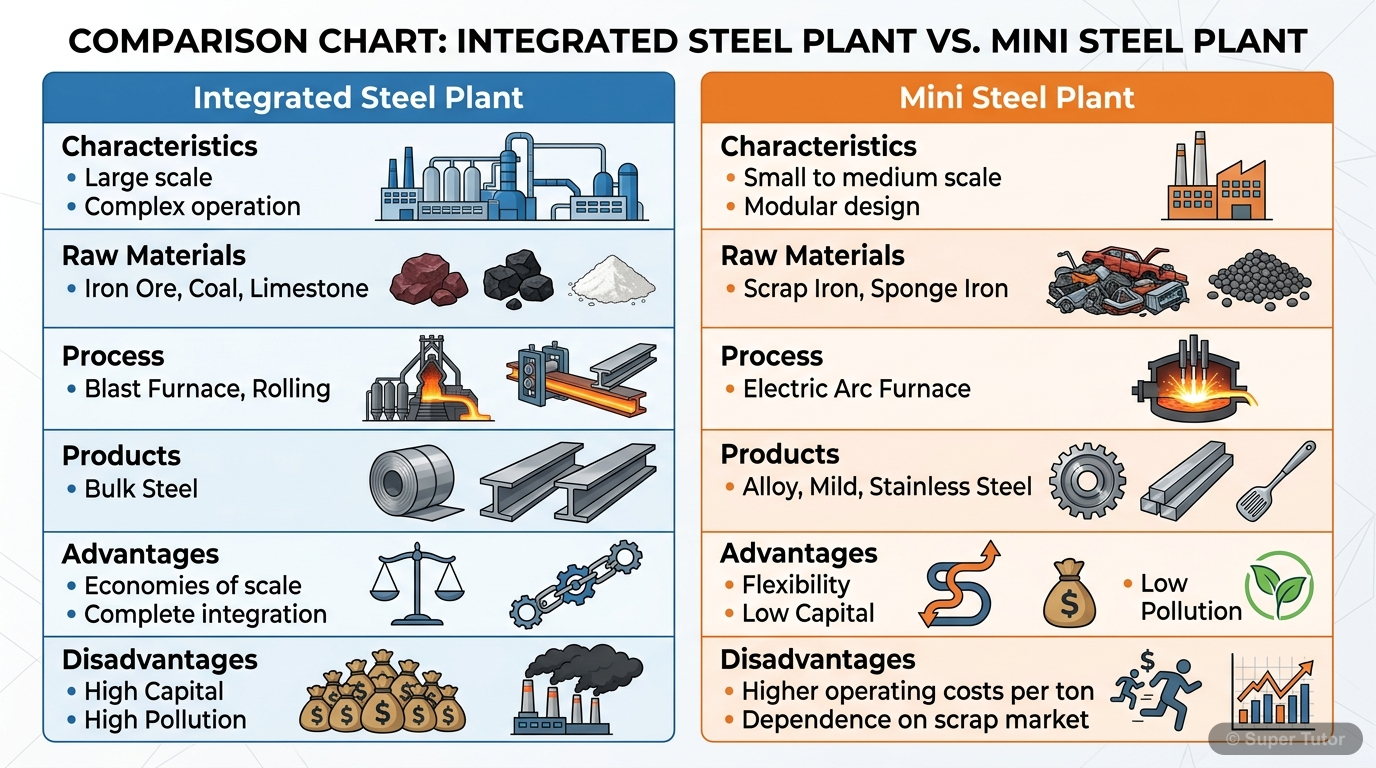
Learn better with visuals Super Tutor pairs illustrations like this with notes and quizzes for Manufacturing Industries in India - II: Mineral-based.
Get startedOverview
Mineral-based industries depend on minerals for their raw materials. Among them, the iron and steel industry is the most important because it supplies materials needed by many other industries. The chapter also covers major steel plants in India, mini steel plants, electronic and space research cent
Key Concepts
These are industries that secure their
These are industries that secure their raw materials from minerals. The iron and steel industry is the best example.
This industry is called the basic
This industry is called the basic industry and the backbone of the industrial economy because many other industries depend on it for raw materials and
An integrated steel plant carries out
An integrated steel plant carries out all three main processes under one complex: melting iron ore in the blast furnace, making steel, and shaping the
Mini steel plants are decentralized secondary
Mini steel plants are decentralized secondary units. They use electric arc and induction furnaces, scrap iron and sponge iron, and produce alloy steel
Tata Steel Company is the oldest
Tata Steel Company is the oldest and largest private-sector steel industry of India. It was established in 1907 by Jamshedji Tata at Sakchi in Singhbh
Learning Objectives
- Understand the meaning of mineral-based industries
- Explain why the iron and steel industry is called a basic industry
- Differentiate between integrated steel plants and mini steel plants
- Learn the main features and locations of Tata Steel, Bhilai, Rourkela and Visakhapatnam steel plants
- Identify the favourable factors for the location of major steel plants
Frequently Asked Questions
What are the important topics in Manufacturing Industries in India - II: Mineral-based for ICSE Class 10 Geography?
How should I revise Manufacturing Industries in India - II: Mineral-based for the ICSE Class 10 board exam?
Sources & Official References
Content is aligned to the official syllabus. Refer to the board website for the latest curriculum.
More resources for Manufacturing Industries in India - II: Mineral-based
For serious students
Get the full Manufacturing Industries in India - II: Mineral-based chapter — start free.
Quizzes, flashcards, an AI doubt solver and a study plan for ICSE Class 10 Geography. Free to start, no card needed.