Mineral and Energy Resources II — Chapter Summary
ICSE · Class 10 · Geography
Summary of Mineral and Energy Resources II for ICSE Class 10 Geography. Part of the ICSE Class 10 Geography syllabus.
Interactive on Super Tutor
Studying Mineral and Energy Resources II? Get the full interactive chapter.
Quizzes, flashcards, AI doubt-solver and a step-by-step study plan — built for chapter summary and more.
Free trial, no card needed.
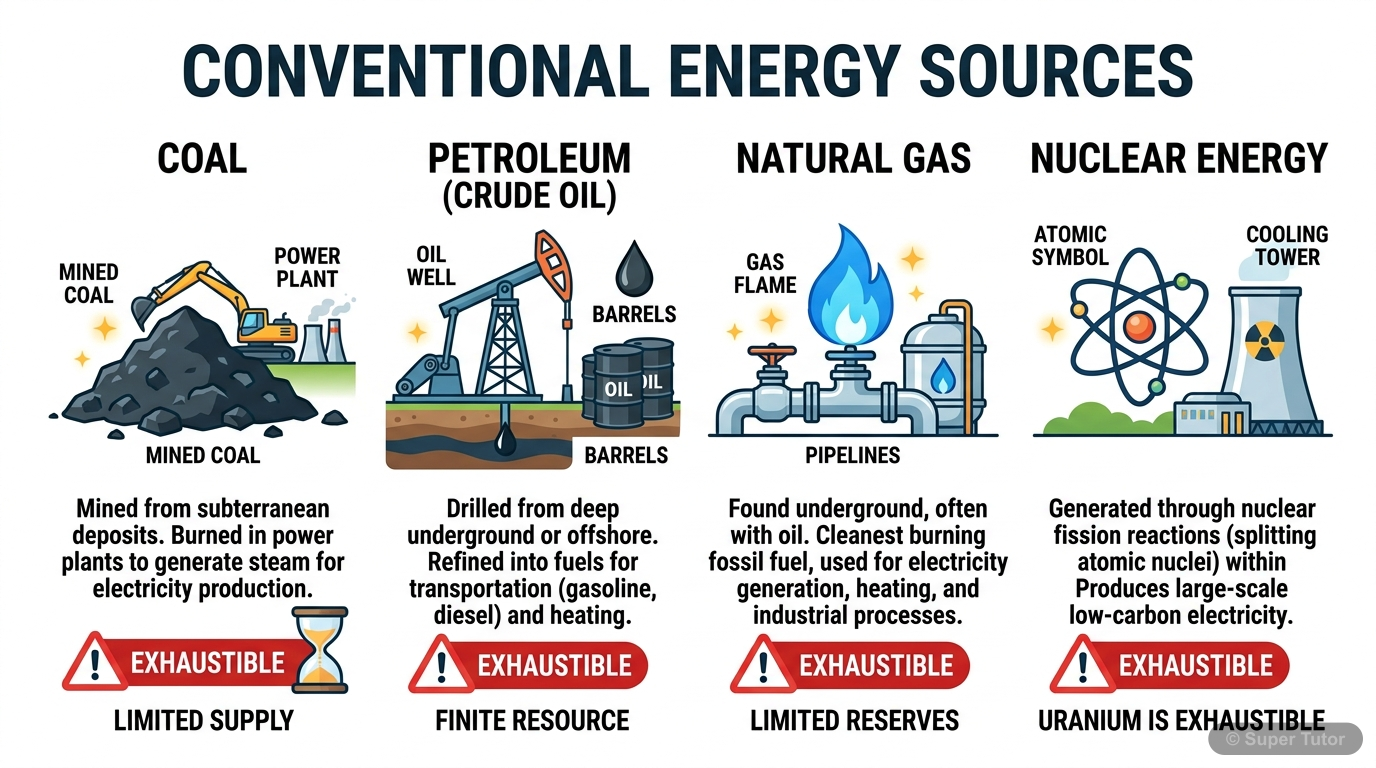
Learn better with visuals Super Tutor pairs illustrations like this with notes and quizzes for Mineral and Energy Resources II.
Get startedOverview
Coal, petroleum, natural gas, nuclear power, hydel power and non-conventional energy sources form the main energy base of modern life. Conventional sources such as coal, petroleum and natural gas are exhaustible and polluting, while non-conventional sources such as solar, wind, biogas, tidal and geo
Key Concepts
Coal is a conventional and non
Coal is a conventional and non-renewable energy source. It is an inflammable organic substance composed of hydrocarbons found in sedimentary rocks. It
Coal is classified by carbon content
Coal is classified by carbon content into anthracite, bituminous coal, lignite and peat. Anthracite has over 80% carbon and is the best quality. Bitum
Jharkhand has the largest coal reserves
Jharkhand has the largest coal reserves in India with 33.53%. West Bengal produces about 18% of India's coal reserves. Jharkhand, Odisha, West Bengal
Petroleum
Petroleum, also called mineral oil, is an inflammable liquid made mainly of hydrocarbons. Hydrocarbons form 90-95% of petroleum, while the rest consis
Oil was first discovered in India
Oil was first discovered in India at Makum in Assam in 1867. Major oil-bearing areas include Mumbai High, Bassein and Aliabet offshore, and Digboi, Na
Learning Objectives
- Understand the main conventional sources of energy and their characteristics
- Identify the different types of coal and their uses
- Locate the major coal, petroleum and natural gas regions in India
- Explain the advantages and disadvantages of coal, petroleum and natural gas
- Understand nuclear power, its raw materials, benefits and limitations
Frequently Asked Questions
What are the important topics in Mineral and Energy Resources II for ICSE Class 10 Geography?
How should I revise Mineral and Energy Resources II for the ICSE Class 10 board exam?
Sources & Official References
Content is aligned to the official syllabus. Refer to the board website for the latest curriculum.
More resources for Mineral and Energy Resources II
Practice Quiz
Test yourself with a quick quiz
Important Questions
Exam-style questions with answers
Revision Notes
Key points for last-minute revision
Formula Sheet
The chapter's formulas in one place
Concept Maps
See how topics connect
Study Plan
Step-by-step plan for this chapter
Flashcards
Quick-fire cards for active recall
Syllabus
What topics to cover
For serious students
Get the full Mineral and Energy Resources II chapter — start free.
Quizzes, flashcards, an AI doubt solver and a study plan for ICSE Class 10 Geography. Free to start, no card needed.